


Vintage Silver Writing Accessory
A vintage silver writing accessory brings tangible craft to a desk through polished metal, cut glass and fitted leather.
Vintage Silver Writing Accessory
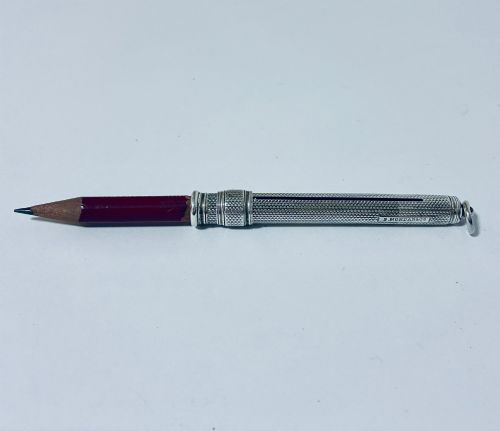
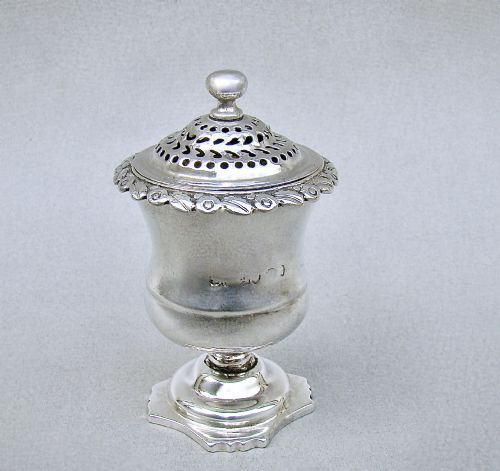
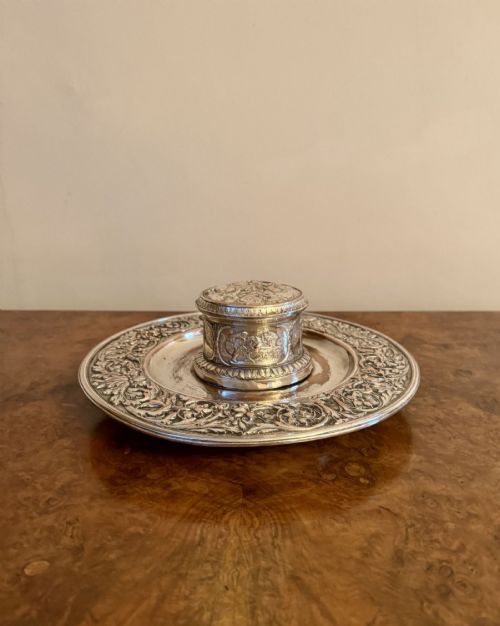
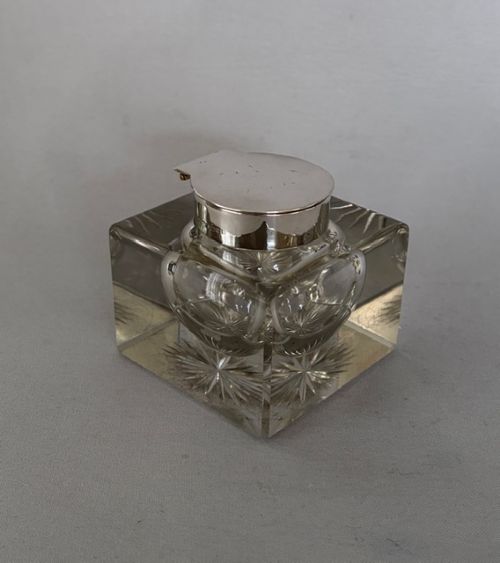
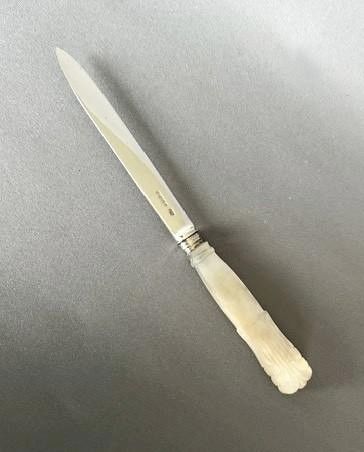
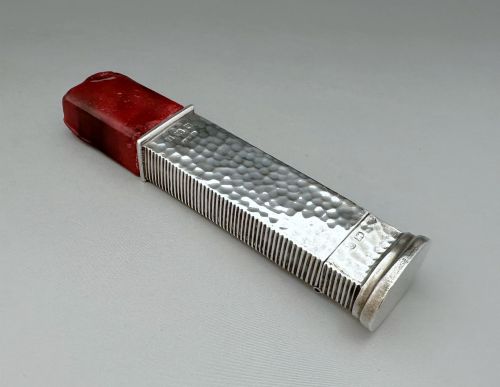
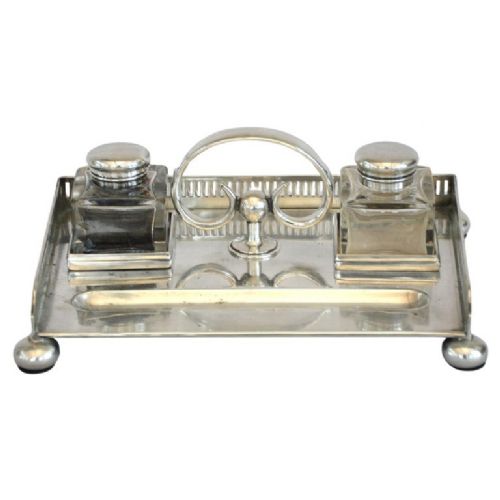
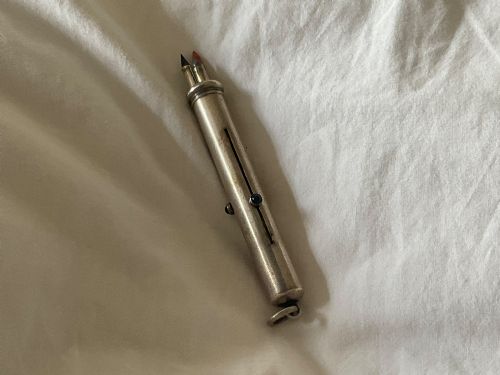
A vintage silver writing accessory encompasses desk items designed for correspondence and record-keeping during the Victorian, Edwardian and Georgian eras. Collectors encounter functional pieces ranging from substantial inkstands and capstan inkwells to delicate propelling pencils, pounce pots and sealing wax holders.
The material palette spans sterling silver and silver plate alongside cut glass, leather, wood, metal, onyx and lapis lazuli. Forms reflect historical shifts from ornate Rococo Revival designs to flowing Art Nouveau contours and utilitarian desk tidies.
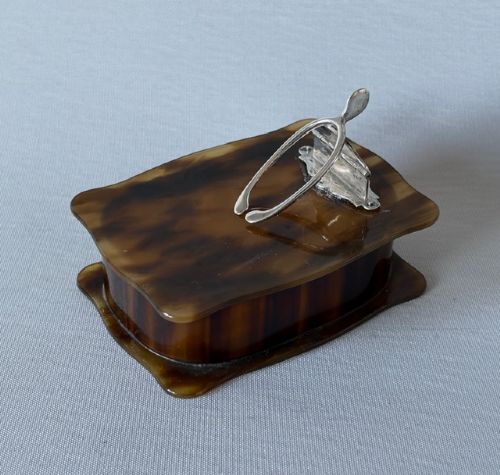
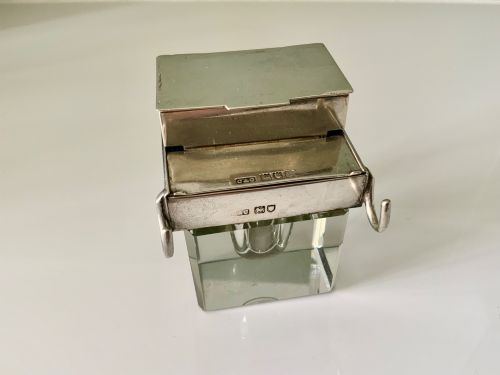
Pieces frequently combine multiple functions, such as stamp boxes paired with blotters, or inkwells integrated into pen rests and desk sets. The items on this page preserve the physical tools of a handwritten correspondence era.
Distinctions in Quality
Quality rests upon the crispness of chased and cast ornamentation, from figural novelty pen wipes to rococo scrollwork on inkstands. Superior examples display balanced proportions, substantial metal gauge or thick silver plating over base metal, and secure hinge mechanics.
The integration of mixed materials, such as flawless cut glass liners, genuine tortoiseshell, lapis lazuli or intact leather interiors, separates standard utility pieces from high-workshop commissions by makers like Sampson Mordan or Elkington.
Vintage Silver Writing Accessory Retail Price Guide 2026
Typical asking prices for vintage silver writing accessory among the pieces listed under this phrase on Sellingantiques today, from the lower quarter to the upper quarter. They describe what is for sale here now, not the wider market.
Mordan And Co·Sampson Mordan·Elkington·Walker And Hall·Marson And Jones·Zimmermann·Maurice Dufrene
The Vintage Silver Writing Accessory Glossary
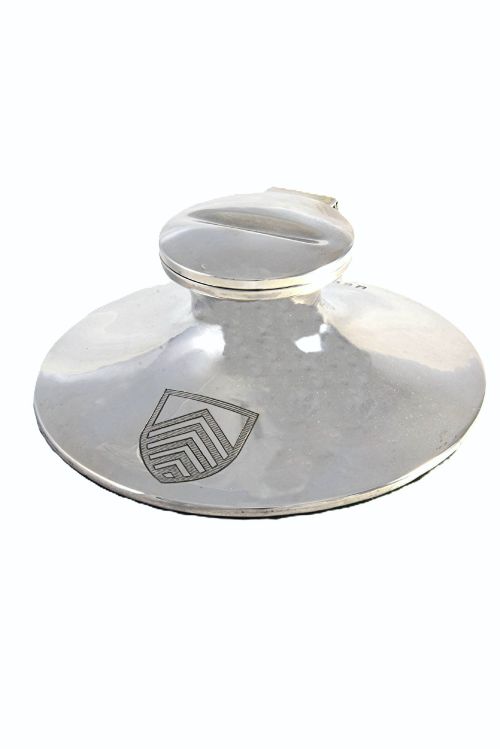
- Capstan inkwell
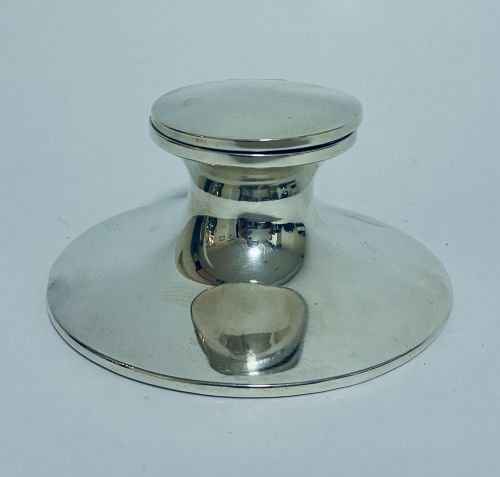
- An inkwell shaped like a ship's capstan, featuring a wide circular base tapering upward to a hinged silver top. This profile provides stability to prevent tipping on a busy desk.
- Pounce pot
- A small shaker container used to sprinkle powdered resin or cuttlefish bone onto freshly written ink to dry the surface and prevent blotting. They date predominantly to Georgian and earlier working desks.
- Vesta case
- A small pocket container designed to hold matches, frequently combined in desk accessories with sealing wax holders or stamp compartments. They protect wax matches from friction and moisture.
- Pen wipe
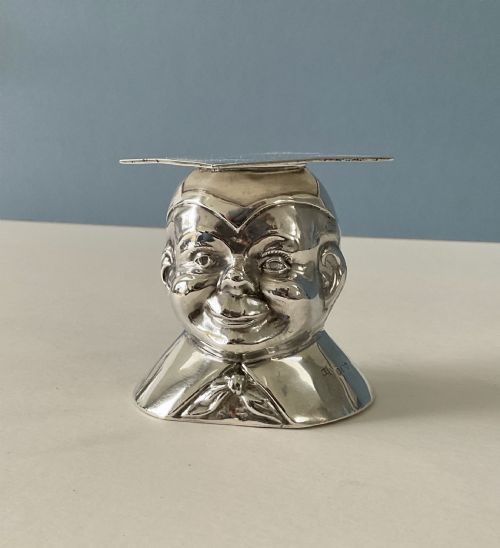
- A small desk accessory made of fabric, leather or novelty figural forms designed to clean ink nibs between uses. They appear in diverse shapes including birds and scholarly figures.
Vintage Silver Writing Accessory: Frequently Asked Questions
What is a vintage capstan inkwell?
A capstan inkwell is a desk ink reservoir characterised by its wide, heavy base that tapers upward to a hinged silver lid. This practical silhouette prevents the inkstand from tipping over during use.
Such pieces appear frequently in sterling silver and silver plate across Edwardian and later periods, often paired with glass inserts.
How were silver inkstands used?
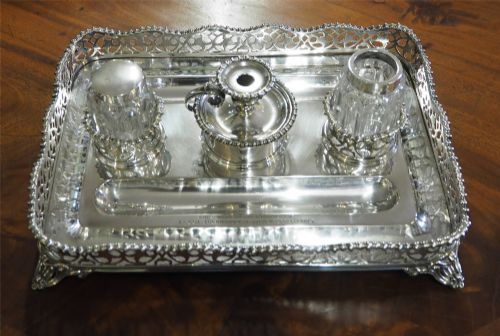
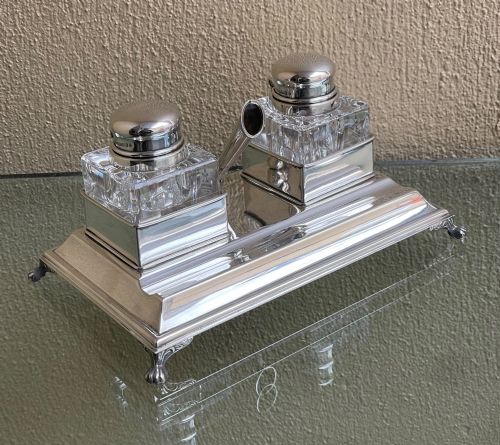
Silver inkstands served as central desk organisers holding inkwells, pen rests, stamp boxes and sometimes taper sticks or sanders. Writers dipped quill or steel nib pens into the ink reservoirs before writing correspondence.
These sets anchored the writing desk in studies and offices throughout the Victorian and Edwardian eras.
How do I care for silver desk accessories?
Silver desk accessories require gentle dusting with a soft cloth and occasional cleaning with a specialist silver polish to maintain their finish. Care must be taken around integrated materials like cut glass, leather, wood or lapis lazuli.
Keeping pieces away from direct moisture preserves internal linings and hinged mechanisms.
What is a pounce pot?
A pounce pot is a small shaker container used to dust sand or powdered resin over wet ink to speed drying. This substance absorbed excess fluid before blotting paper became commonplace.
These items are typically found on Georgian and early Victorian writing desks.