

Vintage Silver Tea Caddy
A vintage silver tea caddy brings domestic history to the tabletop, holding dry leaves safely inside polished metal or cut glass.
Vintage Silver Tea Caddy
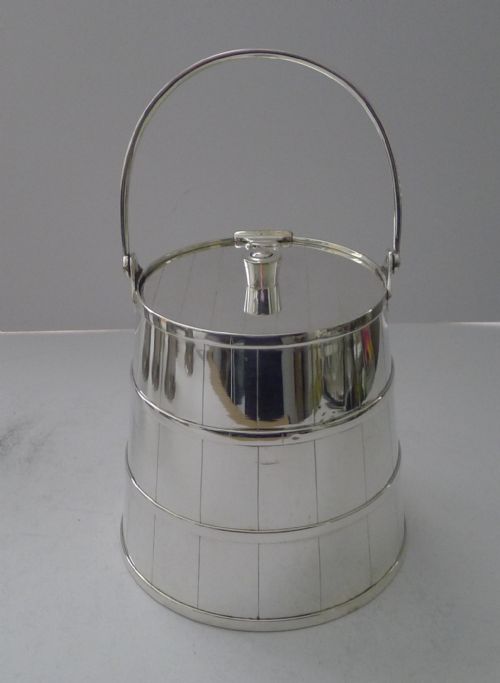
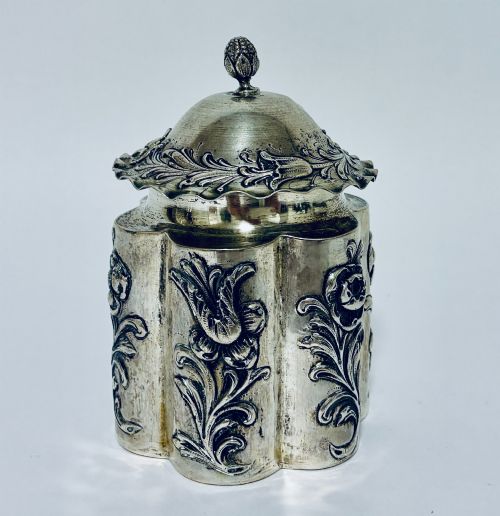
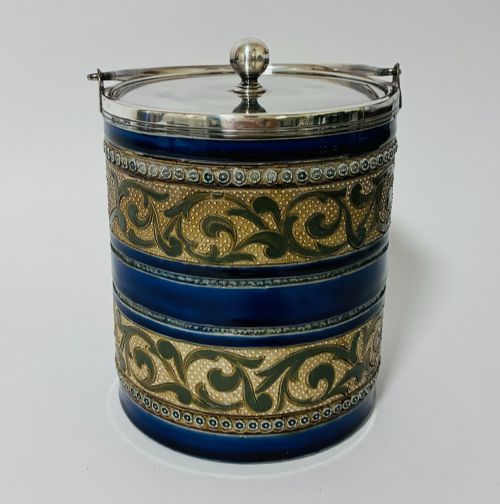
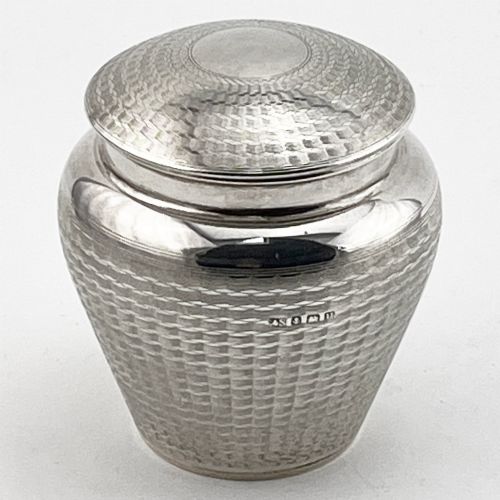
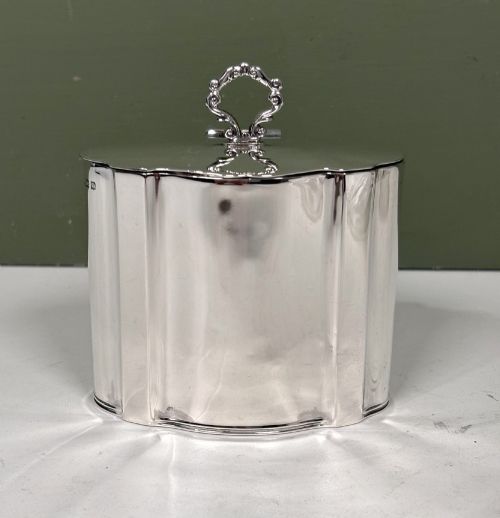
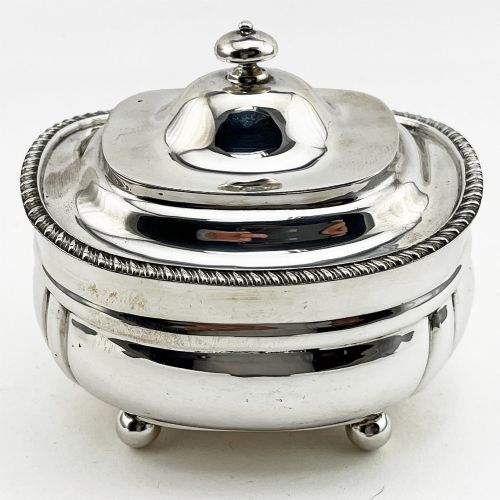
A vintage silver tea caddy serves as a small storage container designed to keep loose leaves dry and aromatic on the dining table or sideboard. These pieces range from Georgian shapes to Edwardian canisters and later twentieth-century forms, often appearing alongside related items such as caddy spoons and biscuit barrels.
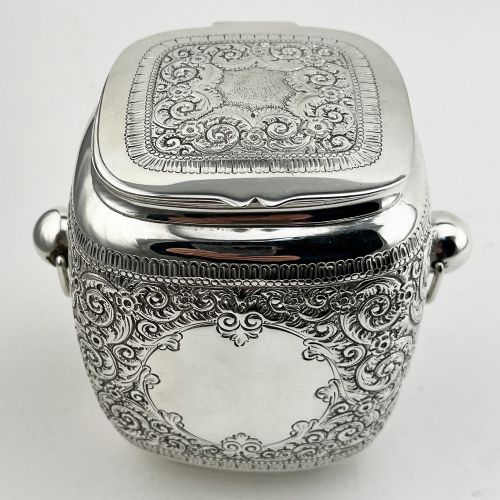
Buyers will encounter containers shaped from sterling silver, silver plate, and solid silver, frequently paired with cut glass, oak, or earthenware bodies. Styles span from simple geometric Art Deco designs to ornate Edwardian repoussé work and classical Georgian revival patterns.
Origins stretch across English provincial workshops, continental makers, and Scandinavian studios, with pieces dated from the eighteenth century through to the middle of the twentieth century. The selection includes both utilitarian tea canisters and decorative novelty boxes adapted for trinkets or desk storage.
How They Were Made
Silversmiths formed the metal bodies of these containers through hammering, spinning, or pressing sterling and plated silver sheets into cylindrical, oval, or square forms. Makers then soldered hinges, lion mask handles, and rims onto the main structure to create tight-fitting lids that kept moisture away from the tea leaves.
Workers combined metal with other tactile substances, mounting sterling silver collars onto cut crystal or hobnail glass jars, and fitting oak or earthenware bodies with silver-plated mounts. Details like engraved handles and enamel accents required specialised hand tools and careful firing or chasing by skilled artisans.
Listings feature periods from the Georgian era through to the 1940s, utilising sterling silver, silver plate, oak, and earthenware.
What Varies in Quality
The weight of the metal and the thickness of the silver plating dictate the substance and longevity of a container, separating lightweight utilitarian pieces from heavier solid silver examples. Crispness in the chasing, engraving, and applied mounts indicates the level of care taken at the workbench during production.
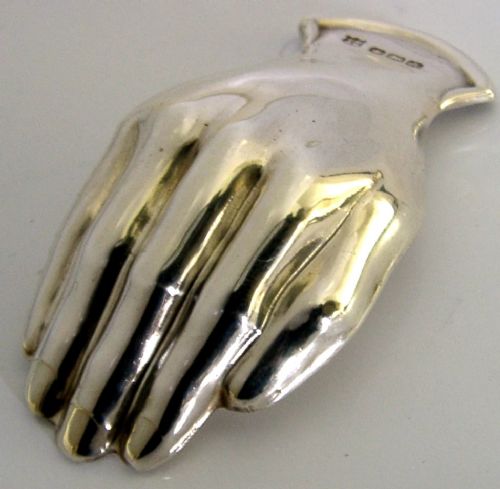
Makers' marks and assay office stamps provide clear evidence of origin and metal purity, adding historical context that influences the standing of a piece. The condition of internal linings, original hinged lids, and paired items like matching caddy spoons further distinguishes standard production items from finer workshop output.
Martin Hall & Co·Zimmermann·Thomas Hayes·Mappin & Webb·Ernest Druiff & Co·David Andersen·Georg Jensen·Asprey
The Vintage Silver Tea Caddy Glossary
- Sterling silver
- An alloy containing 92.5 percent silver by mass, with the remainder consisting of other metals like copper to improve durability. This standard metal forms the basis of many traditional tea canisters.
- Silver plate
- A layer of silver applied to a base metal core such as copper or nickel brass through electroplating. This technique allowed manufacturers to produce decorative tableware at a lower cost.
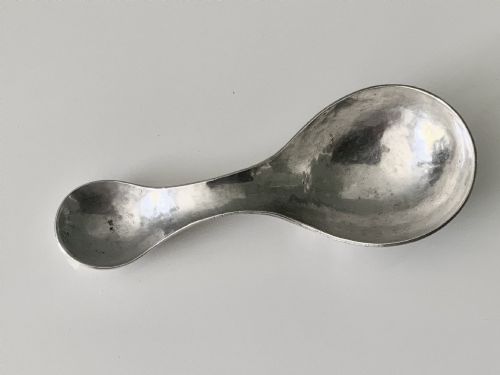
- Caddy spoon
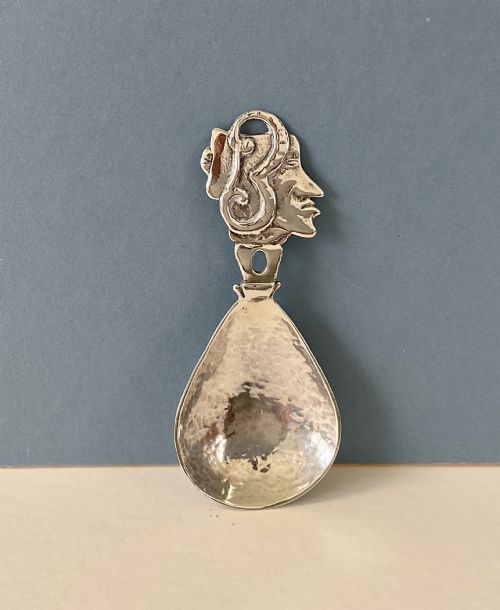
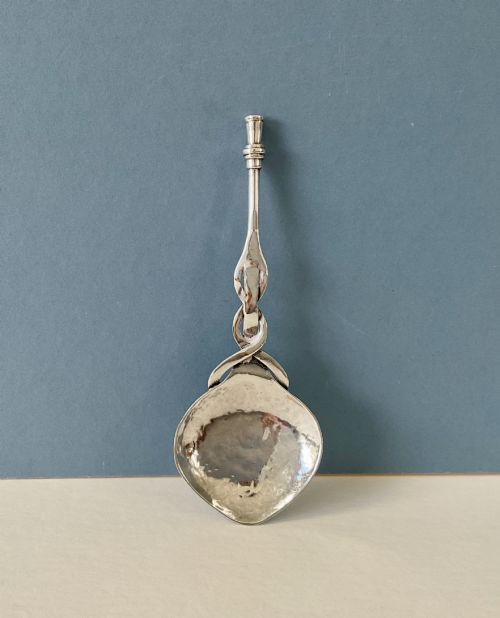
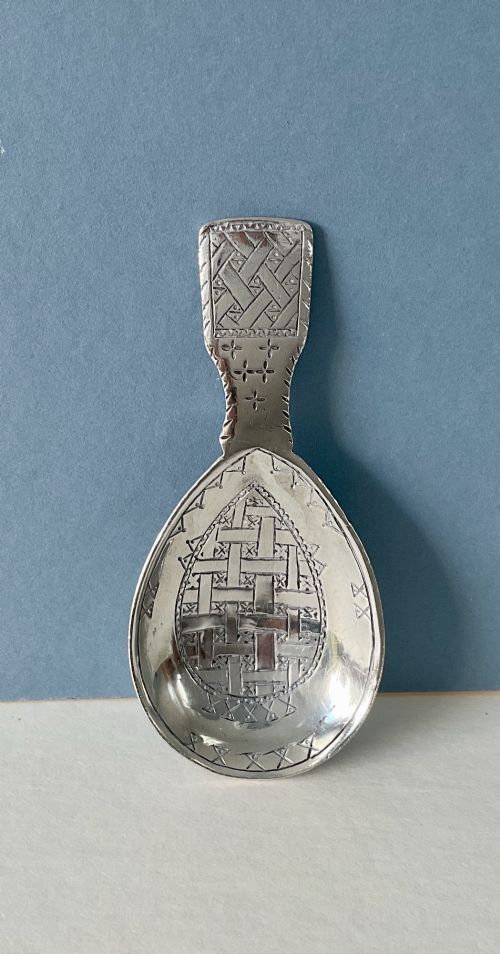
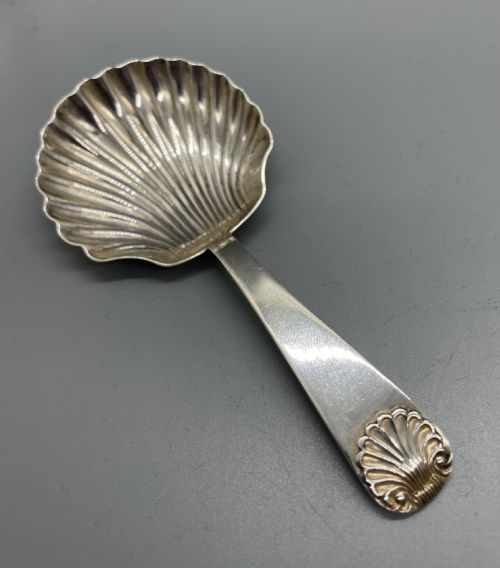
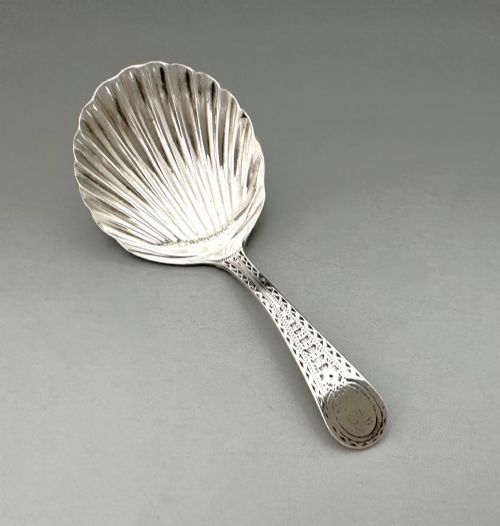
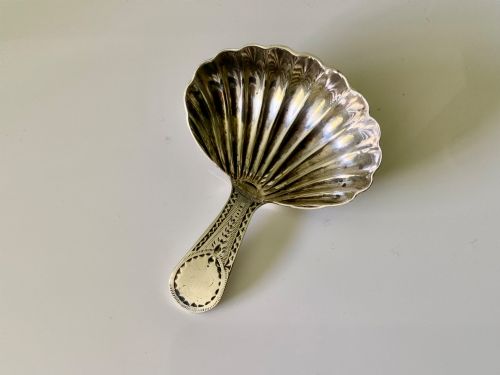
- A small scoop specifically proportioned to measure loose tea leaves from a canister into a pot. These utensils frequently feature shell bowls, engraved handles, or Arts and Crafts motifs.
- Hallmark
- A series of official marks stamped onto precious metal items to indicate purity, the maker, and the assay office. These stamps help determine the exact year and place of manufacture.
- Repoussé
- A metalworking technique where the artisan hammers the design from the reverse side to create low relief ornamentation on the surface. This method appears on many Edwardian and Victorian containers.
Vintage Silver Tea Caddy: Frequently Asked Questions
What is a tea caddy?
A tea caddy is a dedicated container built to store loose tea leaves while protecting them from moisture and light. These vessels kept expensive leaves secure in the home.
Over time, styles shifted from simple wooden or metal boxes to ornate silver canisters and cut glass jars with tight lids.
How were tea caddies used?
Tea leaves were extremely valuable commodities, so the mistress of the house typically kept the caddy locked to control distribution. Servants or hosts used a small spoon to measure leaves directly into the teapot.
Today, these pieces serve as decorative accents on sideboards or as practical containers for small items on a desk.
How do I date an antique silver caddy?
Dating relies on examining the hallmarks stamped into the metal, which reveal the assay office, the purity standard, and a specific date letter. Maker marks and stylistic cues like Edwardian scrollwork or Art Deco lines also point to the correct era.
Comparing construction methods helps separate eighteenth-century examples from later revival pieces.
Are silver plate and solid silver different?
Solid silver objects consist entirely of precious metal throughout their structure, while silver plate applies a thin coating over a base metal foundation. Hallmarks usually distinguish sterling and solid pieces from plated alternatives.
Both materials were used across different periods to create functional and decorative tableware.