



Vintage Silver Table Vases
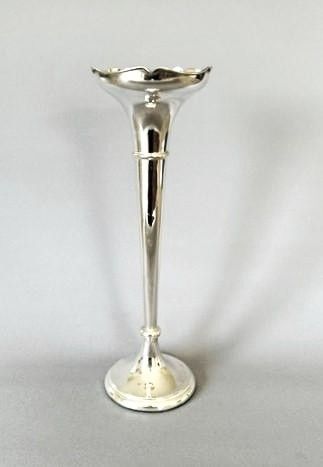
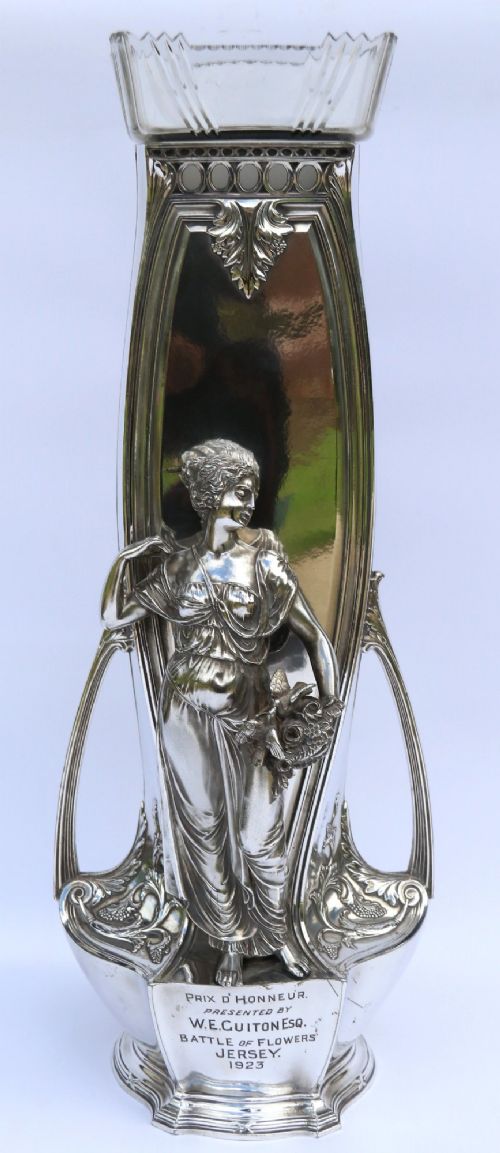
These vintage silver table vases range from Georgian wirework sugar pieces to Edwardian posy vessels and tall silver plated designs, built to grace a dining table or sideboard.
Vintage Silver Table Vases
Vintage silver table vases encompass a varied selection of vessels designed for display on dining tables, ranging from compact posy holders to grand epergnes and centrepieces. When searching for vintage silver table vases, buyers encounter objects that include utilitarian forms as well as decorative centrepieces meant to hold floral arrangements or fruit.
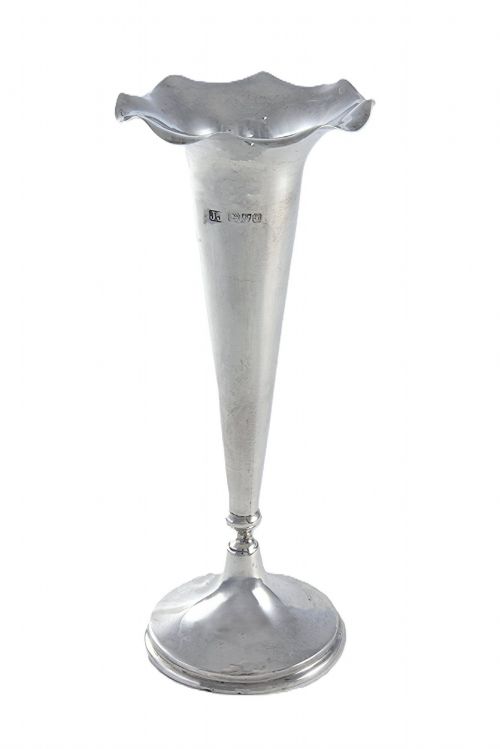
The pieces appearing on this page stretch across multiple eras, including Georgian, Victorian, Edwardian, and the early twentieth century, alongside later twentieth-century studio glass creations. Forms frequently take the shape of single trumpets, multi-branch epergnes, urns, and wirework baskets adapted for table presentation.
Makers and workshops of various scales contributed to this category, employing traditional metalworking alongside glass production. Buyers are most likely to meet silver plated examples from the nineteenth and early twentieth centuries, alongside solid sterling silver items and combinations incorporating ruby or cobalt glass liners.
Construction and materials
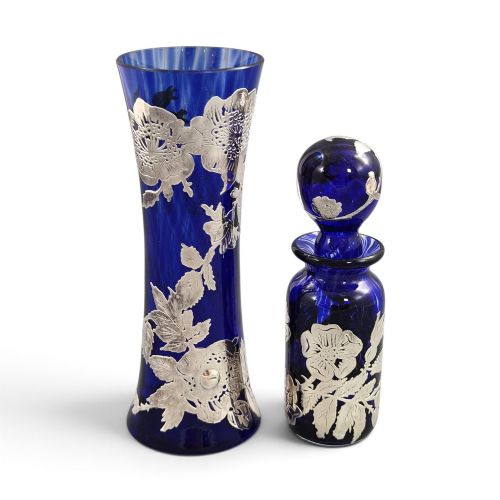
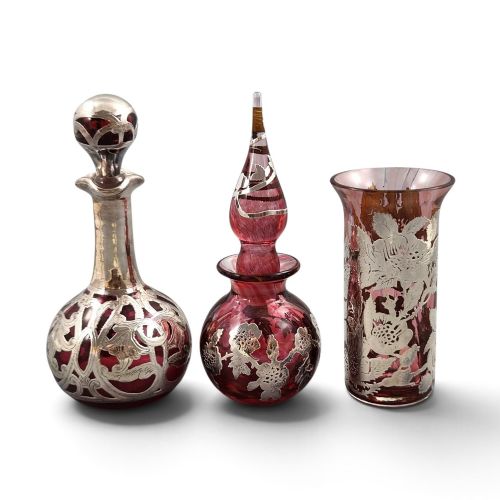
The manufacture of these vessels relies heavily upon silver plating over base metals, Old Sheffield plate, and solid sterling silver, often combined with blown or cut glass components such as ruby glass and cobalt glass. Techniques range from traditional hand-soldering of wirework frames to electroplating and sterling silver overlay applied directly to glass bodies.
Makers utilised distinct methods for creating multi-part items like epergnes and centrepieces, screwing or soldering trumpets and branches to central bases. Glass inserts were typically hot-worked or mould-blown before being fitted into metal mounts, wire frames, or pierced silver galleries.
Vintage Silver Table Vases Retail Price Guide 2026
Typical asking prices for vintage silver table vases among the pieces listed under this phrase on Sellingantiques today, from the lower quarter to the upper quarter. They describe what is for sale here now, not the wider market.
Some Victorian dining tables required elaborate multi-trumpet epergnes so tall that guests had to converse entirely around them.
Assessing quality and craftsmanship
The distinction between standard commercial pieces and finer examples rests upon the weight of the metal, the crispness of any chased or pierced decoration, and the integrity of the silver plating over the underlying base metal. Superior items exhibit heavier gauge silver or robust Old Sheffield plate construction that maintains its structural rigidity across multi-branch arrangements.
In pieces combining glass and metal, quality is evident in the precise fit of the glass liner within its silver or plated mount and the absence of bubbles or flaws in coloured glass elements like cobalt and ruby glass. The refinement of the solder joints and the balance of multi-trumpet epergnes further separate basic utility items from more ambitious workshop productions.
Gorham·Laugharne Glass·Daniel & Arter
The Vintage Silver Table Vases Glossary
- Old Sheffield plate
- A composite material made by fusing a thin sheet of sterling silver to a thicker copper core, popular before the invention of electroplating.
- Epergne
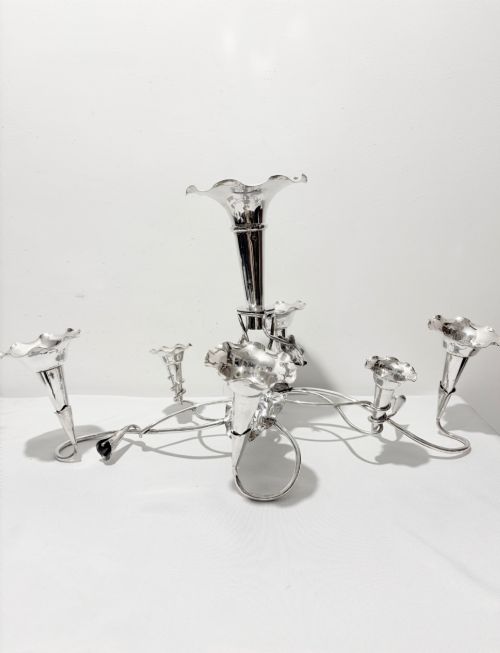
- A large table centrepiece featuring a central bowl or basket surrounded by multiple branching trumpets or vases for flowers and fruit.
- Wirework
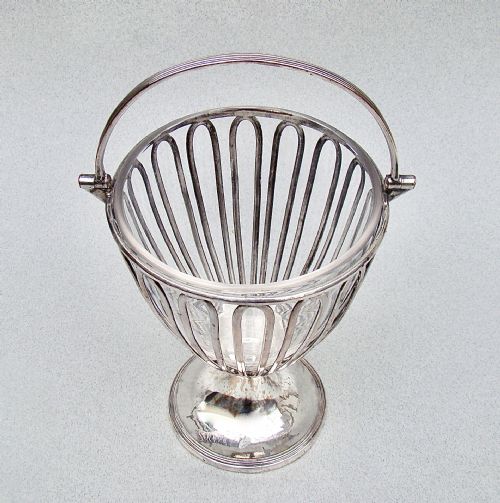
- Open framework constructed from bent metal wires, seen in Georgian sugar vases and decorative baskets.
- Electroplated nickel silver
- A base metal alloy of copper, nickel, and zinc coated with a layer of silver using an electrical current.
- Sterling silver
- An alloy consisting of ninety-two point five percent silver by mass and seven point five percent other metals, usually copper.
- Posy vase
- A small personal vase specifically intended for holding a small bunch or posy of flowers.
Vintage Silver Table Vases: Frequently Asked Questions
What are vintage silver table vases used for?
These vessels were traditionally used on dining tables and sideboards to display cut flowers, fruit, or decorative foliage during meals and formal gatherings. They served both a functional role in table service and a purely aesthetic one to showcase the host's refined taste.
Today, they remain popular for interior decoration, allowing owners to continue using multi-branch epergnes and single trumpets for floral arrangements in domestic settings.
How do I clean vintage silver plated vases?
Cleaning requires a soft microfibre cloth and a gentle, non-abrasive silver polish formulated specifically for plated items to avoid wearing away the thin silver layer. Care must be taken around soldered joints and applied wirework where excessive scrubbing can cause damage.
Glass inserts should be removed from their metal mounts and washed separately in warm soapy water before being thoroughly dried and reassembled.
How can I tell Old Sheffield plate from silver plate?
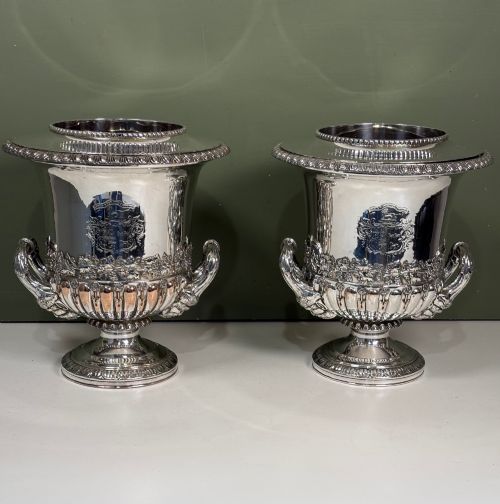
Old Sheffield plate can often be identified by examining edges or worn spots where the underlying copper core shows through a distinct reddish hue beneath the silver layer. Electroplated items, introduced later in the nineteenth century, generally reveal a dull grey or yellowish base metal beneath worn silver.
Weight and construction methods also differ, as Old Sheffield pieces were hand-forged from fused sheets rather than cast or electro-deposited.
How do I style a large epergne on a modern table?
A large multi-trumpet epergne works best as the central focal point of a spacious dining table or a large sideboard where its height and branching structure can be appreciated. Keeping the surrounding decor minimal allows the intricate silver work and coloured glass inserts to stand out.
Matching the floral arrangements in the trumpets to the surrounding room palette helps integrate these elaborate Victorian and Edwardian centrepieces into contemporary interiors.