

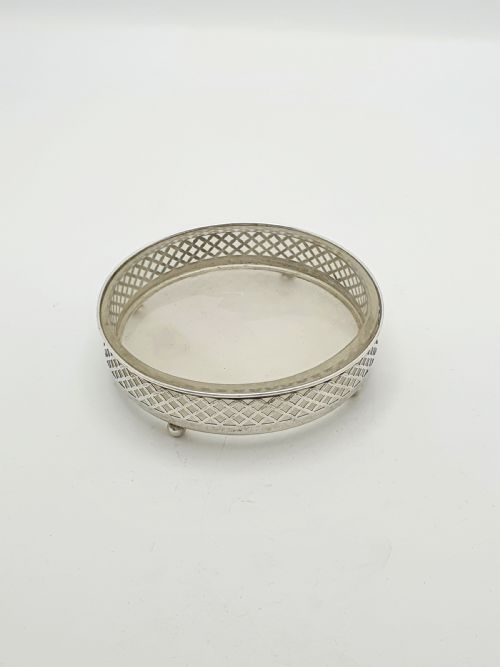


Vintage Silver Table Coaster
These vintage silver table coaster designs protect polished dining tables while holding wine bottles and decanters with traditional grace.
Vintage Silver Table Coaster
When you search for a vintage silver table coaster, you find functional dining accessories designed to catch drips and slide easily across the dining surface. The pieces listed span periods from Georgian and Victorian eras through to the Edwardian period and later twentieth-century examples.
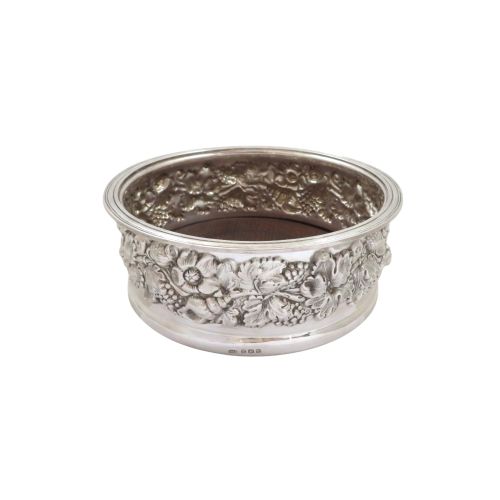
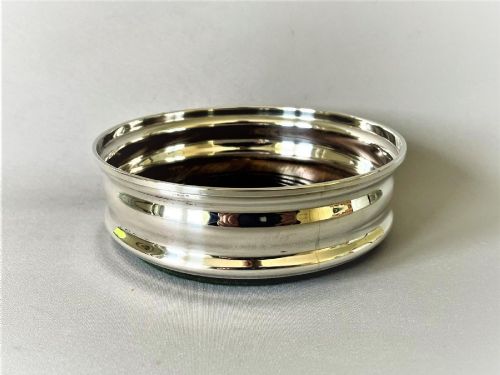
Origins stretch from traditional British workshops to American makers and continental houses, reflecting diverse dining customs over two centuries. The selection ranges from plain metal rings to pierced galleries and heavily ornamented grape and vine motifs.
How they were made
Makers combined sterling silver, Old Sheffield plate, and silver plate with contrasting wooden bases, typically mahogany, to provide stability and a warm textural contrast to the metal. Felt linings on the underside protected polished mahogany dining tables from friction and scratches.
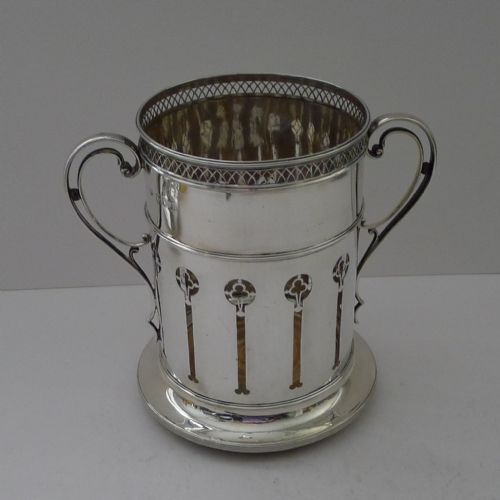
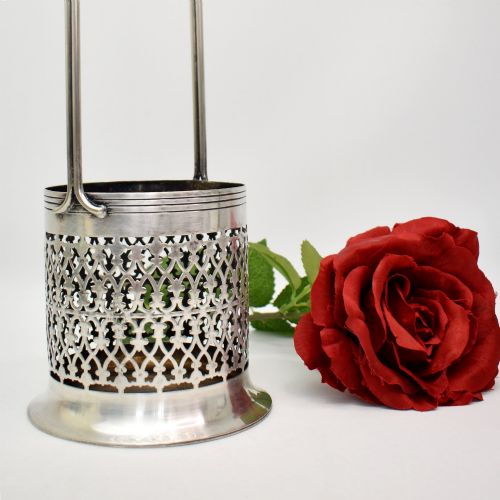
Techniques included piercing sheet metal into openwork galleries, casting decorative borders with floral or vine motifs, and turning wooden bases to fit snugly within metal rims. Old Sheffield plate combined a fused layer of silver over a copper base, whilst later items relied on electroplating or solid sterling construction.
Listings feature periods from George III and the Victorian era through to Edwardian designs, the 1920s, and post-1960 production.
What varies in quality
The distinction between ordinary and exceptional pieces lies in the crispness of chased or cast ornamentation, such as grape and vine borders. Substantial weight in the silver and tight joinery between the metal rim and the wooden base indicate superior manufacture.
The integrity of the wooden insert and the preservation of the silver plating or hallmark details dictate the overall standard. Pieces retaining their original turned mahogany bases and clear maker stamps command greater appreciation among collectors.
Brook and Son Edinburgh·Christofle·Asprey
The Vintage Silver Table Coaster Glossary
- Old Sheffield plate
- A method of fusing a thin sheet of sterling silver to a thicker copper core before shaping. This technique produces a distinctive edge where the underlying copper shows slightly.
- Silver plate
- A layer of silver applied to a base metal substrate, such as copper or brass. This process offered a bright metallic finish at a lower cost than solid sterling silver.
- Gallery
- A pierced or openwork metal railing surrounding the perimeter of a coaster or tray. This architectural feature prevents the bottle from sliding off the base.
- Turned wood
- Timber shaped on a lathe to create circular components like the wooden bases found inside metal bottle coasters. Mahogany is the most frequent wood seen in these inserts.
- Pierced work
- Metal pierced with small openings to create decorative patterns and reduce weight. This technique appears frequently in butter dishes and decorative bottle holders.
Vintage Silver Table Coaster: Frequently Asked Questions
How do I clean a silver coaster?
Use a specialised silver polish and a soft cloth to remove tarnish from the metal surfaces. Take care to avoid getting liquid polish on the wooden base or felt lining.
Buff gently with a clean cloth to restore the shine without rubbing away thin plating on older pieces.
Can these coasters hold champagne bottles?
Standard vintage wine coasters accommodate most traditional wine bottles and narrow spirits decanters. Wider champagne bottles may require larger coasters or multiple bottle holders.
Check the internal diameter of the coaster before attempting to seat wider bottles.
How do I date an antique coaster?
Examine the piece for hallmarks indicating the assay office, metal purity, and date letter. Style indicators like Victorian scrolling or Edwardian piercing also help narrow the period of manufacture.
Construction methods, such as Old Sheffield plating techniques, point to specific manufacturing eras.