

Vintage Silver Salts
Vintage silver salts bring domestic dining history to the table, offering small vessels that hold seasoning with practical elegance.
Vintage Silver Salts
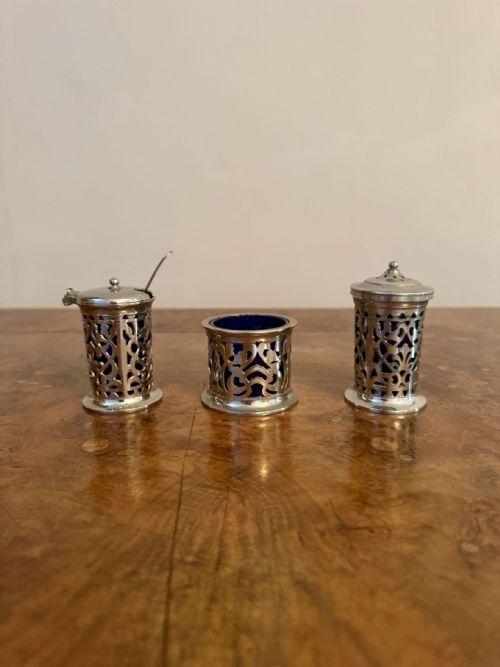
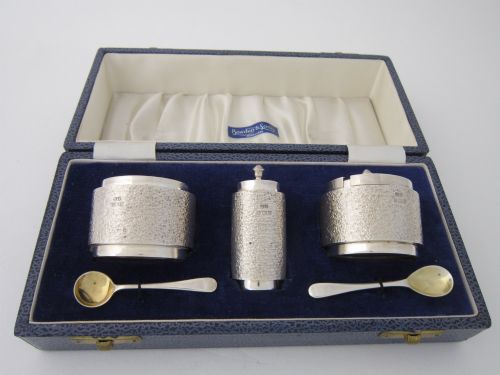
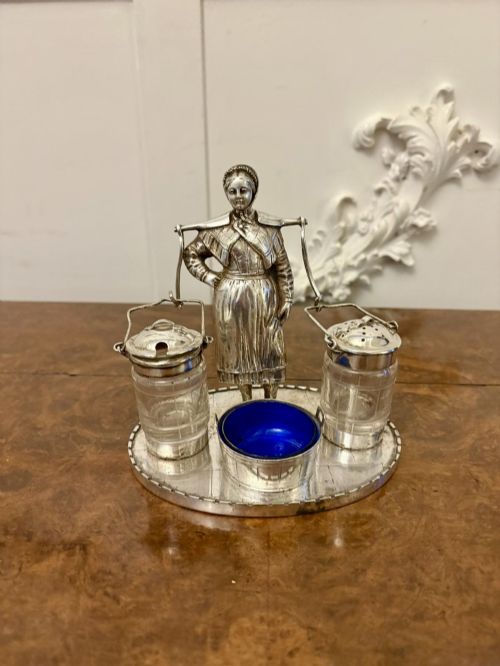
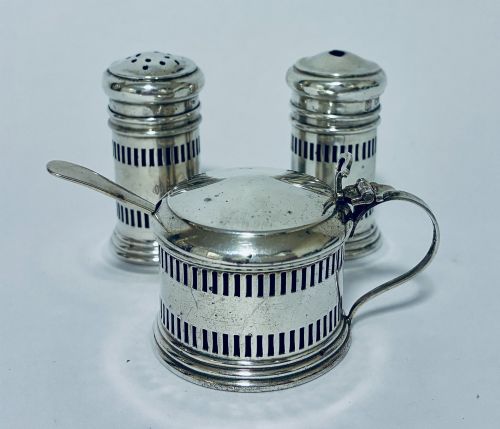
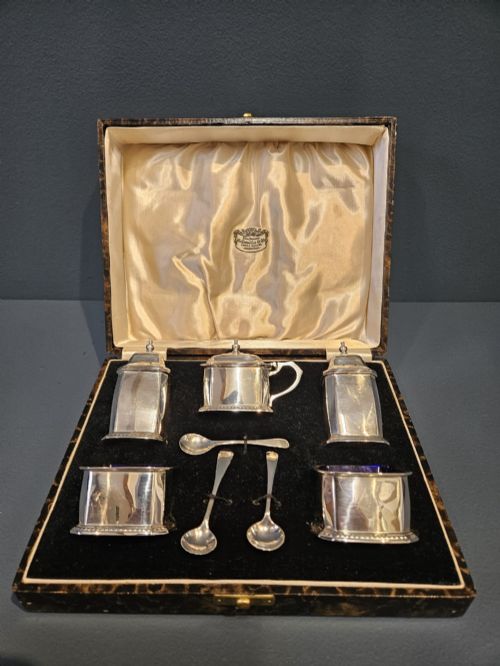
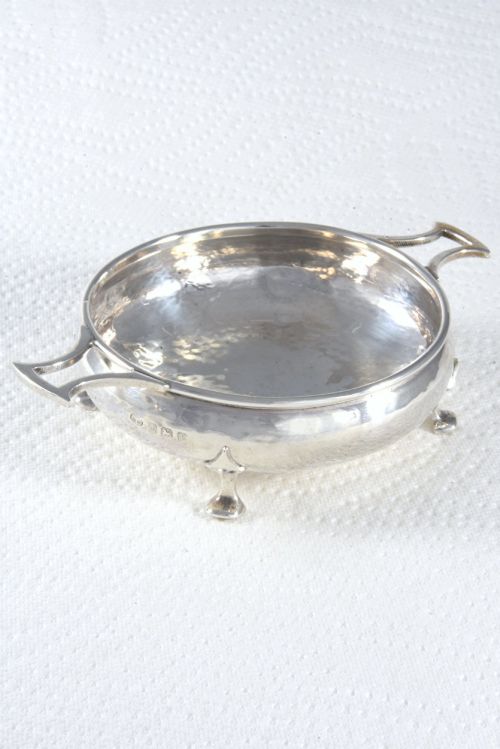
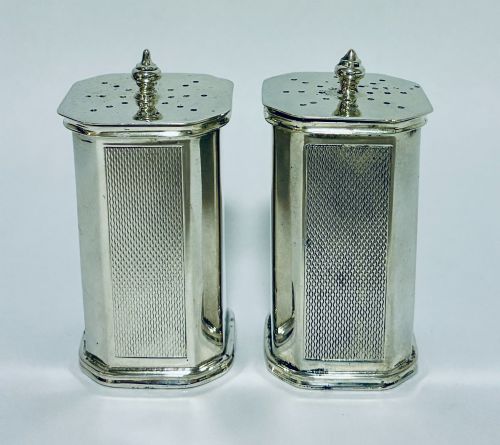
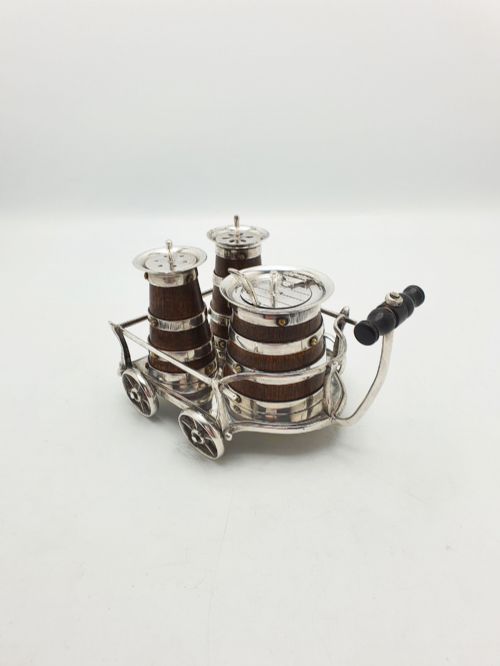
Vintage silver salts encompass open cellars, novelty shapes, and cruet sets designed to hold seasoning at the table. Collectors encounter open salt dips alongside lidded mustard pots and matched pairs intended for formal dining setups.
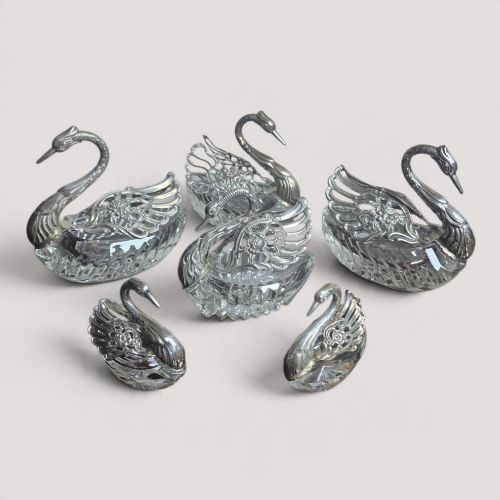
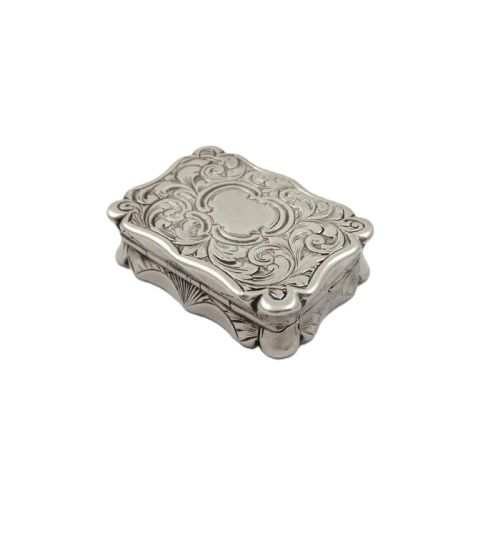
The selections span Victorian, Edwardian, and Art Deco periods, drawing on diverse stylistic influences from traditional British silverwork to Norwegian enamel and Viking Revival motifs. Domestic tableware forms predominate, alongside occasional novelty pieces shaped as animals or watercraft.
Materials and Construction
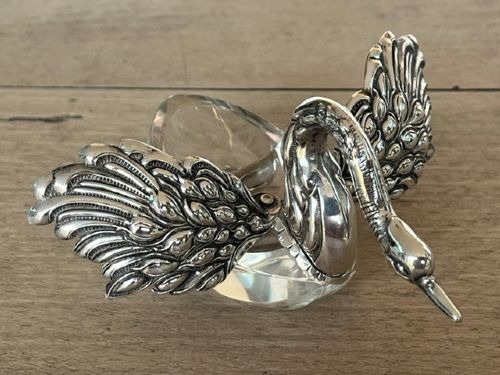
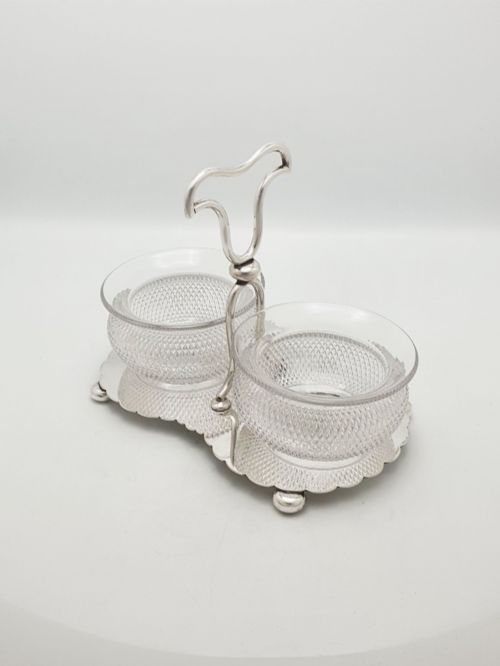
Metals range from sterling silver to silver plate, providing either solid precious construction or a durable plated surface over base metal. Many pieces incorporate glass liners in cobalt, cranberry, or opaline hues, protecting the metal from corrosive salt.
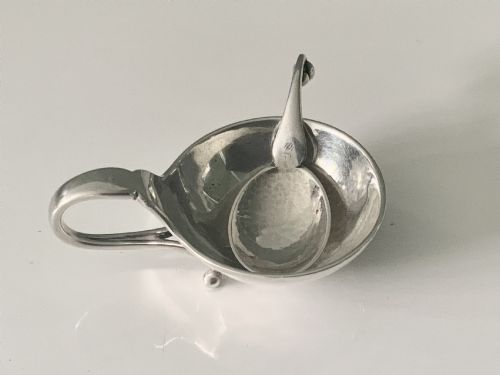
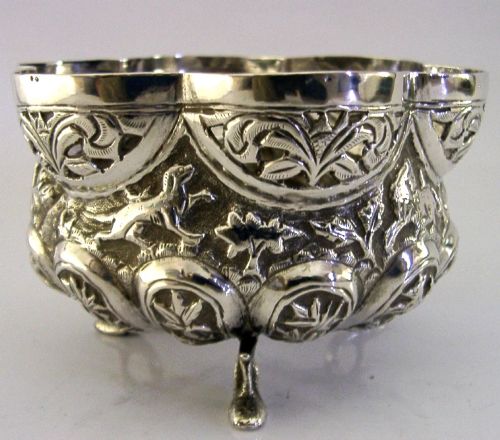
Techniques visible across the inventory include foliate chasing, piercing, and geometric enamelling applied to vessel bodies. Removable components such as movable wings on swan-shaped dishes and fitted spoons demonstrate functional mechanical design alongside decorative metalwork.
Vintage Silver Salts Retail Price Guide 2026
Typical asking prices for vintage silver salts among the pieces listed under this phrase on Sellingantiques today, from the lower quarter to the upper quarter. They describe what is for sale here now, not the wider market.
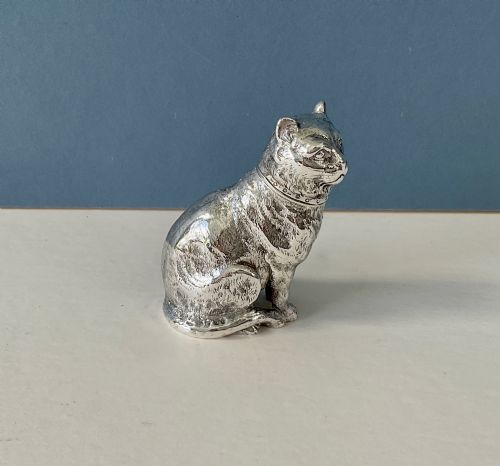
A tiny silver cat doubling as a pepper shaker stands ready to patrol the dining table against runaway seasoning.
Distinctions in Execution
Quality rests upon the crispness of the chasing, the weight of the silver or plate, and the integrity of any fitted glass liners. Superior examples maintain intact gilding inside the bowl and crisp hallmarks or maker stamps.
The relationship between the metal mount and the glass insert dictates overall refinement, where snug fits and undamaged edges separate standard utilitarian vessels from finer cabinet pieces.
Samuel Pemberton·Goldsmith & Silversmith's·Georg Jensen·Barnards·Josiah Williams & Co·Walker & Hall
The Vintage Silver Salts Glossary
- Cruet set
- A matched collection of bottles, jars, or salt cellars held in a stand for condiments. These sets sit centrally on the dining table.
- Salt cellar
- A small open bowl used to hold salt before the invention of free-flowing table shakers. Diners used a tiny spoon or fingers to pinch the seasoning.
- Vinaigrette
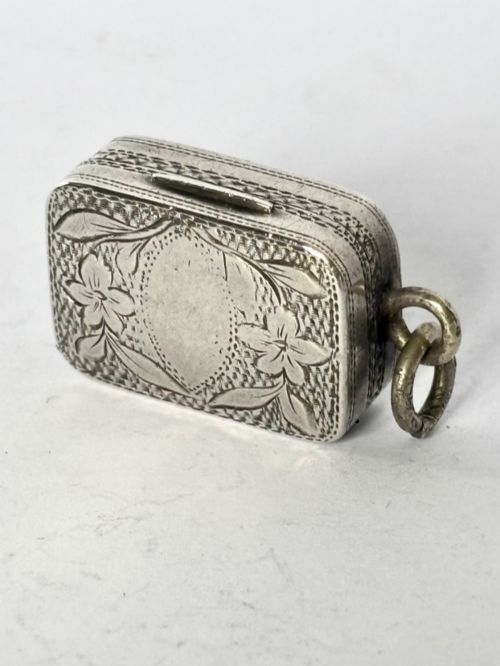
- A small ornamental box with a perforated inner grill holding a sponge soaked in aromatic vinegar. These portable items date back to Georgian and Victorian times.
- Cobalt glass
- A deep blue glass frequently used for liners inside open salt cellars. The dark colour contrasts sharply with bright silver frames.
- Chasing
- A metalworking technique where the artisan hammers the front surface to push the metal inward and create raised decorative patterns. This differs from engraving, which removes metal.
Vintage Silver Salts: Frequently Asked Questions
How were salt cellars used historically?
Diners used open salt cellars to hold dry salt at individual place settings or shared points along the table. Guests extracted the seasoning using miniature spoons or clean fingers.
Before free-running table salt became common in the twentieth century, refined salt sat securely within these decorative glass-lined or solid silver receptacles.
What periods do these silver salts represent?
The inventory spans the nineteenth and twentieth centuries, encompassing Georgian, Victorian, Edwardian, and Art Deco eras. Makers also produced items influenced by mid-century modern and Viking revival aesthetics.
Victorian and Edwardian examples often feature heavy foliate chasing, whereas later twentieth-century items lean towards clean geometric lines or novelty animal shapes.
Are glass liners original to the salt?
Many salt cellars retain their original fitted glass liners, which protected the silver from the corrosive properties of salt. Cobalt blue, cranberry, and clear opaline glass inserts were standard production choices.
Replacements do occur due to accidental breakage, so buyers often inspect the rim fit and glass tint to determine period accuracy.
How do I care for antique silver salts?
Regular dusting and minimal polishing with a soft cloth preserve the silver surface and any applied hallmarks. Avoiding harsh abrasive cleaners protects delicate chased details and thin silver plating.
Glass liners remove easily for washing in warm soapy water, keeping the interior clean without risking moisture damage to the surrounding metal mount.