



Vintage Silver Plated Mixer
A vintage silver plated mixer brings the sharp geometry and polished theatre of the twentieth-century cocktail bar straight to the modern table.
Vintage Silver Plated Mixer
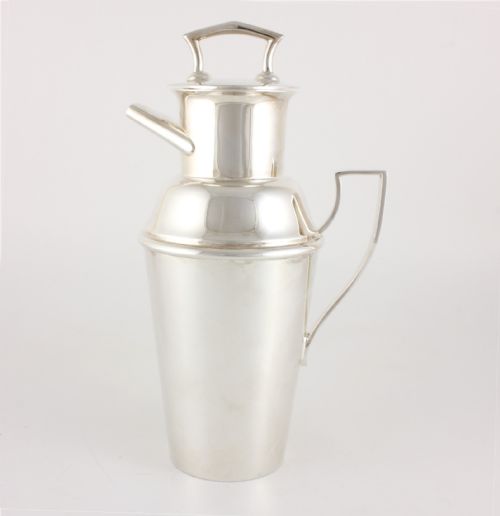
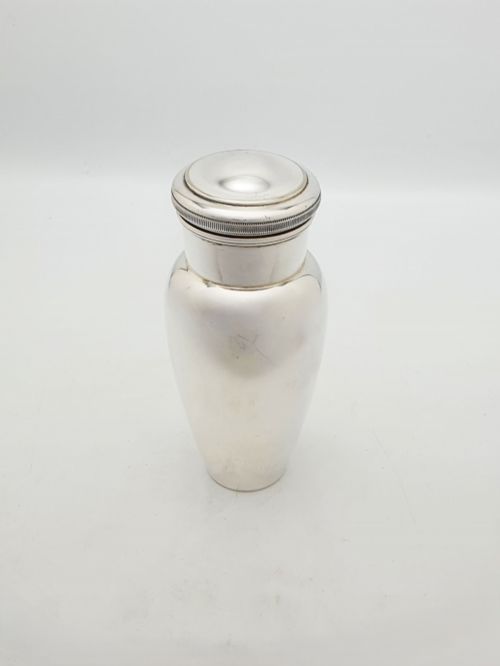
A vintage silver plated mixer is primarily encountered as a cocktail shaker from the interwar decades, predominantly hailing from the 1920s, 1930s, and 1940s. These pieces span Art Deco, Mid-Century Modern, and Italian Modernism styles, taking the form of upright cylinders, milk churns, and bullet shapes.
The selections on this page feature specialised barware, including cocktail shakers with integral lemon squeezers, ice breakers, and rotating recipe mechanisms. English, French, Italian, and German makers dominate the origin points, often utilising utilitarian metals alongside glass and Bakelite.
Materials and Technique
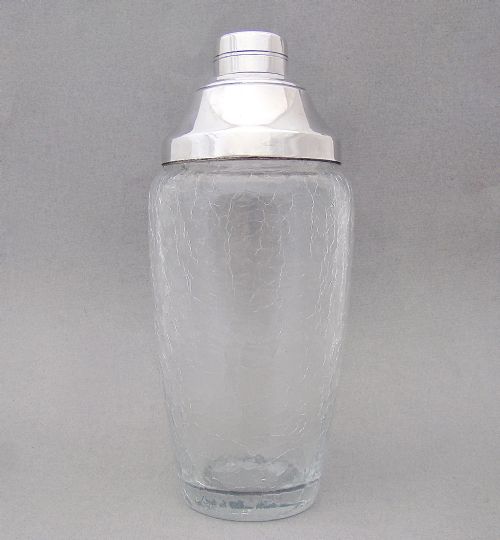
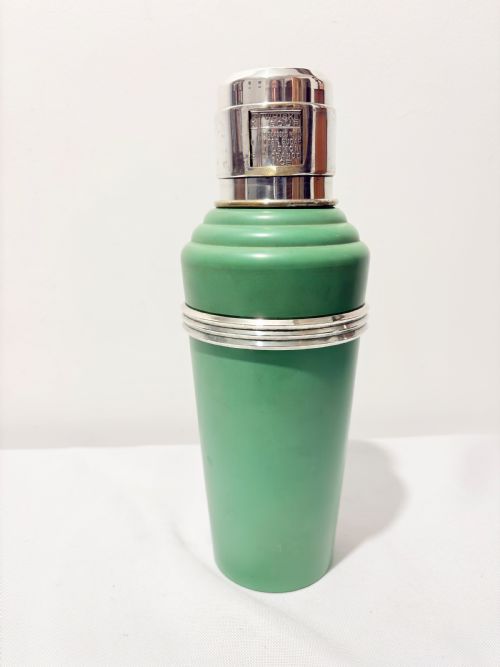
Makers shaped these vessels from base metals coated in silver plate or electroplated nickel silver, known as EPNS, sometimes pairing the metal with crackle glass, green Bakelite, brass, or cork components.
Surface decoration relied on mechanical precision, featuring engine-turned geometric patterns, engraved cocktail recipes, and structural elements like integral squeezers formed directly into the metal body.
Several shakers feature built-in rotating recipe bands, letting hosts spin the metal body to settle on a Manhattan or a Sidecar.
Quality and Distinction
Quality rests in the weight of the metal, the crispness of engine-turned engraving, and the precision fit of removable lids and internal strainers.
Attribution elevates a piece, with designated designs from noted workshops holding greater distinction than anonymous manufacturing.
Asprey & Co·Keith Murray·J. B. Chatterley & Sons·James Dixon & Sons·Lino Sabattini·Christofle·William Suckling·Angelletti·Hukin & Heath·C S Green & Co·Adie Brothers·Carl Deffner·William Hutton·Mappin & Webb
The Vintage Silver Plated Mixer Glossary
- EPNS
- Electroplated Nickel Silver. This designation indicates a base of nickel alloy coated with a layer of silver.
- Engine-turned
- A decorative technique involving precise geometric patterns cut into metal by a specialised lathe. It creates a textured, light-catching surface common on interwar barware.
- Bakelite
- An early synthetic phenol-formaldehyde plastic. It provides contrasting colour and heat resistance for handles and knobs on mid-century vessels.
- Crackleglass
- Glass blown and rapidly cooled to create an internal network of fine fractures while remaining smooth on the exterior. It offers a tactile contrast to polished silver plate.
Vintage Silver Plated Mixer: Frequently Asked Questions
How do I use a vintage cocktail shaker?
Remove the top cap to fill the main chamber with spirits, ice, and mixers, then secure the lid before shaking vigorously to chill and blend the contents.
Strain the liquid through the built-in barrier into glasses, ensuring ice remains contained within the vessel.
What is an integral lemon squeezer?
An integral lemon squeezer is a built-in reamer situated beneath the lid of the shaker, allowing users to juice citrus directly into the mixing chamber.
This feature streamlined cocktail preparation during the Art Deco period by combining multiple bar tools into a single vessel.
How do I clean silver plated barware?
Wash the silver plated surfaces gently with warm water and mild soap, avoiding abrasive pads that can wear away the thin silver layer over time.
Dry the metal thoroughly with a soft cloth to prevent water spots and tarnishing on the exterior.
How do I identify an Art Deco shaker?
Look for symmetrical geometric patterns, stepped details, and streamlined shapes like bullets or milk churns that reflect the design ethos of the 1920s and 1930s.
Materials such as engine-turned metal, crackle glass, and green Bakelite further point to this specific mid-century era.