







French Silver Shaker
These French silver shakers combine rigorous geometric styling with entertaining utility, bringing the unmistakable glamour of twentieth-century cocktail culture to any sideboard.
French Silver Shaker
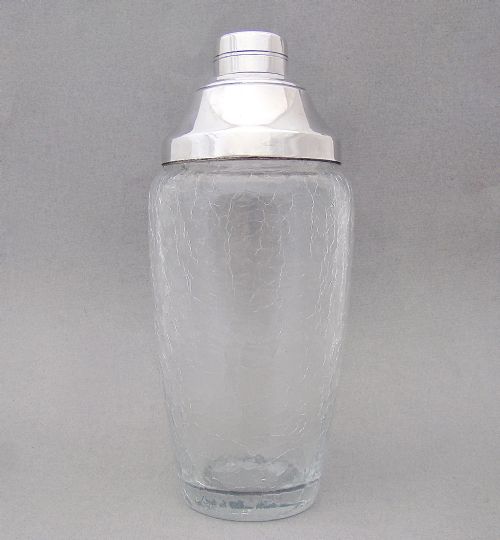
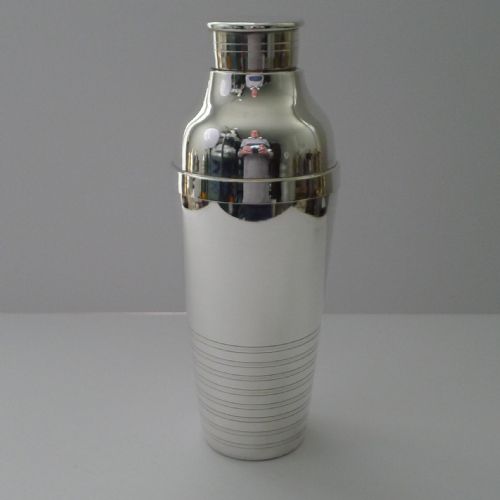
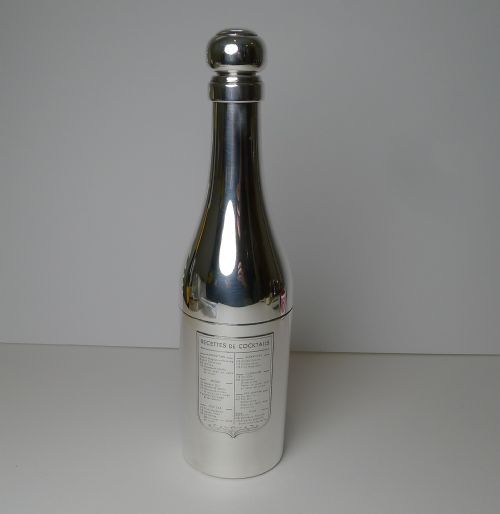
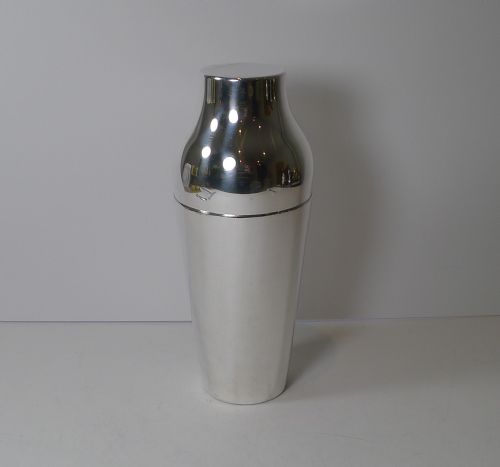
A French silver shaker is a barware vessel designed for mixing drinks, most frequently encountered in the bold geometric forms of the Art Deco period. These objects appear primarily as silver plated vessels, occasionally incorporating materials such as crackle glass or crystal alongside metal bodies.
The selection ranges from simple two-part mixers to comprehensive fitted cased sets including matching beakers, trays, and lemon reamers. Production spans from the 1920s through the 1960s, encompassing streamlined modernist designs alongside ornamental examples with floral decoration or stepped profiles.
What varies in quality
The distinction between standard production and top-tier pieces rests on the weight of the metal, the precision of the manufacturing, and the presence of documented Parisian makers. Maker attribution to established silversmiths elevates a piece significantly beyond unmarked commercial barware.
The completeness of associated sets, such as matching beakers, trays, and fitted presentation boxes, separates utilitarian vessels from comprehensive collector ensembles. Surface decoration, from engine-turned patterns to integrated lemon reamers, demonstrates greater artisanal effort.
The listings span the 1930s, 1940s, and 1960s, featuring silver plate, metal, crackle glass, satin, and velvet across Art Deco and modernist styles.
Maison Barra·St. Medard, Paris·Orfèvrerie Christofle, Paris·Roux-Marquiand·Brille, Paris·Mars·Lancel, Paris·Orbrille Paris
The French Silver Shaker Glossary
- Art Deco
- A design style prevalent during the 1920s and 1930s characterised by streamlined shapes, geometric symmetry, and stylised ornamentation. This aesthetic defines the majority of the barware found in this category.
- Silver Plate
- A manufacturing process where a thin layer of silver is bonded to a base metal core. This technique allowed silversmiths to produce durable, lustrous barware at a scale unattainable with solid silver.
- Engine Turned
- A mechanical decoration technique that cuts intricate geometric patterns into metal surfaces using a specialised lathe. This method provides both visual texture and a secure grip for the user.
- Crackle Glass
- Glassware intentionally subjected to thermal shock during manufacture to produce a fine network of internal fractures while remaining structurally sound. It appears combined with metal mounts in select cocktail shakers.
French Silver Shaker: Frequently Asked Questions
Who made these shakers?
Numerous prominent Parisian silversmiths and metalwork ateliers produced these pieces. Notable names include Christofle, St. Medard, Maison Barra, and Lancel.
Many pieces bear maker marks or signatures stamped directly into the metal base. These signatures assist in identifying the origin and workshop behind the design.
How do I date a shaker?
Dating relies heavily on stylistic markers, primarily the geometric and stepped profiles characteristic of Art Deco design from the 1920s and 1930s. Later examples transition into the cleaner lines associated with 1940s and 1960s modernist production.
Maker marks and stamped registry numbers can also provide specific chronological context. Comparing the form against documented catalogued examples helps narrow down the decade of manufacture.
Are these shakers still usable?
These vessels were engineered for practical bar use, featuring tight-fitting sections designed for shaking liquids. Many survive in sound structural condition suitable for modern cocktail preparation.
Careful hand washing preserves the silver-plated surfaces and any delicate glass components. Owners often display them as decorative barware when not actively in use.