





1930s French Cocktail Shaker
A 1930s French cocktail shaker brings genuine Art Deco style to the home bar, combining striking metalwork with the era's distinctive modernist design.
1930s French Cocktail Shaker
A 1930s French cocktail shaker is a barware essential shaped by the prevailing Art Deco aesthetic of the period. The selection on this page centres primarily on pieces from around 1930, alongside occasional examples from 1940.
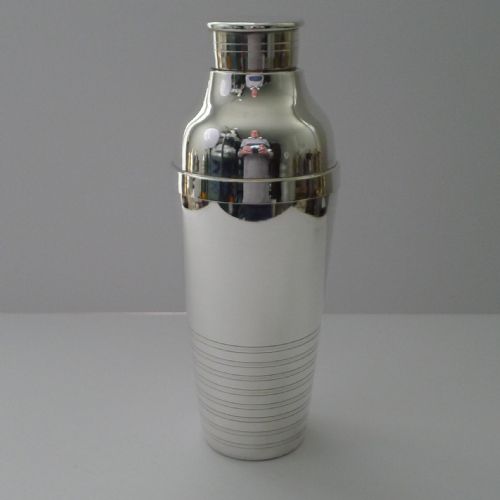
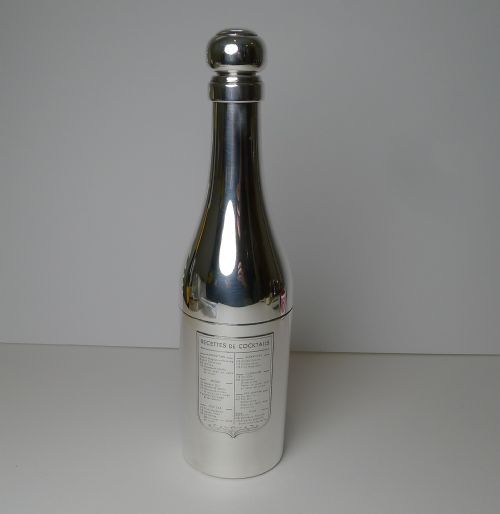
These items take various forms, including standard cocktail shakers, sets complete with beakers, champagne bottle recipe designs, and versions incorporating lemon reamers or stirring spoons. Many feature distinct architectural elements such as stepped profiles or engine-turned patterns.
Materials and Construction
Techniques such as engine-turning were applied directly to the metal exterior, producing precise, repeating patterns that catch the light. Fitted components like internal reamers and accompanying beaker sets demonstrate the functional integration characteristic of the era's manufacturing.
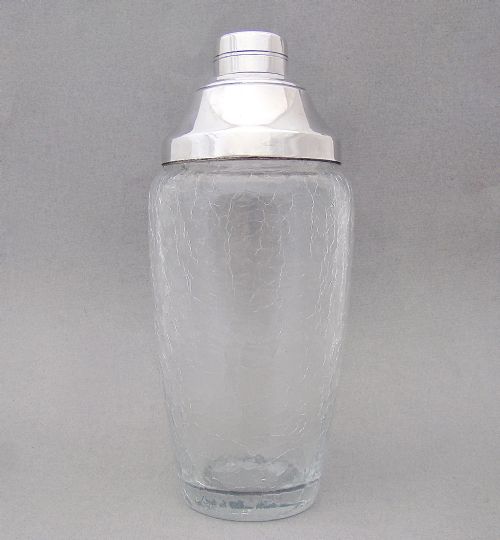
Recorded pieces span the 1930 to 1940 period, predominantly showcasing Art Deco design in silver plate, metal, and crackle glass.
Distinctions in Quality
Quality across these items rests in the clarity of the Art Deco design and the crispness of decorative execution, such as fine engine-turned texturing or clean stepped tiers. Pieces bearing identifiable maker attribution stand apart from unmarked examples.
The inclusion of original matching accessories, such as sets of six beakers or integrated lemon reamers, elevates the completeness and utility of an individual shaker. Preservation of the silver-plated surfaces and the integrity of crackle glass elements further define the finer specimens.
Maison Barra·St. Medard, Paris
The 1930s French Cocktail Shaker Glossary
- Art Deco
- A design style of the 1920s and 1930s characterised by streamlined forms, geometric patterns, and modern industrial materials. It dominates the aesthetic of these barware pieces.
- Silver Plate
- A base metal coated with a thin layer of silver, providing the polished appearance of solid silver. This was the standard finish for high-end hospitality wares of the period.
- Engine-Turned
- A decorative technique involving precise geometric engraving cut into metal by a specialised machine. It creates intricate, repeating linear patterns across the surface.
- Crackle Glass
- Glass intentionally subjected to thermal shock during production to create a network of fine internal cracks. This material offers textural contrast against smooth metal components.
- Lemon Reamer
- A small conical citrus juicer, sometimes integrated into barware sets. It allows fresh juice to be extracted directly during the cocktail-making process.
1930s French Cocktail Shaker: Frequently Asked Questions
What materials were used?
The pieces recorded here utilise silver plate and general metal, with certain examples incorporating crackle glass for visual and textural contrast.
These materials reflect standard barware production methods of the period, chosen for durability and a polished finish.
Were these shakers sold in sets?
Some listings include matching sets consisting of a cocktail shaker alongside six coordinating beakers.
Other examples are accompanied by functional accessories like lemon reamers or stirring spoons.
What dates are typical?
The majority of pieces date from around 1930, capturing the height of the Art Deco movement in France.
Occasional examples extend into the 1940 period while retaining the same foundational design vocabulary.