
Vintage Silver Plated Barware
Vintage silver plated barware brings hospitality and craftsmanship together, offering functional items for drinks preparation that date from the Victorian era to the mid-twentieth century.
Vintage Silver Plated Barware
Vintage silver plated barware comprises a range of items designed for serving and preparing drinks, spanning cocktail shakers, ice buckets, wine coolers, and serving trays. These functional objects reflect social habits from the nineteenth century through the mid-twentieth century.
The most common examples on this page date from the Art Deco period of the 1920s and 1930s, alongside Victorian and Edwardian serving pieces. Forms vary from bachelor cocktail shakers to large champagne coolers and spirit barrels.
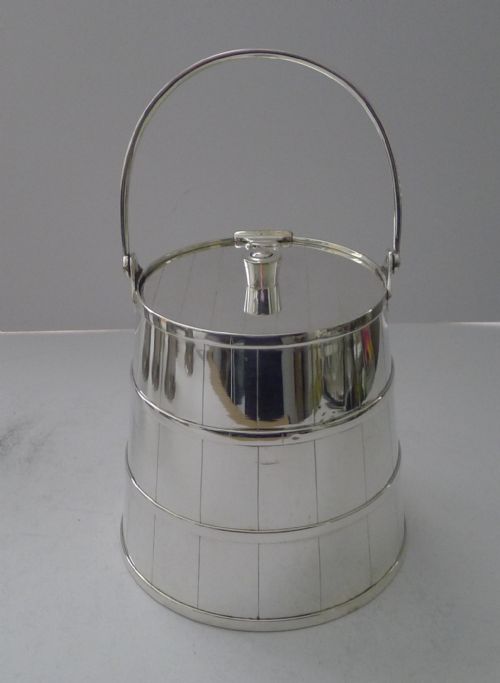
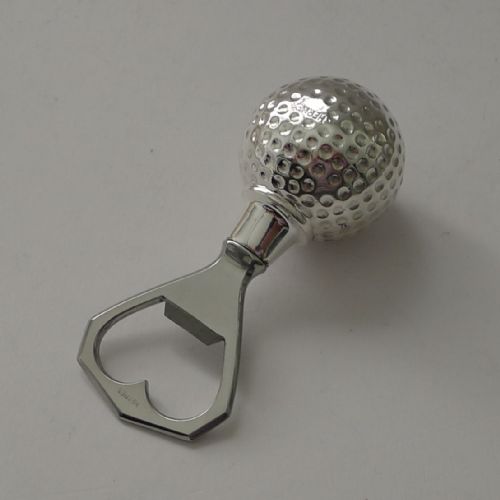
Makers and design houses from Britain, France, and Italy produced these pieces, often combining metalwork with glass, crystal, or ceramics. Buyers encounter everything from utilitarian bar tools to novelty ice buckets shaped like milk churns or barrels.
Materials and construction methods
Makers utilised silver plate over a base metal or nickel silver, applying a thin layer of silver to a sturdier core. Sheffield plating and electroplating methods provided the shiny exterior typical of these serving pieces.
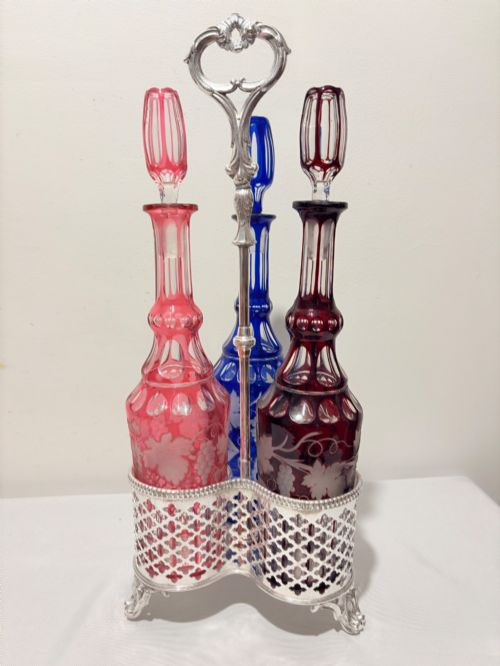
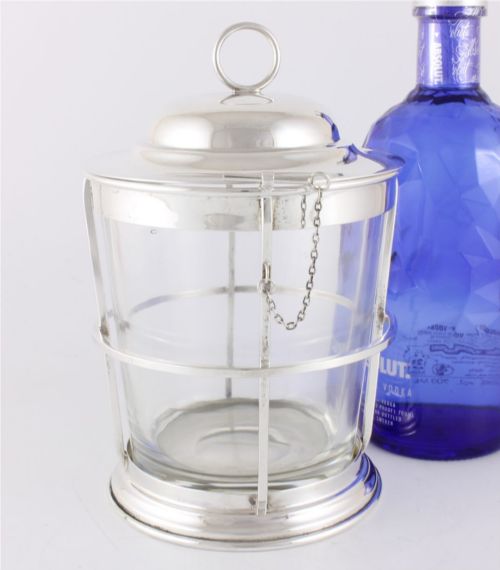
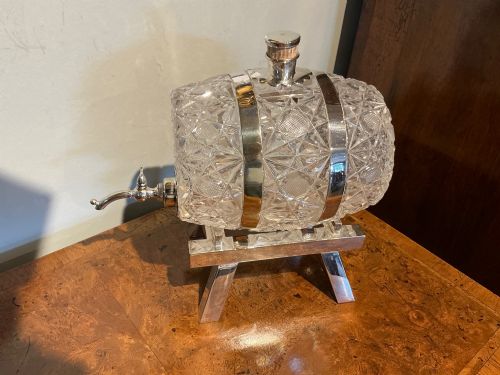
Cut glass, crackle glass, and cut crystal frequently combined with the silver-plated mounts, particularly in ice buckets, claret jugs, and decanter sets. Cork, bamboo, and green Bakelite appear as accents on handles and openers.
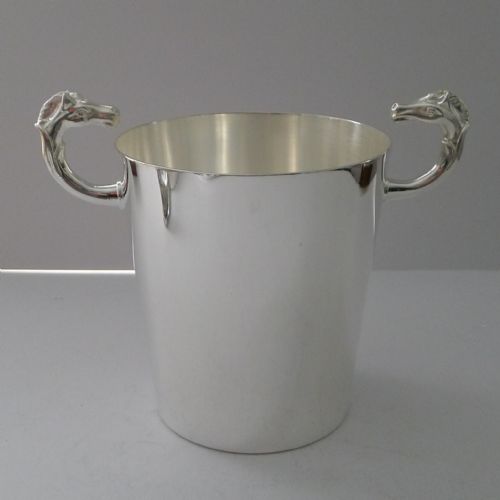
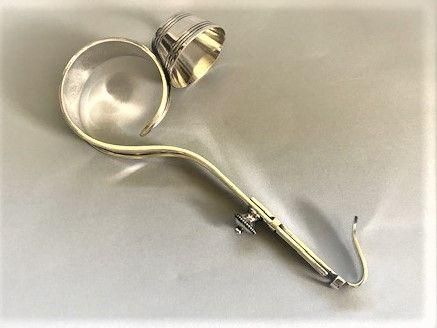
Construction involved soldering mounts to glass bodies, turning wooden bases for tantalus sets, and casting metal components for handles, rims, and novelty details like bird claw tongs or horse head ice buckets.
Listings span the Victorian era, Edwardian period, and Art Deco movement, featuring materials such as nickel silver, cut crystal, and green Bakelite.
Distinctions in quality and execution
Quality rests in the weight of the metal and the precision of the plating, where heavier base metals and thicker silver layers endure decades of handling without wearing down to the base metal. Finer pieces show crisp casting in details such as handles, rims, and novelty motifs.
The integration of materials dictates the overall standard, notably in how securely glass liners fit within silver-plated mounts or how smoothly mechanical elements like ice breakers and locking mechanisms operate.
Mappin & Webb·Hutton Sheffield·Hermes Paris·James Dixon & Sons·Christofle·Hukin & Heath·Brook & Son Edinburgh
The Vintage Silver Plated Barware Glossary
- Silver plate
- A layer of pure silver bonded to a base metal such as copper, nickel silver, or brass. This technique offered the visual appeal of solid silver at a lower cost.
- Tantalus
- A locking wooden frame holding decanters that displays the contents while preventing access without a key. They usually feature silver-plated handles and lock plates.
- Claret jug
- A vessel for serving red wine, typically featuring a glass or crystal body with a silver-plated handle, collar, and hinged spout.
- Old Sheffield plate
- An early method of fusing a sheet of silver to a copper core before shaping. It results in a rich material often found on heavier nineteenth-century items.
- Bachelor shaker
- A smaller cocktail shaker designed for single servings or intimate gatherings. These compact vessels were popular during the Art Deco era.
Vintage Silver Plated Barware: Frequently Asked Questions
What is a silver plated cocktail shaker?
A silver plated cocktail shaker is a metal vessel used for mixing drinks by shaking them with ice. These pieces often feature built-in strainers and removable caps.
Most examples date from the Art Deco period and include geometric shapes or novelty designs like milk churns.
How do I clean vintage barware?
Cleaning requires warm water, mild soap, and a soft cloth to protect the silver plating from excessive wear. Avoid abrasive dips that strip the remaining silver layer.
Dry the metal immediately after washing to prevent water spots and tarnishing.
What is an ice bucket liner?
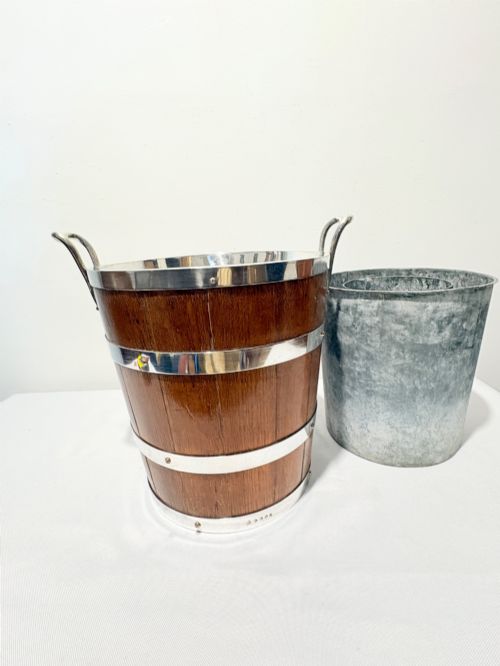
An ice bucket liner is a removable glass or crystal insert placed inside the silver-plated outer pail. This protects the metal from prolonged contact with melting ice and moisture.
Liners can be lifted out for easy emptying and cleaning after use.
How do I identify Art Deco barware?
Art Deco barware typically exhibits clean geometric lines, streamlined shapes, and stylized motifs popular during the 1920s and 1930s. Materials like green Bakelite and crackle glass often accompany the silver plate.
Manufacturers from this era embraced modern industrial aesthetics in their design choices.