







Vintage French Cocktail Shaker
These vintage french cocktail shaker examples bring striking Art Deco and Modernist style to any home bar.
Vintage French Cocktail Shaker
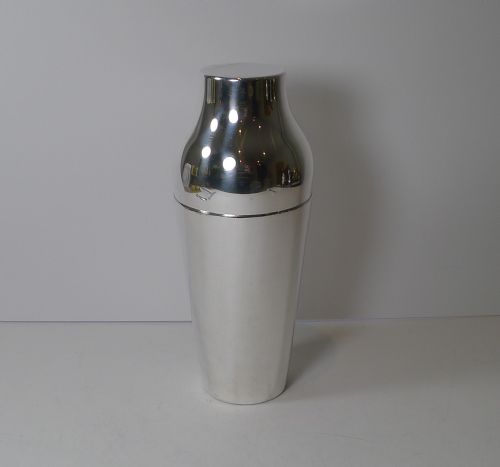
A vintage french cocktail shaker brings distinctive barware history to the table, emerging mostly from the Art Deco and Modernist periods spanning 1930 to 1960. These vessels take various forms, including standard cocktail shakers, champagne bottle shapes, and complete sets that include matching beakers.
The pieces you meet most often on this page date from around 1930 and 1940, reflecting the height of French silver plating and metalwork design. Certain examples incorporate functional additions like built-in lemon reamers or come housed in fitted presentation cases.
Makers working in Paris produced many of these pieces, signing their work or stamping the metal surfaces to denote origin. Collectors find both single two-part vessels and elaborate sets accompanied by half a dozen cups.
Materials and construction
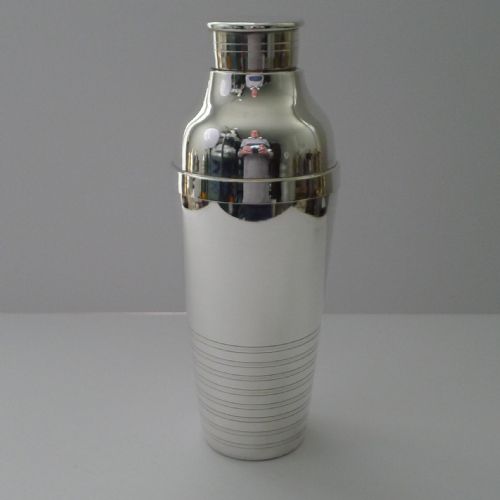
Metal forms the primary body of these vessels, heavily coated in silver plate to create a polished reflective finish. Craftsmen utilised engine-turned decoration to score geometric patterns directly into the metallic surface.
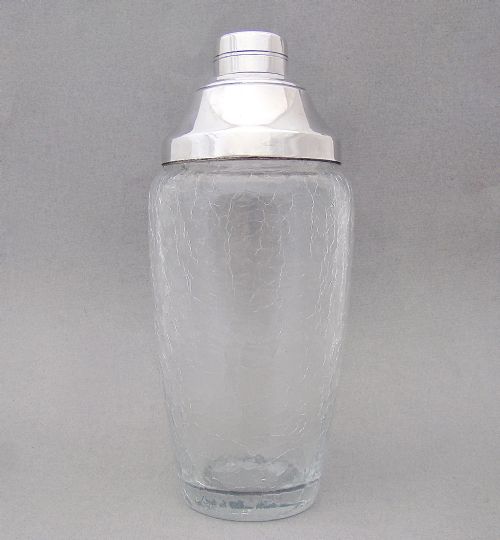
Alternative designs incorporate crackle glass alongside silver-plated components to provide textural contrast. Interior components rely on tight-fitting metal lids to seal liquids securely during use.
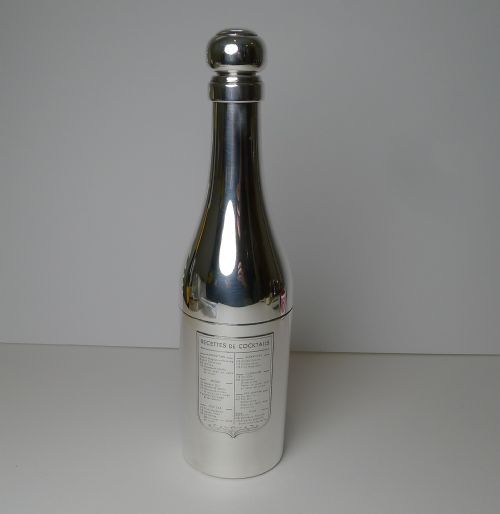
Some shakers take the exact silhouette of a champagne bottle, proving that French hosts loved a clever disguise long before cocktail hour began.
Evaluating quality and design
The distinction between standard vessels and superior examples often rests on the presence of maker signatures and specialised attachments. Pieces featuring integrated lemon reamers or complete matching beaker sets represent higher tiers of production.
Design complexity also sets items apart, where plain cylinders give way to novelty bottle shapes or intricate engine-turned surfacing. The reputation of the Parisian atelier responsible for the plating ultimately dictates the standing of individual pieces.
Maison Barra·St. Medard Paris·Orfèvrerie Christofle·Lancel Paris·Apollo Paris·Orfèvrerie Phenix
The Vintage French Cocktail Shaker Glossary
- Art Deco
- A design style characterised by sleek geometric lines and modern materials popular during the 1930s. It heavily influences the shape and ornamentation of these barware pieces.
- Silver Plate
- A thin layer of silver applied to a base metal core. This technique provided the lustrous finish seen across the majority of French barware from this era.
- Engine Turned
- A mechanical decoration method that cuts intricate geometric patterns into metal. It creates a textured surface that catches the light during use.
- Modernist
- A later twentieth-century design movement focused on minimalism and functional form. Pieces from this period strip away ornate details in favour of clean architectural lines.
- Reamer
- A conical tool used for extracting juice from citrus fruits. Certain barware designs incorporate this directly into the upper section of the vessel.
Vintage French Cocktail Shaker: Frequently Asked Questions
What materials are used?
These vessels consist primarily of metal finished with a heavy silver plate. Certain designs combine this metallic body with crackle glass.
Craftsmen often applied decorative techniques such as engine turning to texture the outer surface.
How do I date them?
Most examples originate from the 1930 and 1940 decades during the height of Art Deco design. Later pieces reflect the Modernist style associated with the 1960 period.
Maker signatures and stamped hallmarks on the base metal often help confirm the exact era of production.
Are sets common?
Several listings include matching beakers alongside the main vessel. These complete groups frequently arrive housed in original fitted presentation cases.
Individual shakers without accompanying cups appear with equal frequency across the collection.
Who made these pieces?
Prominent Parisian silversmiths and workshops produced much of this barware. Names like Christofle, Lancel, and St. Medard frequently appear on signed pieces.
Other examples bear signatures from Apollo or Maison Barra.