

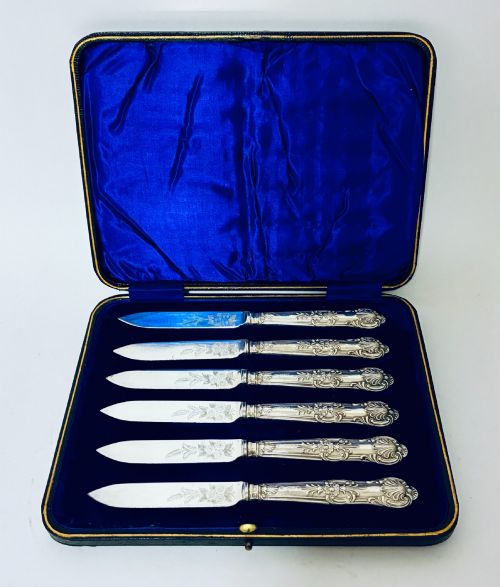


Vintage Silver Knife
These vintage silver knife selections bring tactile weight to the desk and table, crafted across eras from Victorian parlours to the mid-century modern period.
Vintage Silver Knife
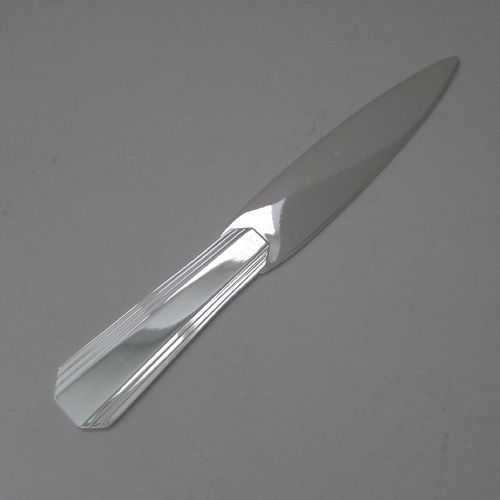
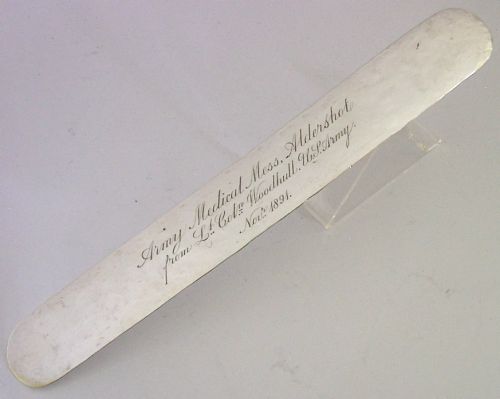
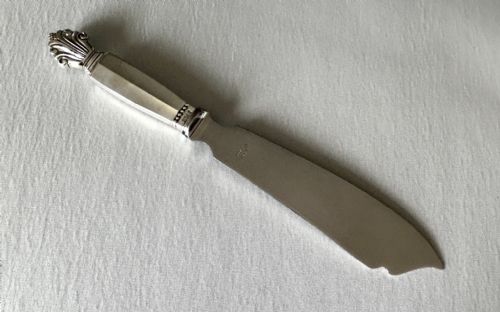
A vintage silver knife search covers diverse forms ranging from fruit and butter cutlery to letter openers and desk accessories. Buyers encounter pieces spanning the Victorian and Edwardian eras, through George V and George VI reigns, into Art Deco and mid-century modern designs.
The most common examples on this page are butter knives, fruit knives, and desk stationery openers. These items originate primarily from British workshops, though items from broader international silver traditions also appear.
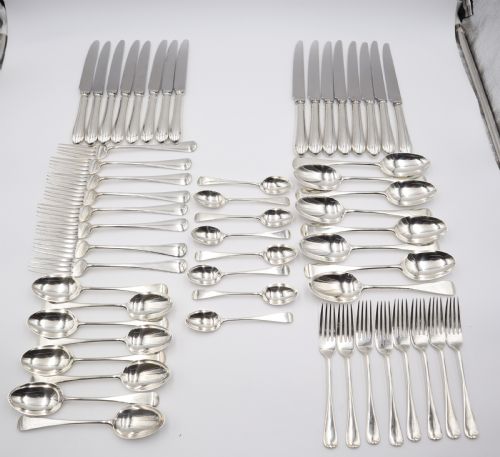
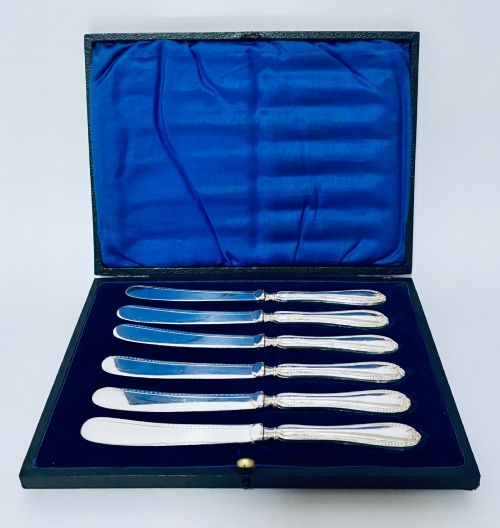
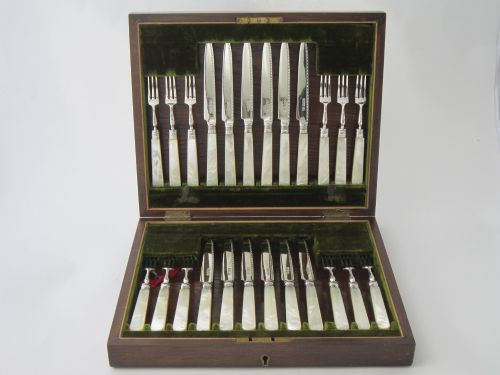
Objects often arrive as individual pieces or in matched sets, occasionally housed in fitted presentation cases with velvet or silk linings.
Materials and construction methods
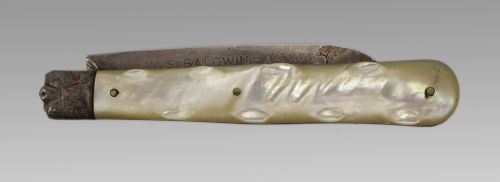
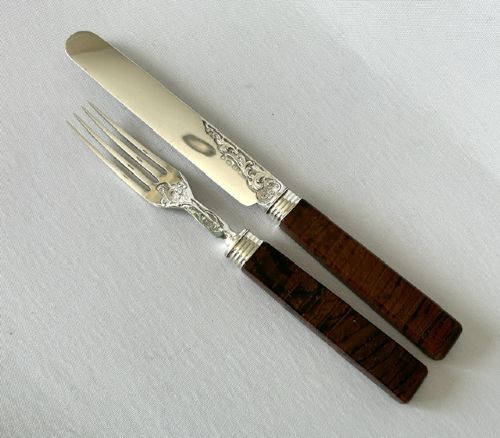
Makers utilised sterling silver and silver plate for mounts and blades, pairing them with organic handles of mother-of-pearl, tortoiseshell, agate, and antler horn. Steel and stainless steel frequently form the functional cutting edges on butter and fruit implements.
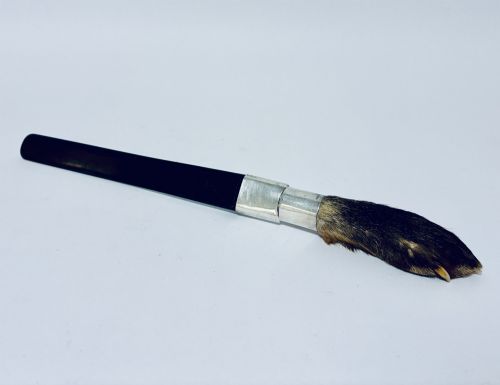
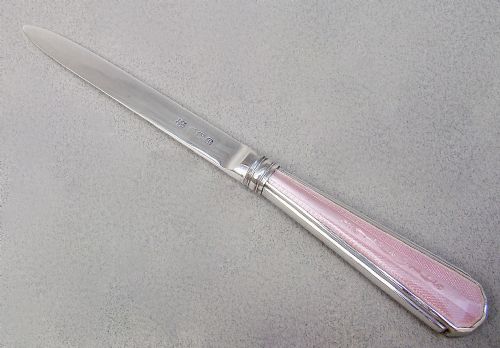
Construction techniques include cast silver blades, hand-engraving, and applied ornamentation such as guilloche enamel or figural motifs. Desk accessories incorporate mixed media like ebonised wood and silk alongside traditional metalworking.
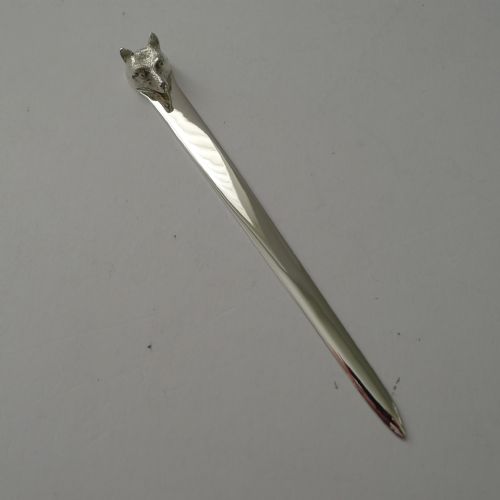
Several desk accessories feature whimsical animal forms, including an owl paper knife and a novelty fox letter opener.
Assessing quality in silver cutlery
Quality rests on the crispness of cast or engraved ornamentation and the integrity of the join between handle and blade. Substantial gauge metal and well-balanced weight distinguish superior examples from lighter utilitarian pieces.
The condition of organic handle materials, such as undamaged mother-of-pearl or stable tortoiseshell, elevates a piece. Maker marks and clear hallmarking denoting specific towns and assay years provide definitive context for higher-tier items.
The Barker Brothers·Asprey·Georg Jensen·Tiffany·The Goldsmiths & Silversmiths·Vale & John·Creswick
The Vintage Silver Knife Glossary
- Sterling silver
- A standard alloy consisting of a high percentage of pure silver combined with other metals to ensure durability for cutlery use.
- Silver plate
- A base metal substrate coated with a thin layer of silver through electroplating or older Sheffield plating methods.
- Assay mark
- An official stamp applied by an office to verify the purity of the precious metal.
- Guilloche
- A decorative technique where a precise, intricate pattern is mechanically engraved into an underlying metal surface beneath translucent enamel.
- Page turner
- A desk accessory with a flat, knife-like blade designed for separating uncut pages in bound books.
Vintage Silver Knife: Frequently Asked Questions
How do I clean tarnished silver handles?
Use a soft microfiber cloth specifically formulated for precious metals to gently remove tarnish without abrading the surface.
Avoid harsh chemical dips, particularly if the handle incorporates organic materials like mother-of-pearl, tortoiseshell, or inlaid enamel.
Were letter openers used as dinner knives?
Letter openers and paper knives feature longer, flatter blades explicitly proportioned for slicing through paper envelopes and uncut book bindings.
Using them for dining is impractical due to their blade geometry and the presence of delicate materials unsuited to food acids.
How can I date an unmarked silver knife?
Stylistic indicators such as Victorian engraving, Edwardian proportions, or Art Deco geometric lines provide initial chronological placement.
Material choices like celluloid or specific handle fasteners offer further clues when official hallmarking is absent.
Can I use antique butter knives daily?
Many silver butter and fruit knives remain robust enough for regular table use if hand-washed promptly after meals.
Avoid putting vintage cutlery through automated dishwashing cycles, as high heat and harsh detergents damage organic handles and plated surfaces.