
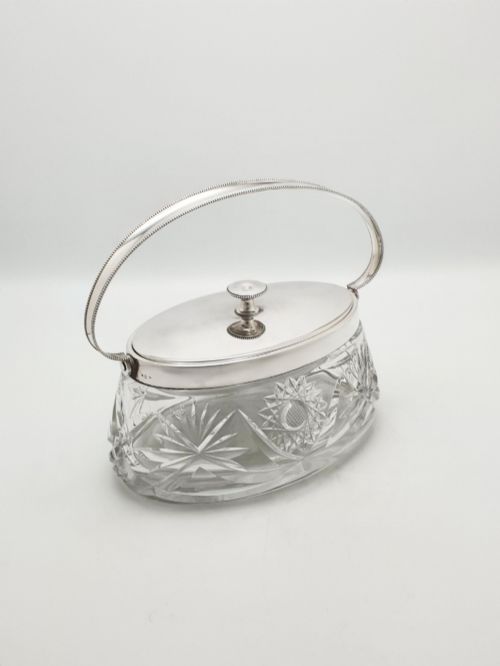


Vintage Silver Glass Container
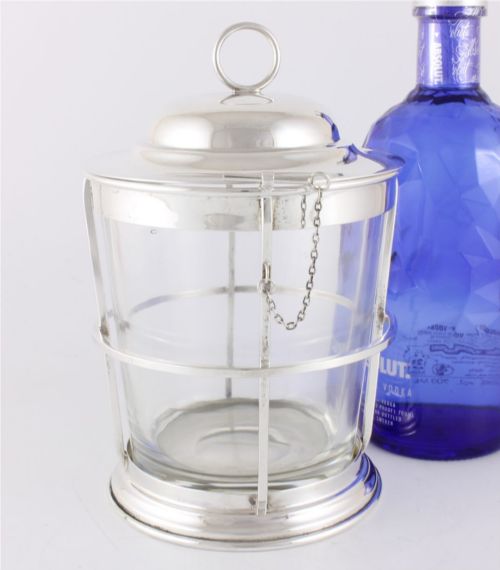
A vintage silver glass container brings together bright metal and heavy glass to hold everything from biscuits to perfume on a table.
Vintage Silver Glass Container
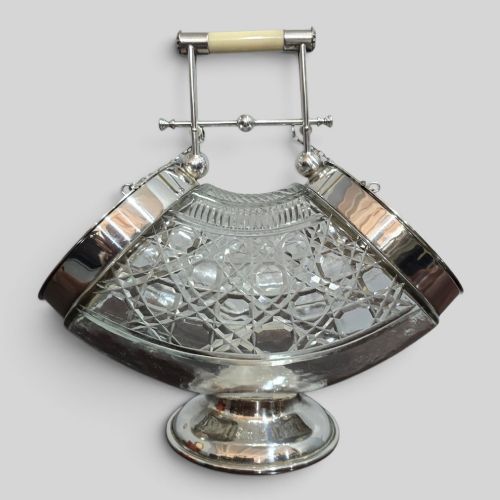
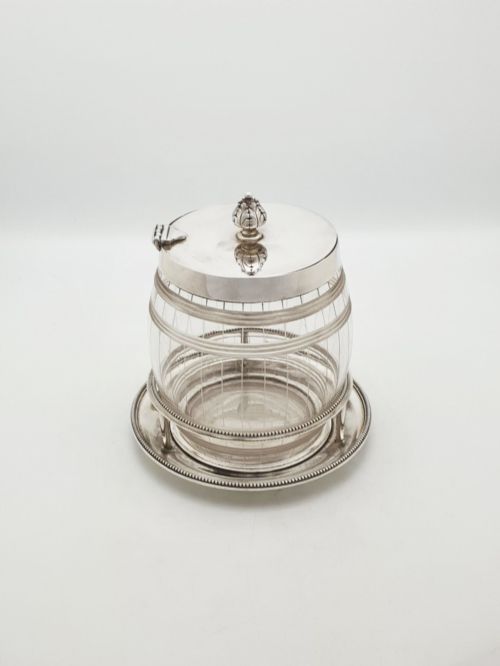
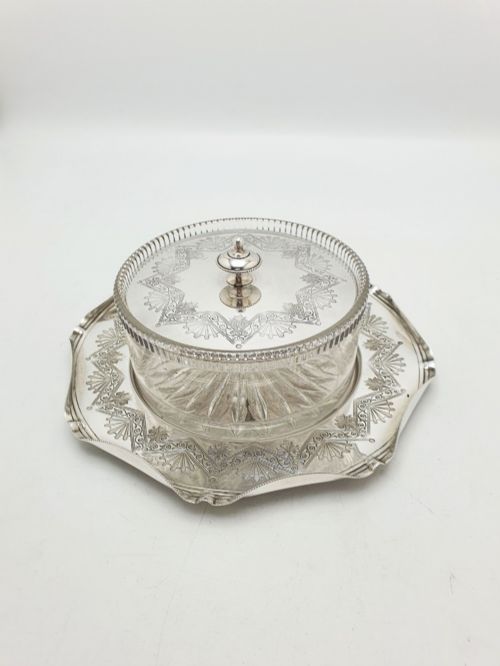
When you search for a vintage silver glass container, you are looking at functional vessels formed from glass and mounted with sterling silver or silver plate. The selection on this page leans heavily towards biscuit barrels, vanity jars, and preserve pots spanning from the Victorian era through the mid-twentieth century.
You will encounter pieces shaped as lidded boxes, handled buckets, and cruet pots reflecting Edwardian, Art Deco, and mid-century design. The glass bodies range from clear cut crystal and cranberry glass to faceted amethyst and overlaid surfaces paired with silver mounts.
These items served domestic roles in dining rooms and dressing rooms alike, holding biscuits, tea, butter, cosmetics, and ice. The combination of reflective metal and heavy glass gives each piece a distinct weight and presence.
How they were made
Makers formed the glass components through heavy cutting, moulding, and facet polishing to create deep patterns like hobnails or smooth panels that catch the light. Crystal and coloured glass provided the foundational body for these vessels.
Silver mounts, collars, and lids were cast, spun, or stamped from sterling silver or silver plate, then fitted directly to the glass contours. Many pieces incorporated hinged lids, swing handles, and detailed finials secured to the glass rims.
Some items feature additional decorative techniques such as guilloche enamel applied over engine-turned silver or tortoiseshell insets set into the lids.
The listings on this site span production from the eighteen-sixties through the nineteen-sixties, covering Victorian, Edwardian, Art Deco, and mid-century design periods.
What varies in quality
The weight and depth of the glass cutting set vessels apart, where thicker crystal with crisp, hand-polished facets demonstrates higher production standards. The clarity of the glass and the richness of coloured variants like cranberry or amethyst also shift the visual impact.
The substance of the metal mount dictates the standard of the piece, with solid sterling silver and heavy silver plate over robust base metals holding their form better than thin plating. Well-engineered hinges, tight lid closures, and securely seated collars show superior workshop execution.
The distinction between standard commercial output and top-tier manufacture often rests on the reputation of the silversmith and the integration between the metal collar and the glass body.
PH Vogel·Elkington·WMF·Hukin and Heath·Mappin and Webb·Hasset and Harper·Walker and Hall·James Dixon and Sons
The Vintage Silver Glass Container Glossary
- Biscuit Barrel
- A covered ceramic or glass vessel designed to keep dry biscuits fresh on the dining table. They frequently feature swing handles and silver-plated or sterling mounts.
- Guilloche Enamel
- A decorative technique where translucent enamel is layered over precisely engraved or engine-turned metal. It creates a repeating geometric pattern beneath the glassy coloured surface.
- Hobnail Cut
- A raised, sharp-pointed diamond pattern cut into the surface of glassware. This technique maximises light refraction and adds tactile grip.
- Silver Plate
- A base metal such as copper or nickel silver coated with a thin layer of pure silver. It provided an accessible alternative to solid sterling silver during the nineteenth and twentieth centuries.
- Vanity Jar
- A small lidded container used on a dressing table for cosmetics, pins, or trinkets. The glass bases are typically topped with ornate silver or tortoiseshell lids.
Vintage Silver Glass Container: Frequently Asked Questions
What were glass and silver containers used for?
These vessels served specific domestic tasks in the Victorian and Edwardian home, acting as table servers for biscuits, butter, jam, and ice. Dressing table versions held perfumes, powders, stamps, and small trinkets.
Their dual construction kept perishable items contained while presenting an ornamental face to guests in the dining room or parlour.
How do I clean a silver glass container?
The best approach is to wash the glass body separately in warm soapy water, taking care to keep moisture away from any secured silver collars or interior linings. Use a soft cloth for the glass and a gentle silver polish for the metal parts.
Avoid submerging pieces that feature cemented mounts or tortoiseshell insets, as water can weaken the adhesives used by the original makers.
How do I date a silver mounted glass piece?
British pieces in metal mounts often carry hallmarks stamped directly onto the silver, including date letters, maker marks, and assay office symbols. These stamps allow you to trace the exact year of manufacture.
When hallmarks are absent on silver plate, the style of the glass cutting, the shape of the handle, and the overall design period point towards an approximate decade.
Can I use these vintage items daily?
Most of these containers remain sturdy enough for regular domestic use, whether serving ice at a gathering or holding small items on a desk. The thick glass and metal mounts were built for practical service.
Care should be taken with delicate elements like enamel lids or thin glass liners to prevent accidental chips or surface wear during handling.