



Vintage Silver Dining Utensils
These vintage silver dining utensils are tactile relics of formal meals, offering a tangible link to past dining traditions.
Vintage Silver Dining Utensils
When buyers search for vintage silver dining utensils, they encounter a specialised collection of serving implements and cutlery designed for specific foods. These pieces span from the Georgian era through to the mid-twentieth century, capturing shifts in domestic dining habits over several hundred years.
Origins range across periods such as Victorian, Edwardian, and the mid-century modern era, reflecting distinct aesthetic movements in British silver manufacturing. Buyers frequently find both plain utilitarian designs and elaborately pierced or cast serving pieces suited to formal tables.
How they were made
Silversmiths utilised sterling silver and base metals with silver plating, shaping the metal through casting, hammering, and piercing techniques. Serving pieces often combine solid silver working ends with structural reinforcement to handle the rigours of dining.
Handles and fittings frequently incorporate specialised materials like cut crystal, velvet, leather, and satin, particularly in fitted boxes and presentation cases. Makers employed detailed chasing and piercing to decorate grape scissors, servers, and tongs with ornate motifs.
Listings feature sterling silver and silver plate across the Victorian, Edwardian, and mid-century modern styles.
What varies in quality
Quality in these dining implements rests upon the weight of the metal, the crispness of any cast or pierced decoration, and the integrity of the maker's marks. Heavier gauge sterling silver provides better balance and durability in the hand than lighter plated alternatives.
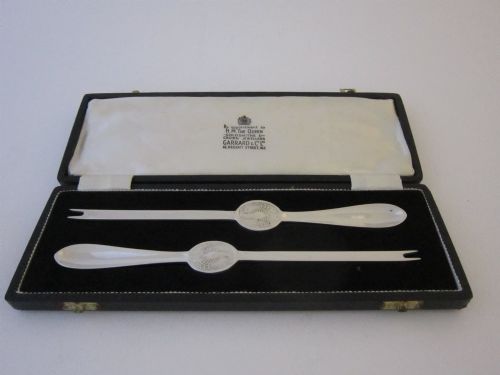
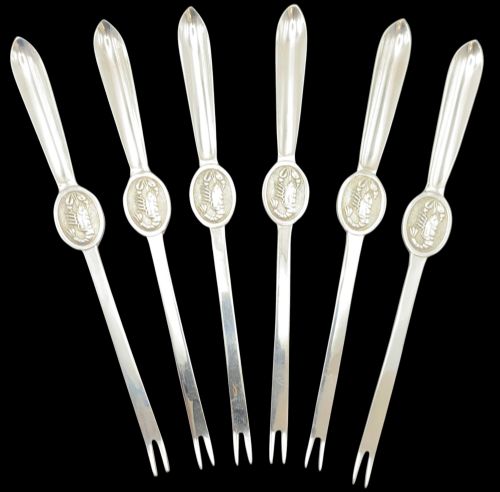
The precision of the mechanical action in articulated pieces, such as grape shears and lobster crackers, distinguishes superior examples from standard production items. Preserved surface detail and well-defined hallmarks indicate a higher standard of original craftsmanship.
Garrard·Jonathan Hayne
The Vintage Silver Dining Utensils Glossary
- Sterling silver
- An alloy containing a high proportion of pure silver combined with other metals to increase hardness. This standard is typically indicated by specific hallmarks on British pieces.
- Silver plate
- A base metal substrate coated with a thin layer of pure silver through electroplating or older manufacturing methods. This technique allowed for decorative tableware at a lower production cost.
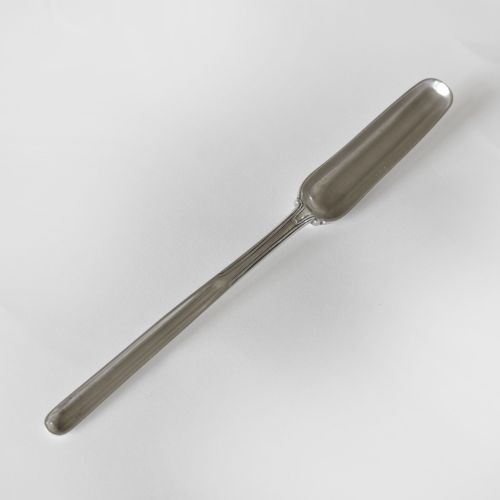
- Marrow scoop
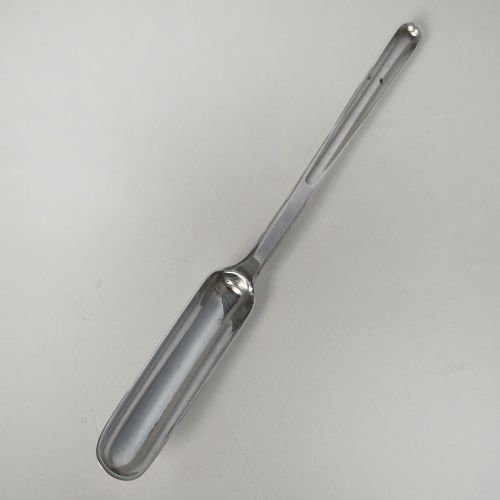
- A narrow, elongated utensil with shallow troughs at each end, designed for extracting marrow from bones. These pieces date predominantly from earlier periods when marrow was a culinary staple.
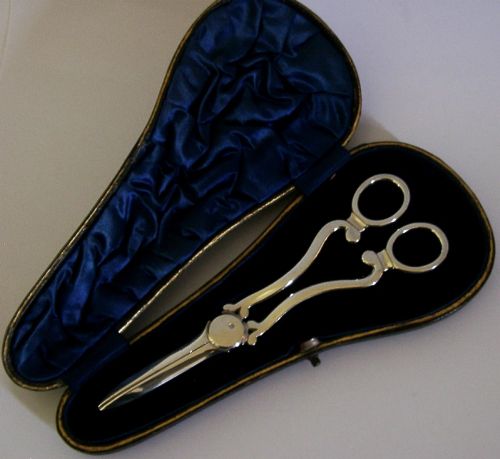
- Grape shears
- Specialised scissors used for cutting small bunches of fruit at the dining table without crushing the grapes. They often feature vine or leaf ornamentation cast into the handles.
- Fish servers
- A matched pair consisting of a large flat knife and a fork, utilised for serving fish courses. The blades are frequently decorated with engraved or pierced designs depicting aquatic themes.
Vintage Silver Dining Utensils: Frequently Asked Questions
What were marrow scoops used for?
Marrow scoops were utilised at formal dinners to extract bone marrow from roasted joints. The double-ended design provided different bowl sizes for various bone dimensions.
Over time, their culinary role diminished, and they became collectible curiosities prized for their slender forms and historical marks.
How do I identify sterling silver?
Sterling silver items bear official hallmarks stamped into the metal by an assay office. These marks typically indicate the standard of silver, the maker, and the year of manufacture.
Silver-plated pieces use different stamps, such as EPNS, which denotes electroplated nickel silver rather than solid metal.
Are grape shears still practical?
Grape shears remain fully functional for serving fresh fruit on a cheese board or dining table. Their precise blades allow for clean cuts through stems without damaging the fruit.
Many collectors also display them alongside other serving silver due to their decorative cast handles.
What is the difference between servers and cutlery?
Cutlery refers to individual eating implements used by each guest at the table, such as forks, knives, and spoons. Servers are larger, dedicated utensils meant for transferring food from a communal dish to a plate.
Fish servers and salad sets fall into the latter category, designed specifically for hosting larger gatherings.