



Vintage Silver Cocktail Picks
Vintage silver cocktail picks bring undeniable flair to a home bar, offering the geometric lines and playful novelty of the interwar years.
Vintage Silver Cocktail Picks
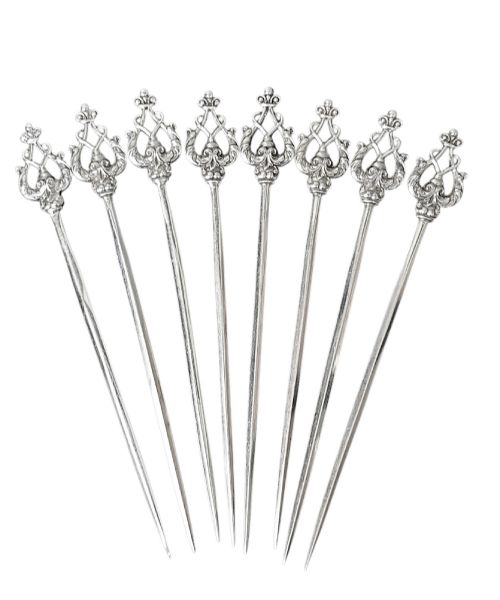
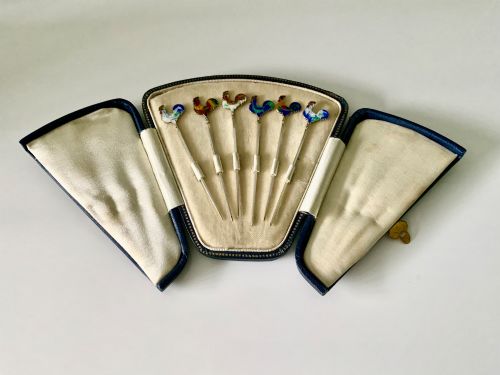
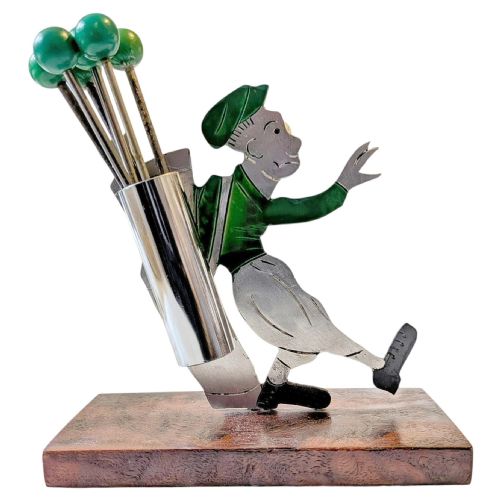
Vintage silver cocktail picks are miniature utensils designed for spearing olives, cherries, and garnishes, originating primarily from the Art Deco period of the 1920s, 1930s, and 1940s. These barware accessories span multiple forms, including boxed sets of six solid sterling silver sticks, novelty figural designs featuring comical golfers or cherry men, and combination sets paired with cut glass holders.
The versions most commonly met on this page date from the 1920s and 1930s, showcasing the characteristic geometric and figural aesthetics of Art Deco design. Makers often incorporated colourful detailing alongside precious metals, reflecting the energetic cocktail culture of the era.
Beyond standard straight pins, the category encompasses broader barware items such as ice tongs and ice picks styled with bird claw motifs. Collectors encounter these pieces both as individual items and complete sets housed in original presentation boxes.
Materials and construction
Silversmiths constructed these cocktail accessories using solid sterling silver, silver plate, and chrome-plated metal, frequently applying brightly coloured enamel to terminal ends to create striking visual contrast. These metallic elements were shaped through stamping, casting, and hand-finishing, utilising traditional silversmithing techniques common to British and French workshops.
Manufacturers also integrated alternative materials such as wood and early plastics like Bakelite into handles and companion bar sets, particularly during the 1930s and 1940s. Cut glass was utilised for accompanying holders and bases, adding weight and clarity to complete the presentation sets.
Vintage Silver Cocktail Picks Retail Price Guide 2026
Typical asking prices for vintage silver cocktail picks among the pieces listed under this phrase on Sellingantiques today, from the lower quarter to the upper quarter. They describe what is for sale here now, not the wider market.
Sudre offered interwar drinkers the unusual luxury of spearing their olives with a comical golfer complete with a tiny caddy.
Distinctions in quality
The standard of execution separates everyday utility items from masterworks of the period, particularly visible in the crispness of cast figural details such as novelty golfers or bird claws. Pieces bearing clear hallmarks and attribution to known makers command greater interest due to documented provenance.
The integrity of applied enamel and the survival of matching original boxes significantly influence the character of surviving sets. Complete matched sets housed within their fitted receptacles represent a higher tier of preservation compared to assembled groups or solitary survivors.
Sudre
The Vintage Silver Cocktail Picks Glossary
- Art Deco
- A design style spanning the 1920s and 1930s characterised by sleek geometric shapes, stylised motifs, and modern industrial materials. It dominates the aesthetic of interwar barware.
- Sterling silver
- A silver alloy containing 92.5 percent pure silver by mass, frequently stamped with date letters and assay office marks. It provides durability alongside a bright metallic lustre.
- Bakelite
- An early thermosetting plastic introduced in the early twentieth century, valued for its rich colour and smooth texture. It appears frequently on handles and bases from the 1930s and 1940s.
- Silver plate
- A base metal coated with a thin layer of pure silver, offering the visual appeal of solid silver at a different production cost. It was widely utilised for mid-market barware.
- Hallmark
- An official stamp applied to precious metals indicating purity, maker, and assay office. These marks provide definitive evidence of date and origin for British silver.
Vintage Silver Cocktail Picks: Frequently Asked Questions
How were cocktail picks used?
These utensils were deployed at cocktail parties to lift olives, cherries, and fruit garnishes from drinks without guests needing to use their fingers.
They sat neatly beside the shaker or in dedicated stands, ready to accompany the era's fashionable mixed drinks.
How do I identify Art Deco pieces?
Look for sharp geometric patterns, stylised figures like golfers or birds, and a general emphasis on symmetry and modernism.
The materials, particularly the combination of bright chrome, enamel, and Bakelite, also point directly to the interwar design movement.
How should I store a boxed set?
Keep complete sets in their original fitted boxes away from direct sunlight and excessive humidity to protect both the metal and any delicate enamel.
Handling them with care ensures the delicate figural tops and thin shafts remain straight and undamaged.