



Vintage Silver Bottle Slide
A vintage silver bottle slide protects your dining table while keeping the port or claret moving freely.
Vintage Silver Bottle Slide
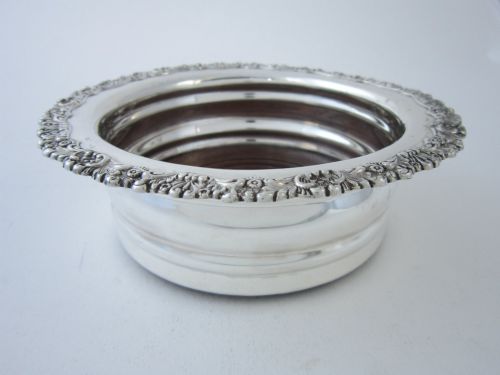
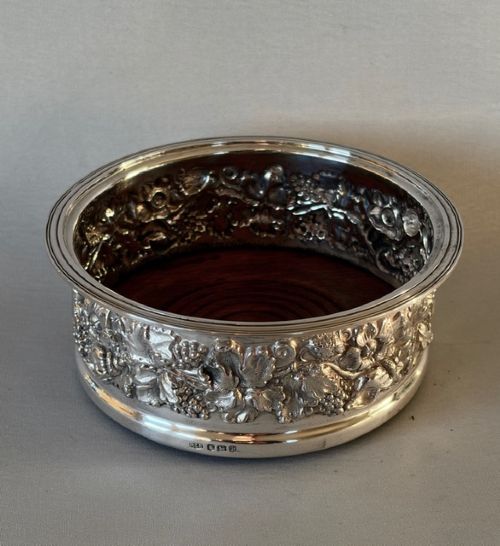
When you search for a vintage silver bottle slide, you encounter circular vessels designed to hold wine bottles and decanters. These pieces appear in forms ranging from single coasters to multiple bottle holders and planters.
The versions most commonly met on this page span the eighteenth, nineteenth, and twentieth centuries. Examples stretch from George III periods through Victorian and Edwardian eras up to later twentieth-century designs.
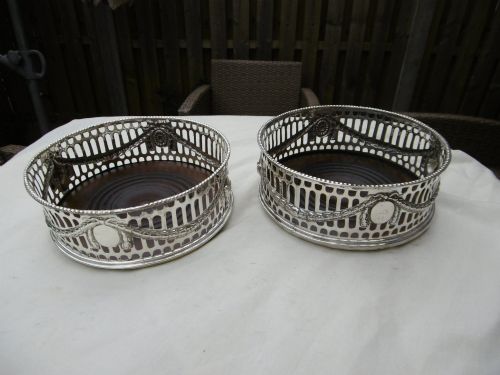
Makers shaped these items as wine coasters and barware, employing styles such as Regency, Georgian, and Victorian Revival. The selection encompasses both single items and matched pairs.
How they were made
Makers constructed these pieces using solid sterling silver alongside silver plate and Old Sheffield Plate. Several examples incorporate copper elements beneath the plating layers.
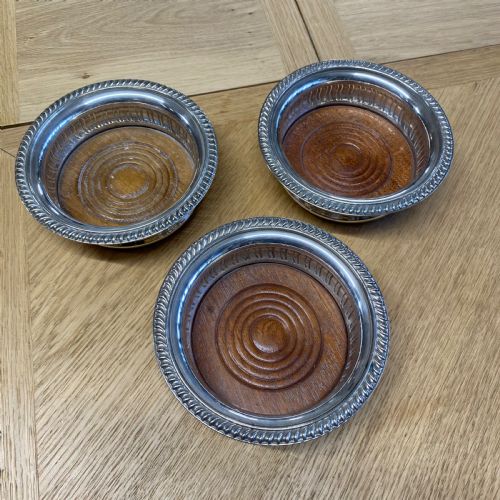
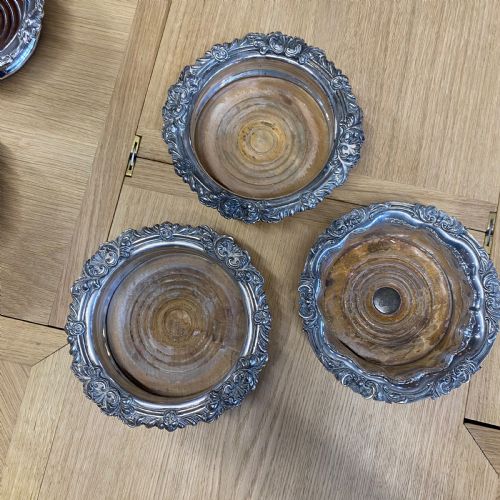
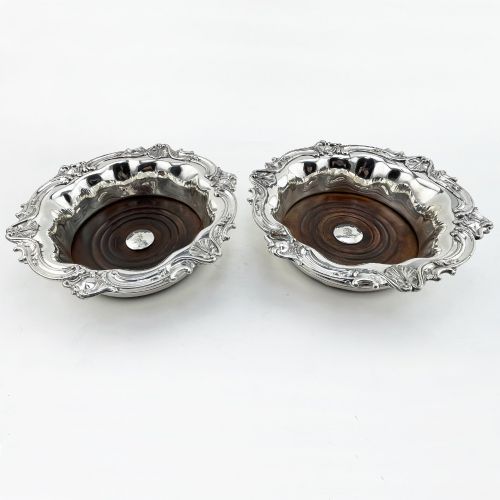
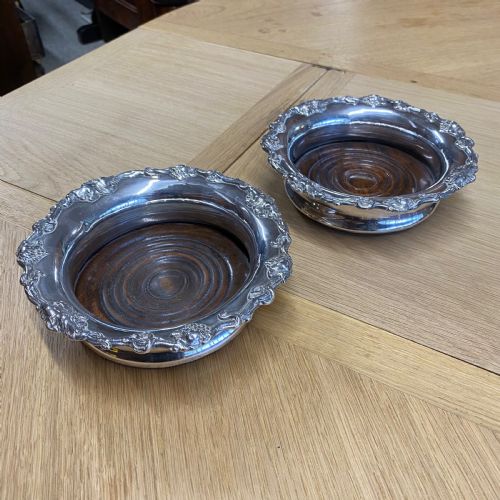
Many items feature wooden bases, predominantly utilising mahogany and other turned timber inserts. Silversmiths mounted the metal galleries directly onto these weighted wooden centres.
Vintage Silver Bottle Slide Retail Price Guide 2026
Typical asking prices for vintage silver bottle slide among the pieces listed under this phrase on Sellingantiques today, from the lower quarter to the upper quarter. They describe what is for sale here now, not the wider market.
The listings here include materials such as mahogany, copper, silver plate, and sterling silver across periods from the eighteenth century to the modern era.
What varies in quality
The distinction between standard examples and superior pieces rests on the weight of the metal and the crispness of the chasing. Early eighteenth-century work by named makers exhibits finer detail in the pierced galleries.
The preservation of the original wooden base and the integrity of the silver plating dictate the overall desirability. Uniformity across matched pairs also separates standard production items from exceptional workshop output.
John Rowbotham
The Vintage Silver Bottle Slide Glossary
- Bottle slide
- A circular vessel used to convey wine bottles across the dining table without marking the surface. These items often feature integrated wheels or smooth wooden bases.
- Old Sheffield Plate
- A composite material formed by fusing a sheet of silver to a thicker copper base. This technique predominated before modern electroplating methods became widespread.
- Pierced gallery
- The openwork metal wall surrounding the base of the coaster. Silversmiths cut or pierced decorative patterns into this band.
- Wine coaster
- An alternative term for a bottle slide designed to hold a single decanter or bottle. These objects frequently appear in pairs.
- Silver plate
- A thin layer of silver applied over a base metal such as copper or Britannia metal. This process provided the appearance of solid silver at a lower cost.
Vintage Silver Bottle Slide: Frequently Asked Questions
What is a vintage silver bottle slide?
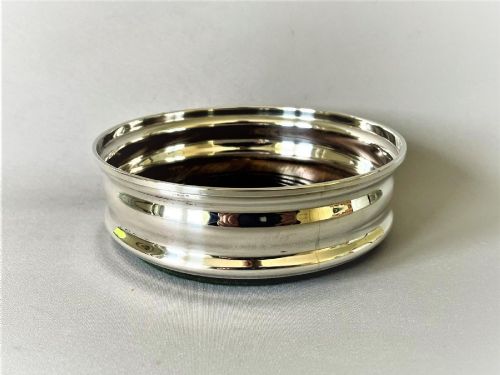
A vintage silver bottle slide is a circular table accessory designed to hold wine bottles and decanters. It prevents condensation and drips from reaching polished wooden dining tables.
These pieces typically feature a metal gallery mounted on a turned wooden base. Many are fitted with small rollers or baize linings to ease movement across the table.
How were bottle slides used?
Bottle slides were passed around the dining table after the meal during the port or claret course. Dinners often involved sliding the bottles from guest to guest rather than lifting them.
The weighted wooden bases kept the bottles upright and stable while in motion. Multiple bottle holders allowed hosts to circulate several vintages simultaneously.
How do I date a silver bottle slide?
Dating involves examining the hallmarks, style of piercing, and construction methods. Georgian examples often feature heavier casting and hand-pierced motifs, while later nineteenth-century pieces show machine stamping.
The wood used in the base also offers clues. Mahogany was favoured in earlier periods, whereas later twentieth-century items often display different timber treatments.
What is the difference between silver and plate?
Solid silver pieces are made entirely of precious metal and bear official hallmarks indicating sterling standard. Silver-plated items consist of a base metal coated with a thin layer of silver.
Old Sheffield Plate uses a fused copper and silver sheet method typical of eighteenth and early nineteenth-century production. Electroplated items emerged later in the nineteenth century.