
Vintage Sideboard
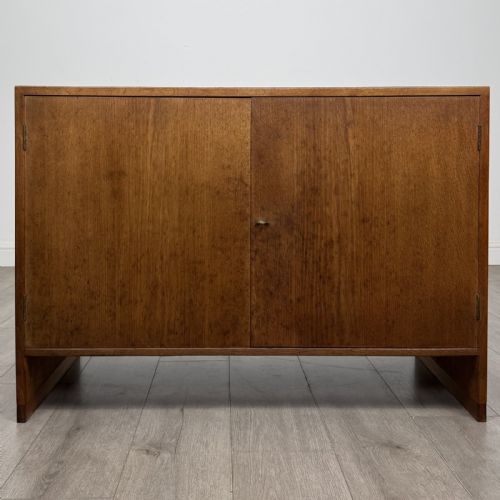
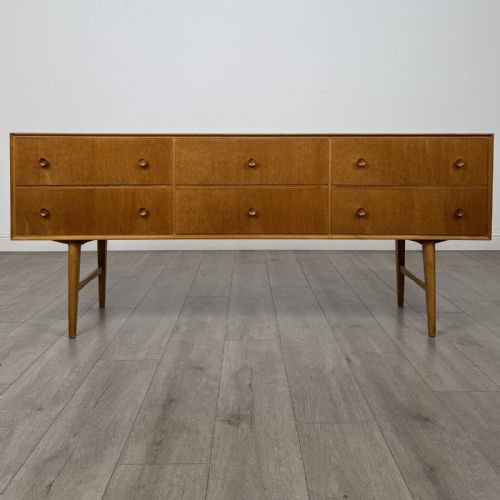
These vintage sideboard pieces are substantial storage furniture shaped by decades of dining room history, offering deep drawers and wide surfaces for modern living.
Vintage Sideboard
A vintage sideboard serves as a functional storage hub in dining spaces and hallways, bringing together cupboards, drawers, and display surfaces. When exploring the vintage sideboard category, buyers encounter a diverse range of forms spanning multiple centuries and stylistic traditions.
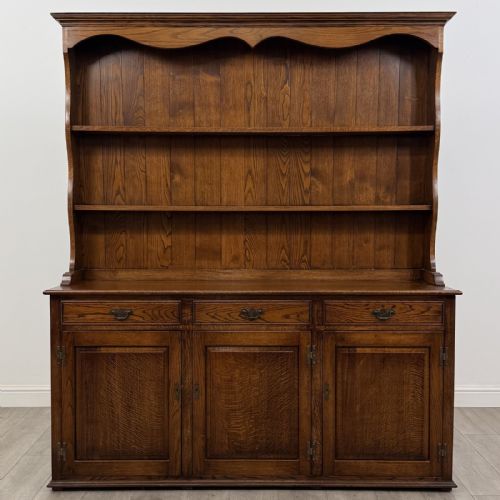
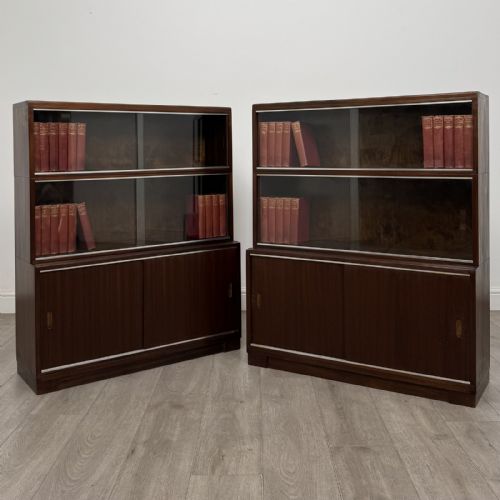
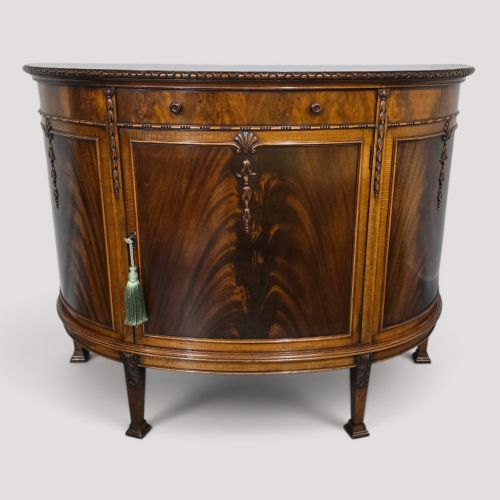
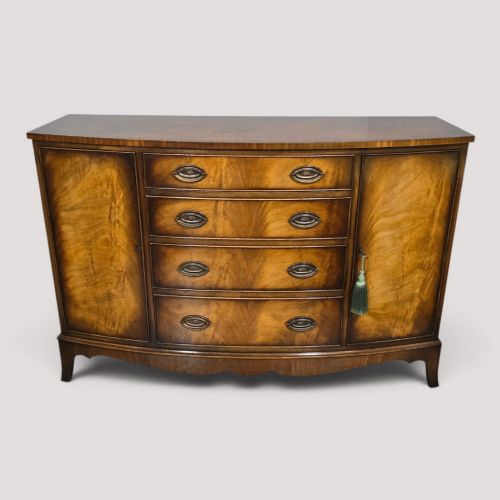
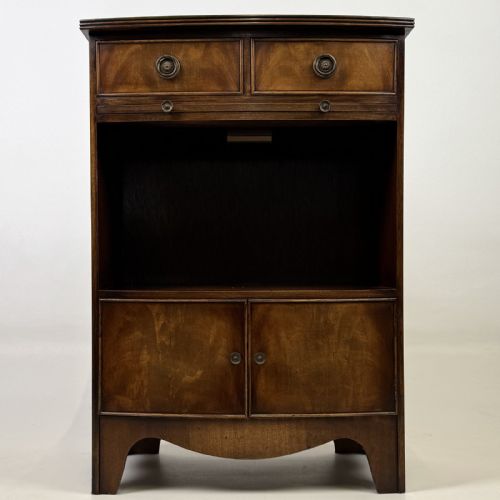
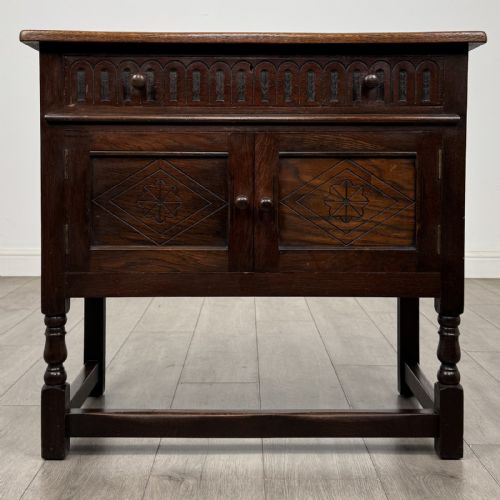
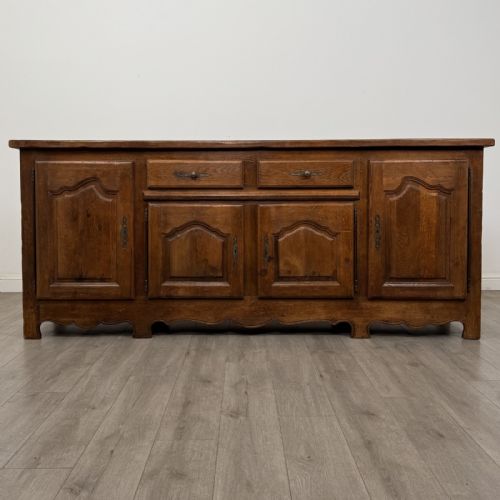
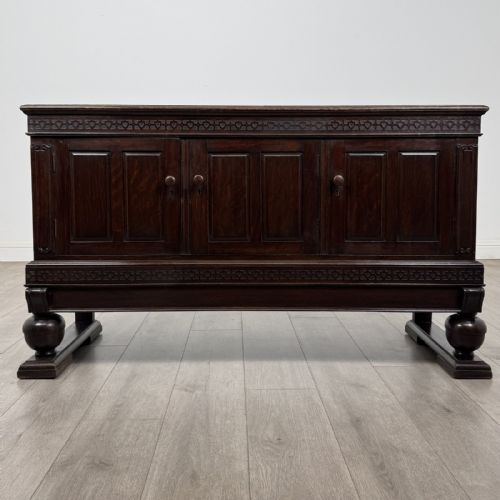
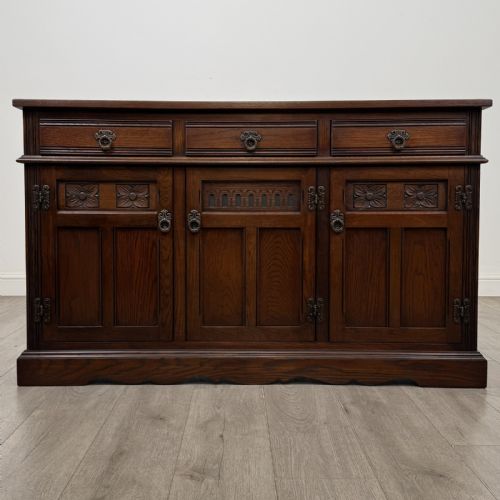
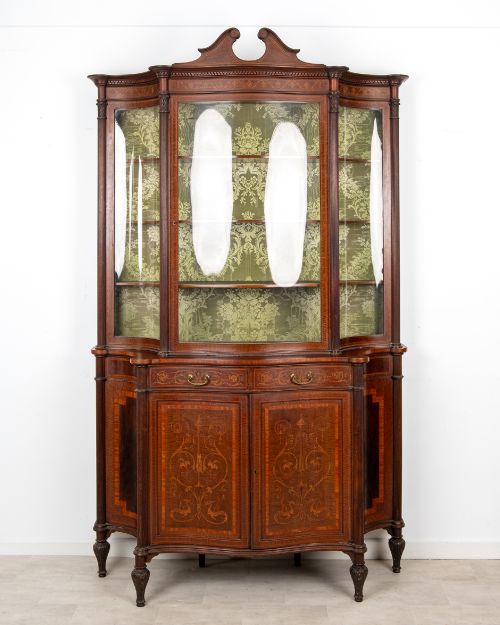
The selections on this page lean heavily toward robust oak and rich mahogany designs from the Edwardian era and the 1920s. Alongside these, one finds Georgian dresser bases, Victorian pieces, and French enfilades offering alternative proportions and storage layouts.
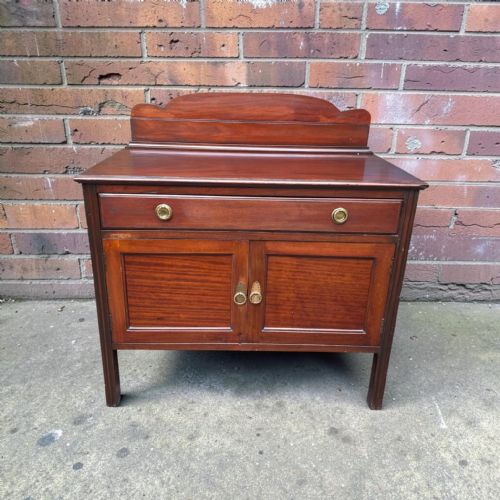
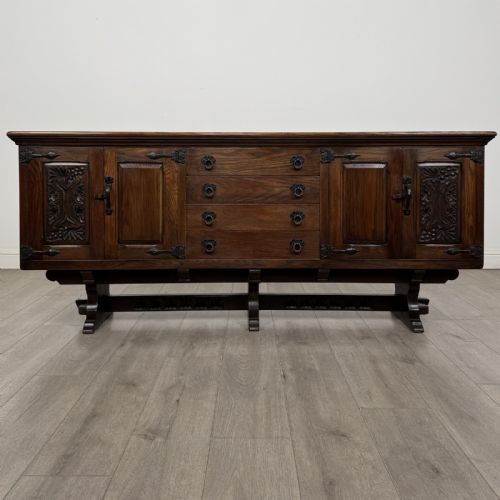
Forms vary from grand four-door cabinets with carved detailing to smaller side cabinets and dresser bases fitted with open plate racks or pull-out slides. This variety ensures that both compact flats and large period properties find a suitable scale.
Materials and construction
Makers relied primarily on native and imported timbers, with solid oak and mahogany forming the structural backbone of most pieces. Pine, satinwood, and walnut appear alongside metal handles, brass hardware, and occasional glass elements.
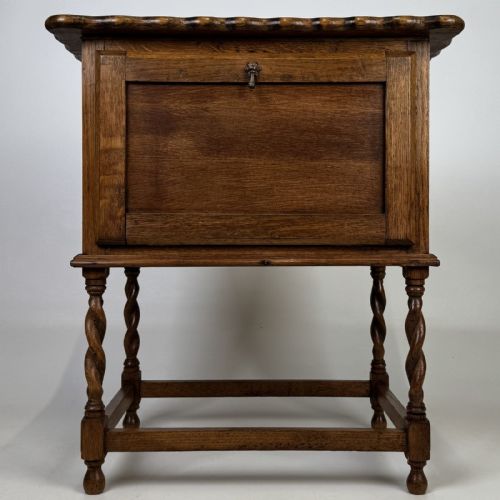
Joinery methods reflect traditional cabinet-making, featuring fitted drawers, pegged joints, and solid timber backs. Decorative elements range from linenfold carving and barley twist legs to marble tops and inlaid satinwood details.
Several heavy oak sideboards happily hide mysterious carved green men among their foliage.
Factors that define quality
Quality rests on the integrity of the timber selection and the precision of the cabinet-making. Superior pieces display thoughtful grain matching, stable construction, and well-fitted drawers that run smoothly within their housings.
The crispness of carved details, such as linenfold panels or green man motifs, distinguishes workshop standards. Original hardware, intact brass handles, and well-preserved marble tops further separate everyday utility items from finer examples of period craftsmanship.
Maple and Co·Epstein
The Vintage Sideboard Glossary
- Enfilade
- A long dining room sideboard or cabinet originating in France, typically featuring a series of cupboards along a single low front. These pieces often feature marble tops and heavy oak construction.
- Dresser base
- A low wooden storage unit fitted with drawers and cupboards beneath a flat top, historically used for food preparation and serving. Many examples lack the upper plate rack entirely.
- Linenfold
- A style of wood carving that mimics the appearance of folded linen fabric, commonly seen on panels of early twentieth-century oak cupboards. This technique adds subtle texture to flat wooden surfaces.
- Demi lune
- A half-moon shape used for the footprint and top of specialised side cabinets and sideboards. This curved form allows the furniture to sit flush against a wall while saving floor space.
- Potboard
- An open lower shelf built into the base of traditional dressers or potboard dresser bases, originally designed to hold heavy kitchen pots and ceramic dishes.
Vintage Sideboard: Frequently Asked Questions
How do I choose the right size?
Measure your available wall space carefully, keeping in mind the depth of open doors and pull-out slides. Larger four-door oak formats require significant clearance compared to slender demi lune cabinets.
Consider the visual weight of the timber in your room. Dark mahogany and heavily carved oak demand more surrounding space than lighter pine or simpler Edwardian designs.
Can I use a sideboard in a hallway?
Sideboards work exceptionally well in hallways and living rooms to store shoes, linens, and everyday clutter. Their flat tops also provide a convenient surface for lamps and decorative objects.
Narrow side cabinets and shallow commodes fit particularly well in tighter corridors without blocking foot traffic.
How do I maintain wood surfaces?
Dust regularly with a soft, dry cloth and apply a quality beeswax periodically to nourish the timber. Avoid placing wooden furniture near direct heat sources or in strong sunlight.
Marble tops require gentle cleaning with mild, non-acidic soap and water to protect the polished stone from staining.
What is a dresser base?
A dresser base is the lower portion of a traditional Welsh dresser, functioning as a standalone sideboard with drawers and cupboards. These pieces originated in country houses and farmhouses for daily culinary use.
They offer deep surface space and robust under-counter storage without the height of an upper plate rack.