




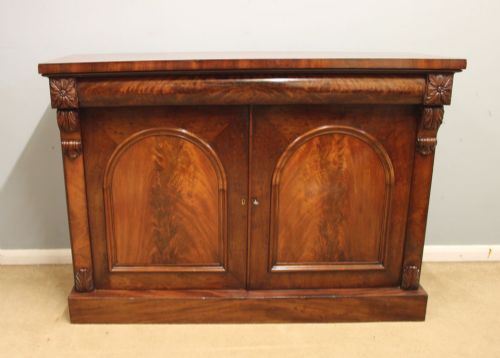
Vintage Sideboard Console
These vintage sideboard console pieces bring rich timber grain and period utility to a hallway or living space.
Vintage Sideboard Console
A vintage sideboard console combines the heavy utility of a traditional serving table with the slender proportions required for narrow rooms. Pieces meeting this description span several decades, stretching from the Victorian era through the Edwardian period and into the nineteen-thirties.
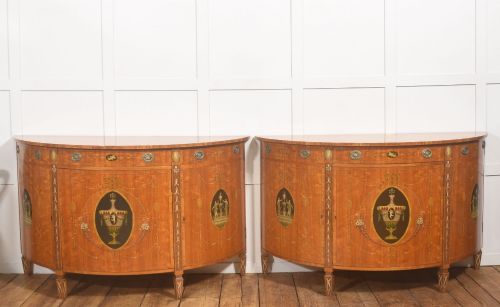
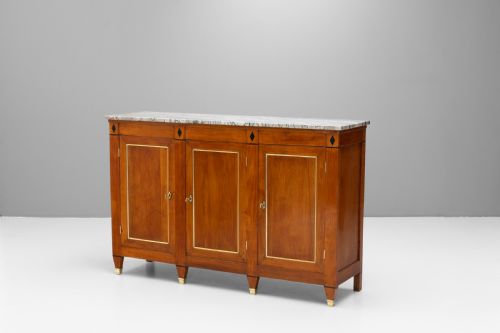
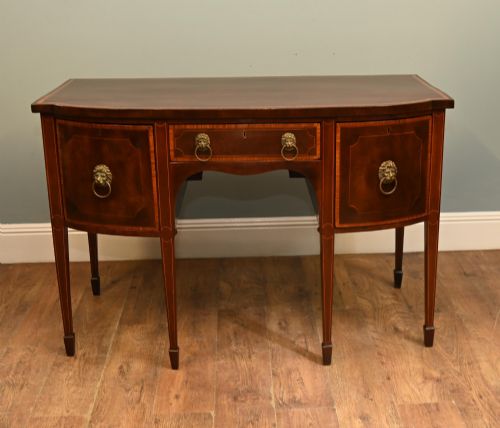
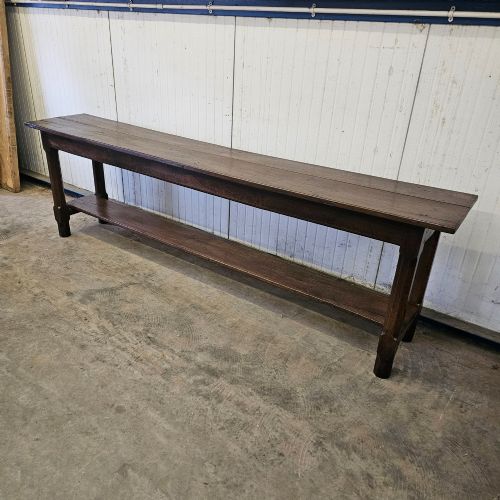
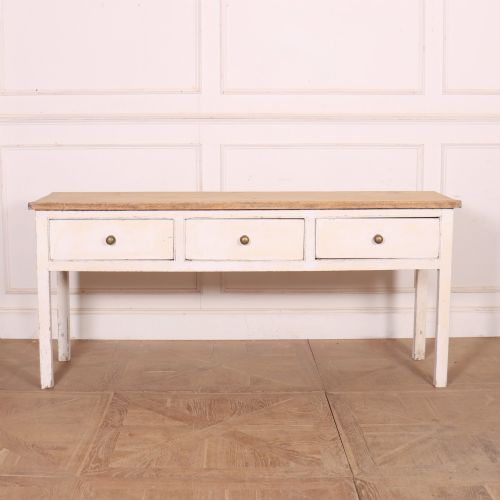
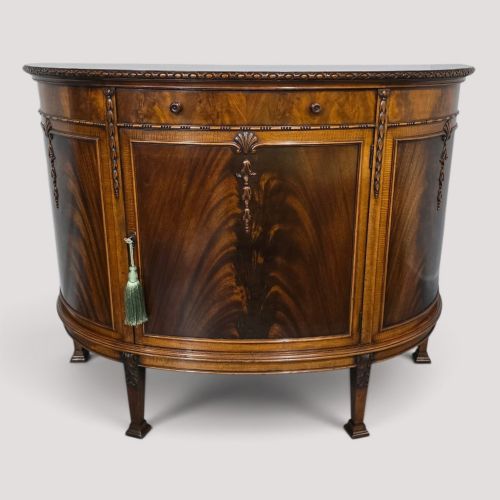
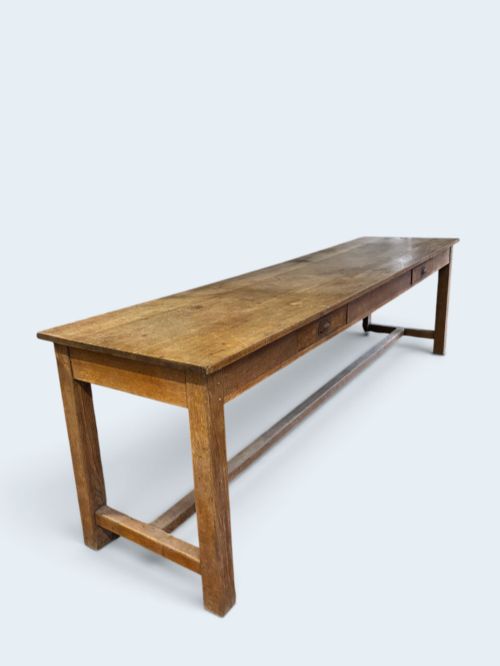
The form shifts considerably depending on origin and style, moving from English country oak dresser bases to French marble-topped console tables and inlaid demi-lune cabinets. Buyers encounter substantial mahogany servers alongside rustic pine and elm prep tables, each designed originally for domestic service or food preparation.
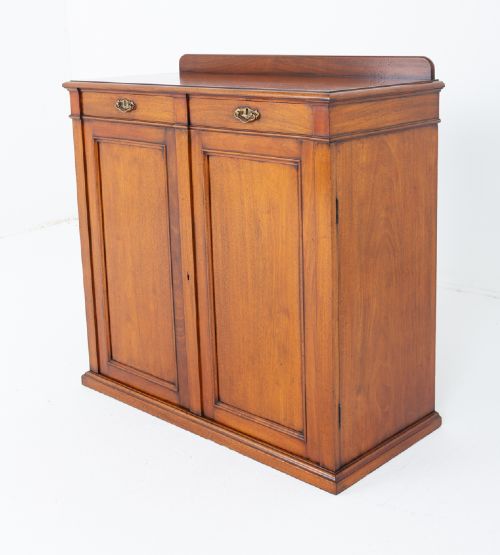
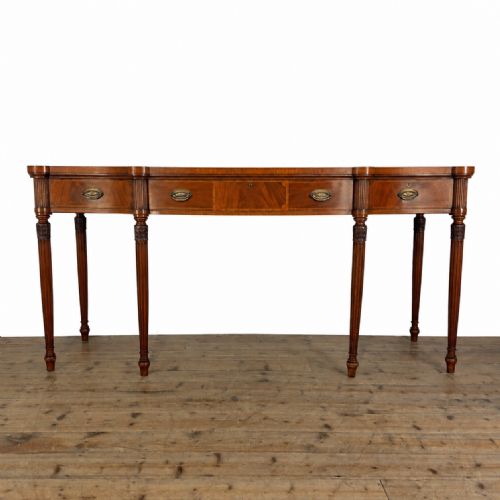
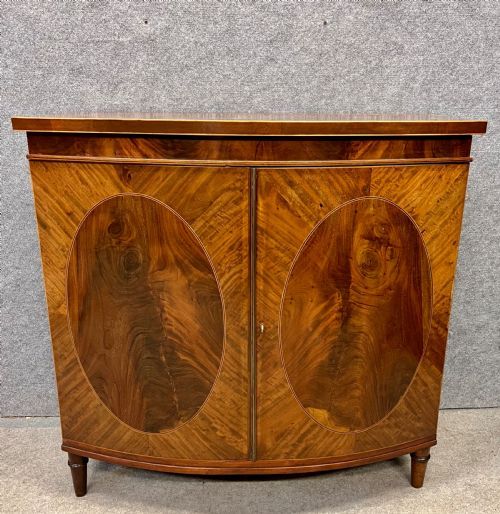
Edwardian and Sheraton Revival examples often utilise satinwood and mahogany with delicate stringing, whereas earlier nineteenth-century iterations rely on solid oak, pine, and sycamore. The category absorbs side cabinets, chiffoniers, and washstands that share a long, low profile suitable for display.
Materials and Construction
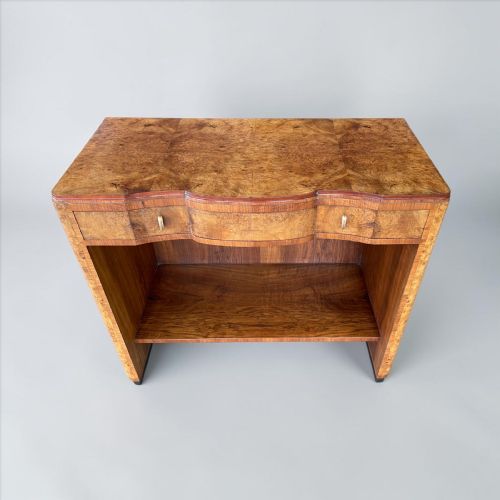
Cabinet makers relied heavily on timber selection, pairing solid oak, mahogany, and walnut with decorative veneers like burr walnut and satinwood. Iron and brass hardware - ranging from drop handles to gallery rails - secured structural joints and added functional contrast to the wooden surfaces.
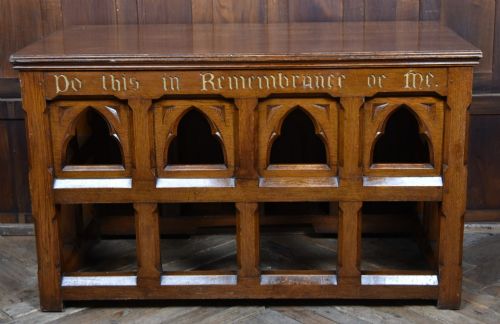
Surface finishes vary from polished mahogany and waxed oak to layered historical paint on country pieces and white marble slabs fitted to French console tables. Carving techniques include linenfold patterns, barley-twist supports, and subtle inlay work seen on revival pieces.
Joinery methods reflect the date of manufacture, utilising traditional dovetails for drawer construction and pegged joints for earlier potboard dresser bases. Secondary timbers such as pine appear consistently in drawer linings and internal framing.
Vintage Sideboard Console Retail Price Guide 2026
Typical asking prices for vintage sideboard console among the pieces listed under this phrase on Sellingantiques today, from the lower quarter to the upper quarter. They describe what is for sale here now, not the wider market.
Listings feature pieces spanning the nineteenth and twentieth centuries, constructed from oak, mahogany, pine, and burr walnut.
Judging Quality and Distinction
Quality rests primarily on the integrity of the timber and the depth of the patina accumulated over decades of use. Pieces retaining their original brass handles, integrated marble tops, and untouched surface finishes command greater attention from discerning collectors.
Construction details separate standard workshop output from finer examples, particularly in the precision of dovetail joints, hand-carved ornamentation, and balanced proportions. The integration of decorative elements, such as satinwood crossbanding or fine stringing, elevates the visual weight of Edwardian and revival furniture.
Proportional harmony dictates the success of a console or sideboard, where height, depth, and length relate logically to the chosen style. Whether dealing with a rustic farmhouse table or a refined demi-lune cabinet, structural balance remains paramount.
Maurice Adams
The Vintage Sideboard Console Glossary
- Demi-lune
- A half-moon shape commonly found in the tabletops and cabinet bases of Edwardian and revival console furniture. This curved profile allows the piece to sit flush against a wall while softening room geometry.
- Dresser base
- A low wooden storage unit featuring drawers above cupboards or an open potboard shelf. These sturdy pieces originated in farmhouse kitchens before transitioning to dining and living spaces.
- Potboard
- An open lower shelf built into traditional serving tables and dresser bases, historically designed for storing ceramic pots and heavy kitchenware. It provides structural stability to the legs while offering display space.
- Chiffonier
- A compact Victorian sideboard featuring a low enclosed cupboard base beneath a shelved superstructure. They were built for smaller parlours to store tableware and linens.
- Barley-twist
- A decorative turning technique resembling a twisted rope, carved into the wooden table legs and upright supports of seventeenth-century revival furniture from the early nineteen-hundreds.
Vintage Sideboard Console: Frequently Asked Questions
What is the difference between a sideboard and a console?
Sideboards generally offer enclosed storage with cupboards and drawers for dining rooms, prioritising functional capacity over slender floor space. Consoles are shallower tables designed primarily for display in hallways and reception rooms.
Historical examples often blur these lines, as narrower serving tables and washstands now serve the same decorative purpose as traditional console furniture.
How do I care for antique wood surfaces?
Maintain timber surfaces by applying natural beeswax periodically to nourish the grain and protect against excessive drying. Avoid placing antique furniture near direct heat sources or in areas prone to dampness.
Use soft, dry cloths for routine dusting rather than modern chemical polishes that can degrade historical finishes over time.
Where were these pieces used originally?
Many of these items originated in country house kitchens, dairies, and pantries as robust preparation tables or potboard storage units. Others functioned in formal dining rooms and hallways as serving surfaces for food and silver.
Revival pieces from the Edwardian era onwards were designed specifically for sophisticated domestic interiors to display decorative objects.
How can I tell the period of a sideboard?
Dating relies on examining construction techniques, timber choices, and stylistic revival markers typical of specific decades. For instance, nineteen-thirties pieces often feature bold oak carving and barley-twist supports, while Edwardian items lean toward inlaid satinwood and mahogany.
Internal drawer construction and secondary woods like pine provide reliable clues regarding whether a piece dates to the Victorian era or the early twentieth century.