





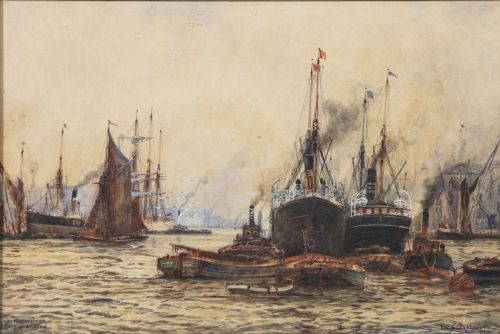

Vintage Ship Painting
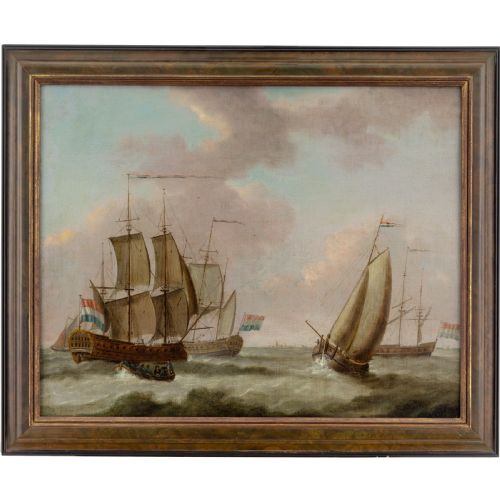
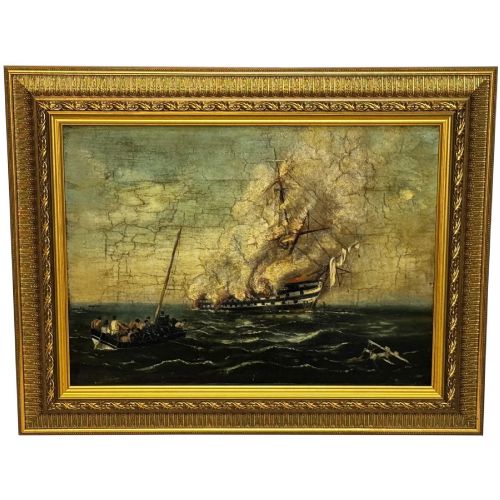
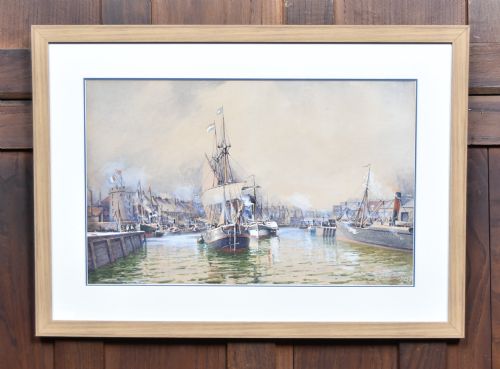
These vintage ship painting works capture centuries of maritime history through oil, watercolour, and gouache on canvas, board, and paper.
Vintage Ship Painting
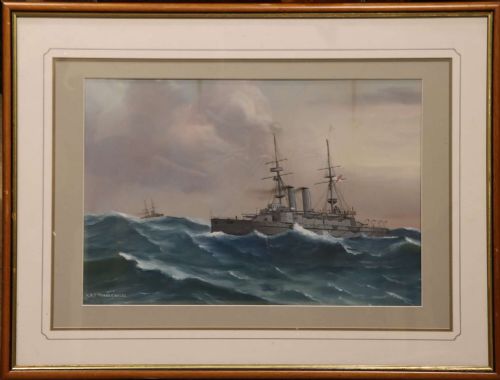
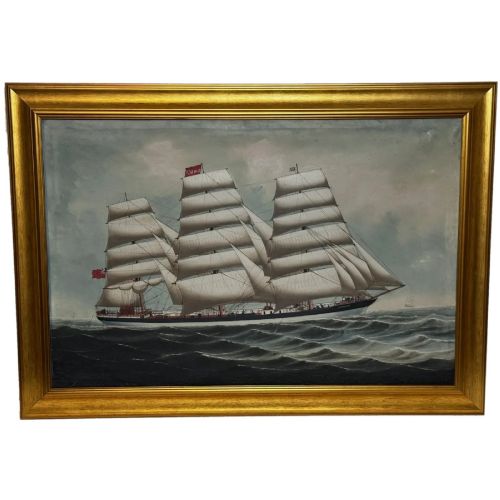
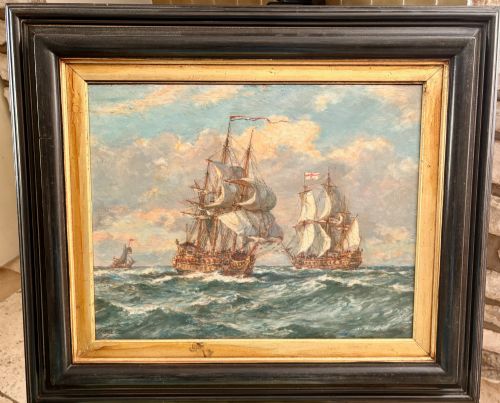
When you search for a vintage ship painting, you encounter works spanning the nineteenth century through the mid-twentieth century, recording naval vessels, steamships, and sailing clippers in harbour or open seas. The selection on this page ranges from detailed Victorian marine art to Edwardian watercolours and maritime folk art.
Most pieces meet the eye as framed oil paintings on canvas or board, alongside delicate watercolours and gouache works. Subjects encompass specific historical vessels like the HMS Prince of Wales and the SS Bregonian, as well as atmospheric coastal scenes and harbour views.
Makers include named artists of the period alongside competent anonymous hands working in traditional styles. These pieces function as historical records and decorative works suited to period and modern interiors alike.
Materials and construction
Artists utilised oil paint on stretched canvas or wooden boards, building up deep water effects and sky tones through layered brushwork. Watercolours and gouache on paper required precise handling to capture coastal light and maritime detail.
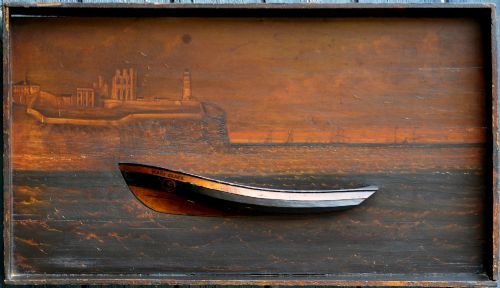
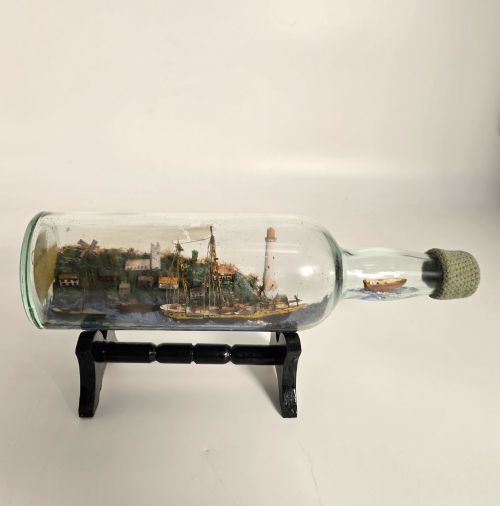
Frames incorporated wood and glass to protect the painted surface, often featuring gilt mouldings appropriate to the Victorian and Edwardian periods. Dioramas utilised mixed media including wood and paper to construct three-dimensional ship models within glazed shadow boxes.
Listings feature works from the 19th Century, Edwardian era, and mid-20th Century.
Judging quality and execution
Quality rests upon the artist's command of maritime perspective, rigging accuracy, and water movement. Superior works convey the weight of heavy seas and the precise architecture of naval and merchant vessels with confident brushwork.
Condition of the paint surface and paper support determines the integrity of the piece, where stable pigment and minimal restoration preserve the original atmosphere. The quality of the framing also contributes to the overall presentation of the artwork.
Eugène-Louis Gillot·William McAlpine·Reginald Arthur Borstel·Charles Edward Dixon·James Kay·Bernard Gribble·Frank William Scarbrough·F. Corpuz·Paul Bret·Bernard Benedict Hemy·Nicholas Condy·Alexander Harwood·Frank Kelsey·Abraham Hulk I·William Frederick Settle·Eric Tufnell·Vincenzo D’Esposito
The Vintage Ship Painting Glossary
- Gouache
- An opaque water-based paint that allows for brilliant highlights and solid colour application on paper or board.
- Diorama
- A three-dimensional shadow box containing a model ship set against a painted maritime backdrop.
- Clipper
- A very fast nineteenth-century sailing ship with three masts and square sails.
- Seascape
- A painting depicting the sea, coastal views, or ships operating in marine environments.
- Maritime Folk Art
- Self-taught or vernacular artistic production focused on nautical subjects and ship models.
Vintage Ship Painting: Frequently Asked Questions
How do I date a vintage ship painting?
Dating relies upon the vessel type depicted, such as identifying nineteenth-century wooden barques versus twentieth-century steamships. Signatures, framing materials, and artist active dates provide further chronological anchors.
Examine the back of the canvas or board for period labels, inscriptions, or artist notes that record the specific year or location of the maritime scene.
Where should I hang maritime art?
These paintings suit studies, libraries, and living rooms, often serving as focal points above mantelpieces or console tables. Ensure placement avoids direct sunlight to protect watercolours and oil pigments from fading over time.
Pair framed watercolours and oil paintings with appropriate wall lighting to highlight the fine brushwork and detailed rigging characteristic of these works.
What is the difference between a painting and a diorama?
Paintings are two-dimensional works executed in oil, watercolour, or gouache on canvas, paper, or board. Dioramas are three-dimensional shadow boxes featuring carved or constructed model ships set against painted backgrounds.
Both forms document maritime history but utilise entirely different techniques to portray vessels at sea or in port.
How do I care for antique watercolours?
Protect watercolours from moisture and direct sunlight by utilising UV-filtering glass and acid-free framing materials. Maintain stable indoor humidity to prevent paper degradation and foxing.
Dust frames gently with a dry cloth and avoid placing paper works in damp environments such as unheated hallways.