

Vintage Ship Canvas
Vintage ship canvas covers maritime paintings and model boats spanning the eighteenth to the twentieth centuries, depicting naval engagements, clipper ships and coastal harbours.
Vintage Ship Canvas
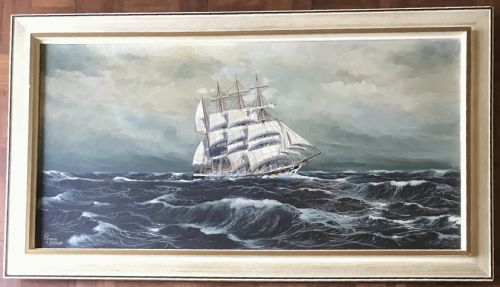
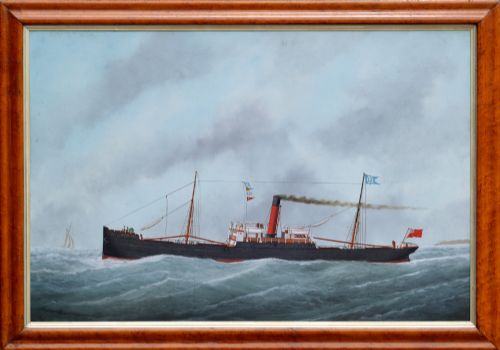
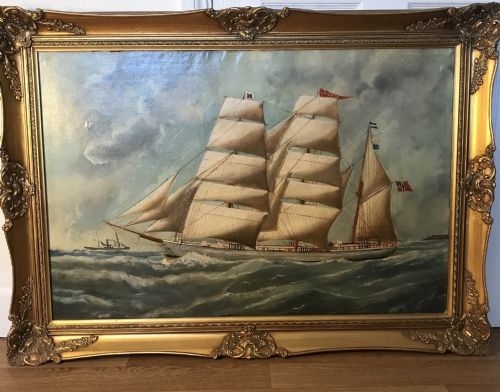
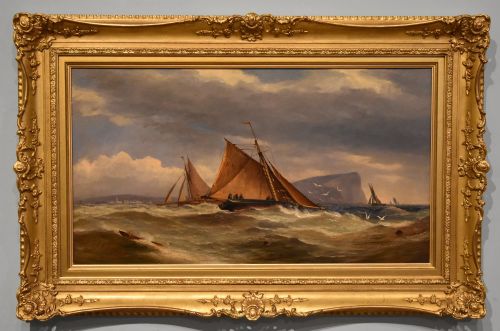
When you search for vintage ship canvas, you encounter maritime oil paintings and occasional model boats that record centuries of seafaring history. The works range from early eighteenth-century Dutch shipping scenes to mid-twentieth-century depictions of ocean liners and wartime vessels.
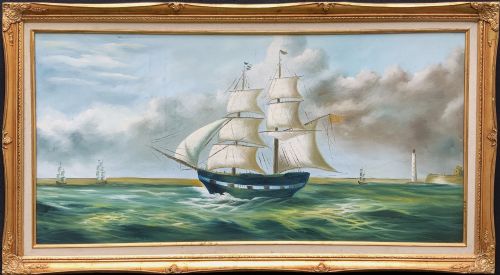
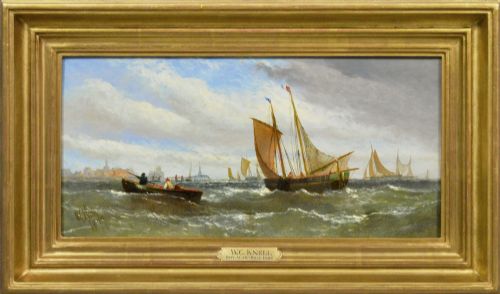
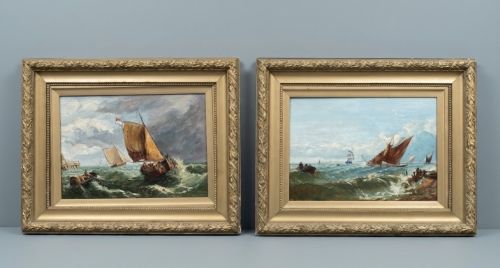
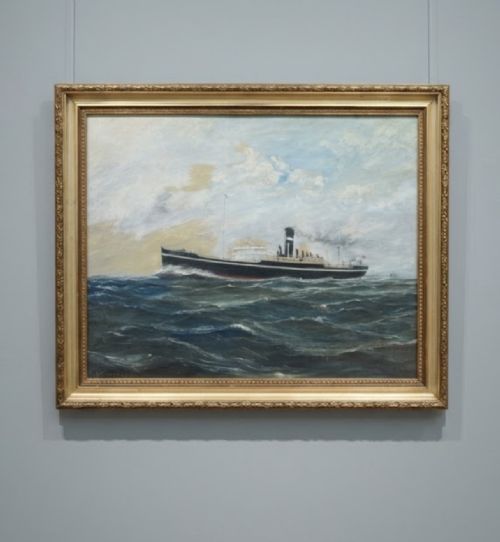
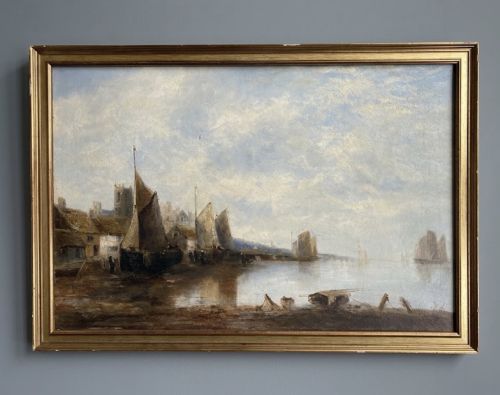
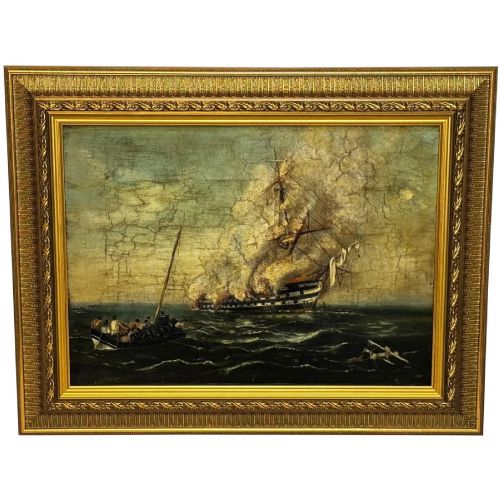
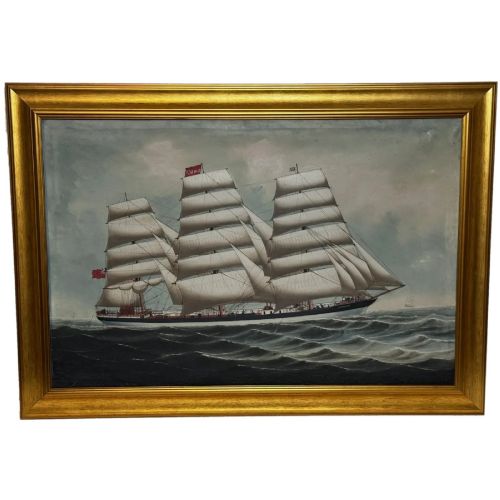
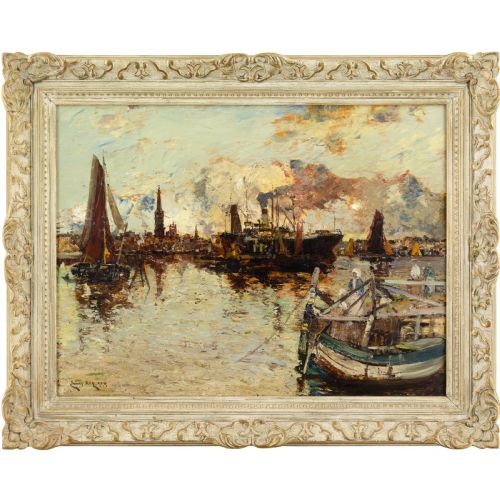
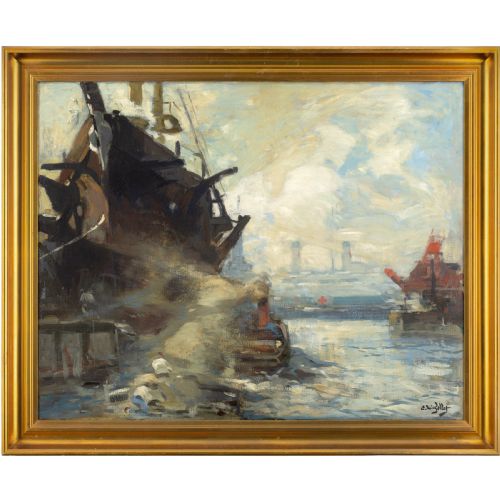
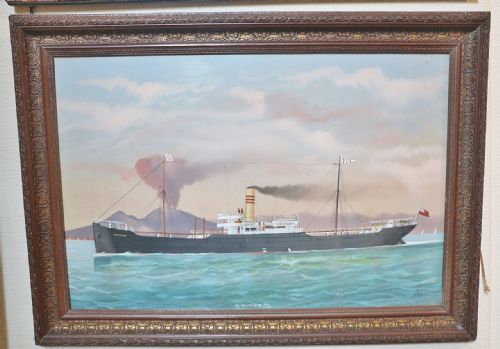
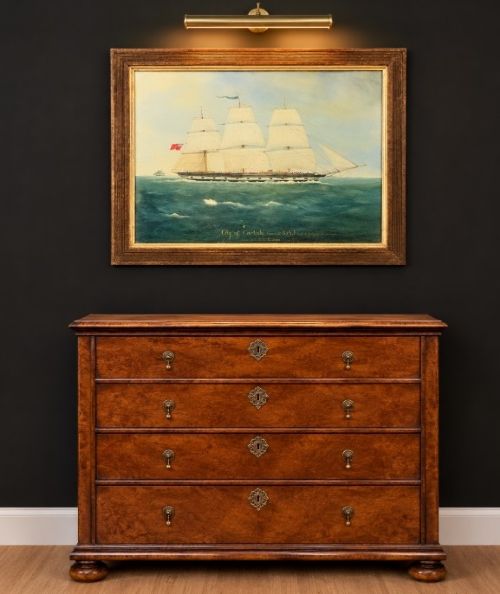
The pieces on this page are predominantly oil paintings executed on canvas, framed by periods extending from the Victorian era and Edwardian years through to the twentieth century. Common subjects include three-masted barques, naval cruisers, and harbour scenes from locations such as Palermo, Antwerp and the Mediterranean.
Works appear from named artists and distinct regional schools, including British, Dutch and Neapolitan marine painters. Collectors find both dramatic depictions of vessels in heavy seas and calmer coastal views featuring lighthouses and quaysides.
Materials and construction
The physical works rely fundamentally on oil paint applied to woven canvas supports, stretched or mounted over wooden frames. Many of the nineteenth-century and Edwardian paintings retain their original giltwood frames, which contribute to the historical presentation of the maritime subject matter.
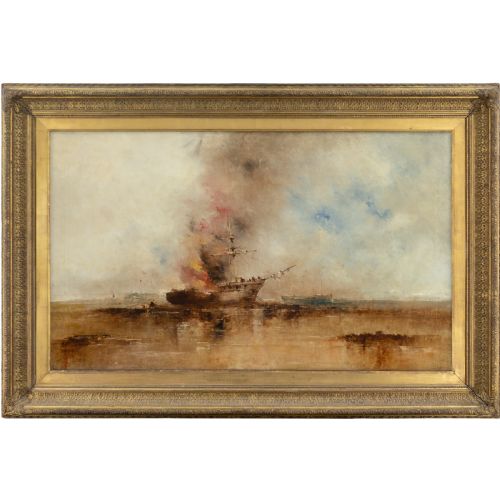
Pigments are layered to capture the shifting tones of sea and sky, utilising the interplay of oil paint to render rolling waves, billowing sails and atmospheric smoke from burning vessels. Some pieces incorporate gilt highlights to catch the light on rigging and hull details.
Vintage Ship Canvas Retail Price Guide 2026
Typical asking prices for vintage ship canvas among the pieces listed under this phrase on Sellingantiques today, from the lower quarter to the upper quarter. They describe what is for sale here now, not the wider market.
Several captains commissioned harbour portraits so precisely that even the ship's cat could occasionally be spotted lounging near the funnel.
Evaluating quality and execution
Quality in a vintage ship canvas rests upon the artist's command of maritime architecture, rigging accuracy and atmospheric depth in the depiction of water. Stronger works convey the genuine weight of a rolling sea and the precise structural details of named vessels like the HMS Bombay or the clipper Slieve Roe.
The handling of light and movement distinguishes accomplished marine art from more rigid or formulaic workshop output. Provenance, legible signatures, and the survival of period framing also elevate the standing of an individual canvas within the market.
Hans Harlander·Eugène-Louis Gillot·William McAlpine·James Kay·Bernard Gribble·Bernard Benedict Hemy·Abraham Hulk·Marie-Edouard Adam·Dion Pears·Charles Dixon
The Vintage Ship Canvas Glossary
- Barque
- A sailing vessel with three or more masts, having the foremast and mainmast square-rigged and the mizzenmast fore-and-aft rigged. This rig was common for large merchant ships in the nineteenth century.
- Marine painting
- A genre of art that depicts ships, harbours, coastal views and naval battles. These works document maritime history and naval architecture.
- Giltwood
- Wood that has been carved and coated with gold leaf or gold paint. Many period frames for oil paintings utilise this technique.
- Pierhead painting
- A specific record of a commercial ship, often commissioned by its captain or owner when visiting a port such as Naples or Antwerp. These works focus on the exact representation of the vessel.
Vintage Ship Canvas: Frequently Asked Questions
What periods do these paintings cover?
The works span from the early eighteenth century through the Victorian and Edwardian eras up to the mid-twentieth century.
Most pieces date from the nineteenth and early twentieth centuries, reflecting the height of sail and steam navigation.
How do I identify a ship in the painting?
Many canvases name the vessel directly in the title or incorporate legible lettering on the hull, flags or stern.
Historical records, shipping lines such as Cunard or the Brocklebank Line, and distinct rigging configurations often help confirm the exact ship.
Where were these maritime scenes painted?
Artists recorded scenes across British coastal waters, European ports like Antwerp and Ostend, and international trade routes.
Harbours in the Mediterranean, Sicily and local waters near London Bridge also appear frequently in the available works.
How should I care for an oil painting on canvas?
Keep the canvas away from direct sunlight, high humidity and sudden temperature fluctuations to protect the oil paint and wooden stretcher.
Dust the surface gently with a soft, dry brush and avoid using liquid cleaners on either the paint or the frame.