




Vintage Sheep Artwork
Vintage sheep artwork captures pastoral scenes in oil and watercolour from the Victorian era through the mid-century.
Vintage Sheep Artwork
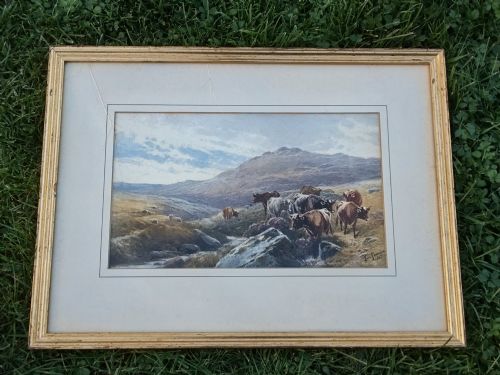
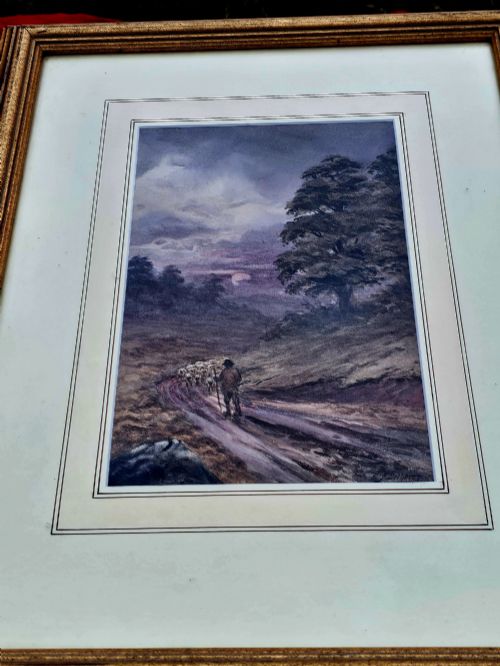
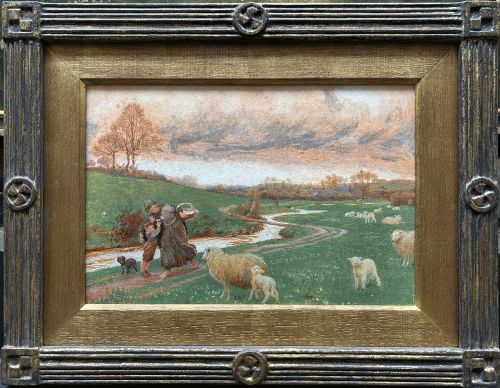
Vintage sheep artwork comprises framed landscape paintings and watercolours depicting flocks in fields, moorlands and country lanes. These pieces record rural life across Britain and Europe through the lens of pastoral and impressionist traditions.
The versions most commonly met on this page date from the late nineteenth century and the early decades of the twentieth century. Artists working in oil on canvas, oil on wood panel and paper watercolour document pastoral subjects during these periods.
Compositions range in scale from intimate watercolours to large oil paintings created by regional British schools and continental painters. Each work places herds and shepherds centrally within valley, moorland or coastal settings.
How they were made
Painters applied oil pigments to stretched canvas, wooden panels and heavy paper supports to build up textured pastoral scenes. Watercolours on paper utilise fluid washes and fine brushwork to render atmospheric light across open downs and moorland.
Works are typically presented within period wooden frames, often accented with gilt mouldings to separate the painted surface from the wall. Glass protects fragile paper watercolours from environmental moisture and surface damage.
Vintage Sheep Artwork Retail Price Guide 2026
Typical asking prices for vintage sheep artwork among the pieces listed under this phrase on Sellingantiques today, from the lower quarter to the upper quarter. They describe what is for sale here now, not the wider market.
Current listings feature oil paintings and paper watercolours spanning the Victorian period, Edwardian pastoral movement and mid-century British art.
What varies in quality
The strength of a composition depends upon the artist's handling of light, atmosphere and the integration of the flock within the wider landscape. Stronger examples demonstrate confident brushwork and a balanced tonal range that establishes depth across the terrain.
Material preservation also differentiates pieces, particularly the stability of the paint layer on wood panels or canvas and the absence of fading or foxing on historical paper supports. Original framing contributes to the historical integrity of the piece.
Thomas Rowden·Tom Campbell·EJ Letheren·Frederick Walker·Henry Charles Fox·Owen Bowen·Willem Anton Alexander Knip·Eugene Joseph Verboeckhoven·Frederick W Jackson·Herbert Royle·George Turner·A Winter Shaw·Charles James Adams·Rowland Henry Hill·Jessie Hall·W Ramsey
The Vintage Sheep Artwork Glossary
- Pastoral
- A style of artwork depicting rural life, countryside views, shepherds and domestic animals. These scenes emphasise a calm connection to the land.
- Watercolour
- A painting method where fine pigment powders are suspended in a water-soluble binder applied to paper. It allows for translucent washes of colour.
- Oil on canvas
- A traditional painting technique utilising pigments bound in drying oils applied to a woven fabric support. This combination permits rich texture and deep colour layering.
- Wood panel
- A rigid flat wooden surface used as a structural support for oil paintings before and alongside canvas. Panels offer a firm foundation for detailed brushwork.
- Gilt
- A thin layer of gold leaf or metallic gold paint applied to frame mouldings. It provides a decorative border that catches ambient light.
Vintage Sheep Artwork: Frequently Asked Questions
What periods do these paintings cover?
The works span from the Victorian era and the late nineteenth century through Edwardian pastoral production and into mid-century British and Dutch impressionism.
Most pieces date between eighteen seventy and nineteen fifty, reflecting changing artistic approaches to rural landscapes.
Are these paintings signed by the artists?
Many examples feature artist signatures inscribed directly onto the painted surface or manuscript paper details on the mount.
Signed works provide a direct link to named painters working within established regional schools.
How should I display watercolour paintings?
Watercolours on paper require protection behind glass and conservation-grade mounting to prevent environmental deterioration over time.
Placement away from direct sunlight preserves the delicate pigments used in these historical works.
What framing is typically found on these pieces?
Surviving works often retain period wooden frames, sometimes featuring gilded decorative elements that complement the era of creation.
These frames provide structural protection while framing the visual scope of the pastoral subject matter.