


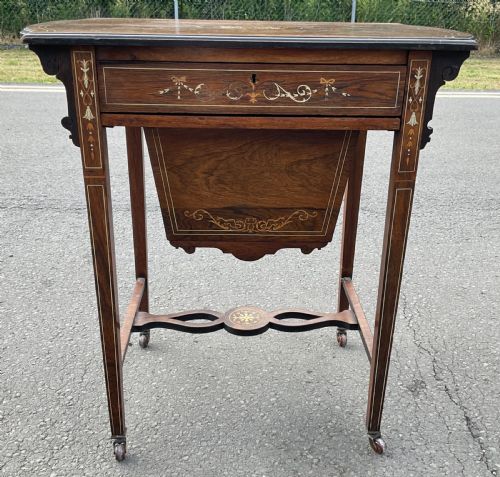

Vintage Sewing Cabinet
A vintage sewing cabinet is a practical piece designed to house threads and tools, and collectors value them for their clever compartments and fine cabinet-making.
Vintage Sewing Cabinet
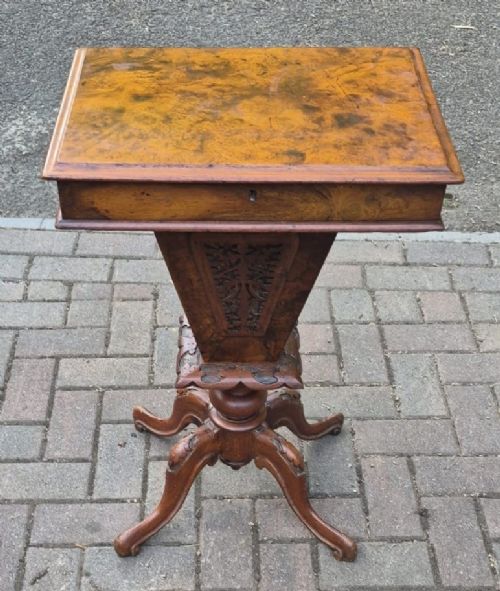
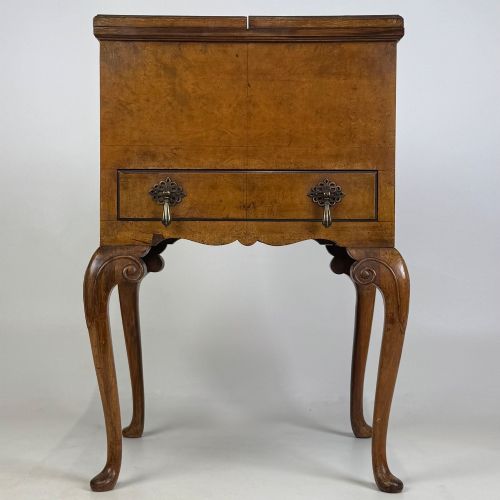
A vintage sewing cabinet brings together functional storage and domestic craft, appearing across styles from the Victorian period through to the twentieth century. These pieces take many forms, including work tables, sewing tables, haberdashery cabinets, and countertop display cases.
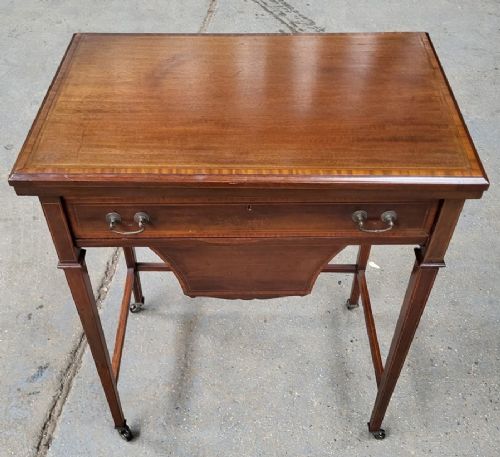
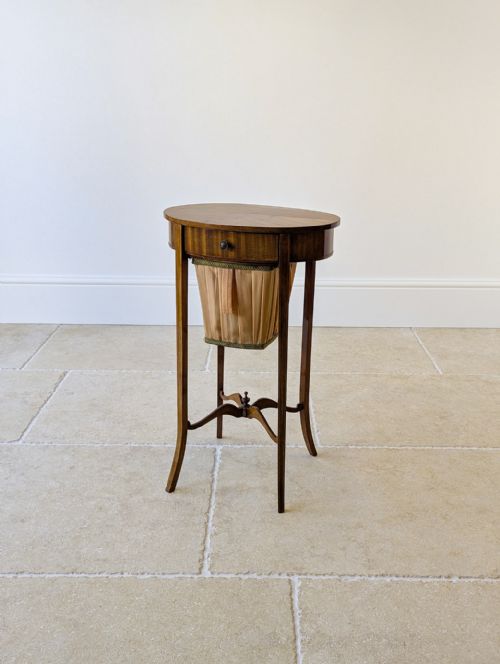
Buyers browsing this selection will frequently encounter Edwardian inlaid mahogany work tables and various 1920s examples, alongside Victorian walnut and rosewood pieces. The forms range from octagonal tables with silk baskets to machinist consoles and shop display cases.
The historical scope spans from Regency and William IV pieces to interwar commercial designs and Art Deco shop fittings. Each iteration reflects the sewing habits and domestic or retail requirements of its era.
How they were made
Cabinet-makers utilised dense timbers such as mahogany, walnut, burr walnut, and satinwood, often embellishing surfaces with cross-banding and fine inlay work. Structural elements frequently incorporate brass fittings, glass panels for display cases, and fitted fabric interiors for silk baskets.
Construction techniques balanced domestic elegance with utility, employing turned supports, fitted drawers for needles and cottons, and specialised compartments. Haberdashery and shop display pieces added glazed doors and countertop drawer configurations to showcase threads by brands like Chadwick's and Ermen & Roby.
Vintage Sewing Cabinet Retail Price Guide 2026
Typical asking prices for vintage sewing cabinet among the pieces listed under this phrase on Sellingantiques today, from the lower quarter to the upper quarter. They describe what is for sale here now, not the wider market.
A draper's countertop drawer cabinet kept the darning needles orderly while keeping small hands away from the silk.
What varies in quality
The distinction between standard commercial pieces and finer examples rests on timber selection, such as the use of burr walnut or figured mahogany, and the precision of the inlay. Workshops that invested time in harmonious grain matching and intricate cross-banding produced pieces with lasting visual weight.
Interior execution also separates levels of craftsmanship, notably in the construction of compartmentalised trays, sliding needle drawers, and integrated silk baskets. Well-preserved original glass in display cases and intact brass hardware further elevate a piece.
Waring & Gillow·Ermen & Roby·Singer
The Vintage Sewing Cabinet Glossary
- Work table
- A small multifunctional table fitted with drawers or compartments specifically designed for needlework and sewing implements. These items often feature a drop-in silk basket beneath.
- Haberdashery cabinet
- A shop fitting or storage unit featuring multiple shallow drawers, sometimes with glass fronts, originally used by drapers to organise buttons, tapes, and threads. Collectors prize them for modular storage.
- Cross-banding
- A decorative technique where a border of veneer is applied to the edges of a surface with the grain running perpendicular to the centre panel. This frames the primary timber.
- Inlay
- The insertion of contrasting woods, metals, or shell into recessed areas of a base wood to form decorative patterns. Edwardian examples frequently showcase delicate floral or geometric motifs.
- Machinist console
- A specialised cabinet or table adapted to house a mechanical sewing machine, such as a Singer. These combine heavy-duty stands with hinged wooden casing.
Vintage Sewing Cabinet: Frequently Asked Questions
What is a vintage sewing cabinet used for?
These cabinets served to organise needles, threads, fabrics, and haberdashery items for domestic mending and dressmaking. Retail versions also functioned as countertop display cases for cotton manufacturers.
Today, collectors utilise them as bedside tables, side tables, or compact storage units for modern craft supplies and small accessories.
How do I identify an Edwardian sewing table?
Edwardian examples typically feature light mahogany framing with delicate satinwood inlay, tapered legs, and occasionally a suspended silk fabric catch basket. Their lines tend to be lighter and more slender than their Victorian predecessors.
They frequently date from around 1900 to 1910, reflecting the Edwardian taste for refined, multifunctional occasional furniture.
What is the difference between a work table and a haberdashery cabinet?
A work table is generally a domestic piece of furniture designed for an individual's personal sewing needs, often incorporating hinged tops and fabric wells. A haberdashery cabinet originates from a shop environment.
Haberdashery units feature banks of shallow drawers intended for commercial stock organisation and customer display rather than private parlor use.
How do I care for a walnut sewing table?
Protect walnut and mahogany surfaces from direct sunlight and extreme humidity fluctuations to prevent the timber from drying out or veneers from lifting. Regular dusting with a soft, dry cloth maintains the finish without chemical buildup.
Condition the wood periodically with appropriate wax polish, and take care when handling delicate internal silk baskets or glass display panels.