







Vintage Serapi Wool Rug
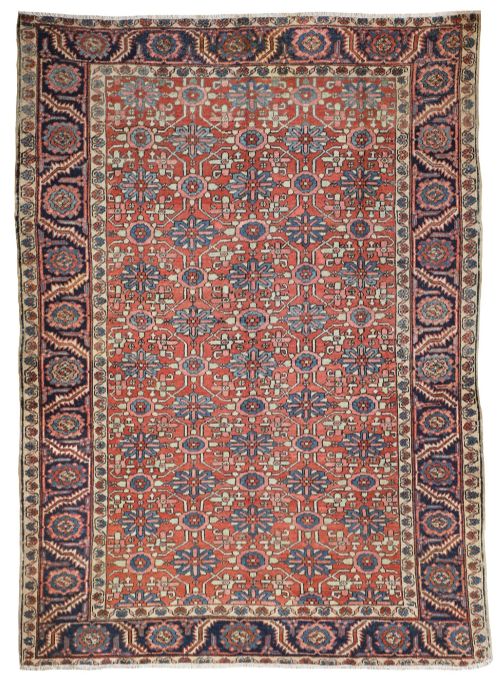
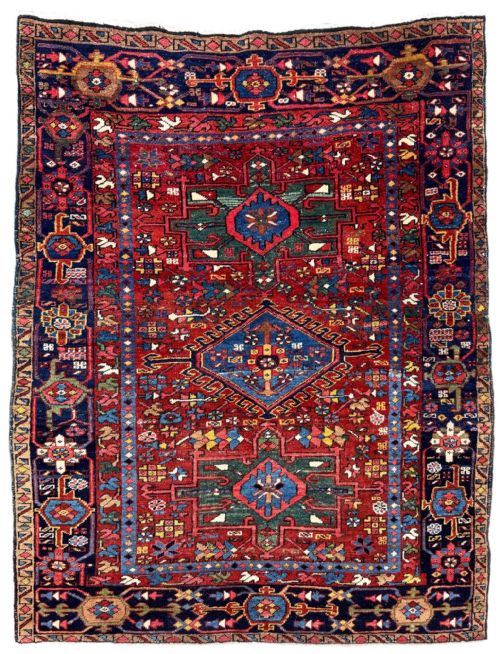
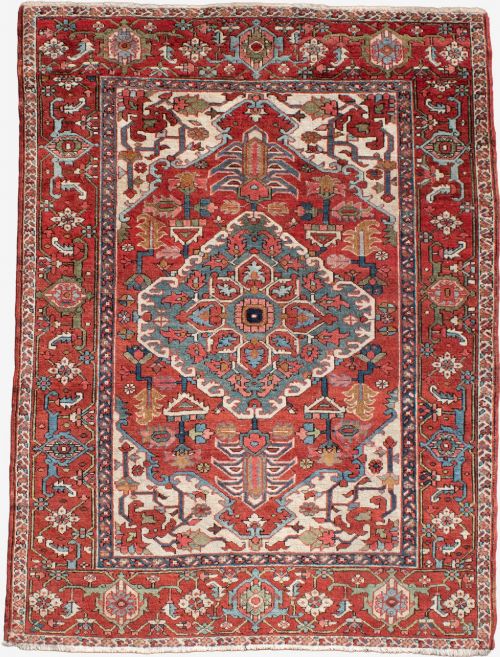
These vintage serapi wool rug examples bring bold Northwest Persian artistry into a room, offering large carpets and runners woven with traditional geometric medallions.
Vintage Serapi Wool Rug
When someone searches for a vintage serapi wool rug, they are looking at hand-knotted floor coverings originating from Northwest Persia, specifically associated with Heriz styles and Serapi weaving traditions. The pieces appearing here span decades from the late nineteenth century through to the early twentieth century, taking the form of large carpets, gallery carpets, smaller area rugs, and long hallway runners.
The version most commonly met on this page is the antique Heriz carpet, often sharing the bold geometric vocabulary and large-scale central medallions typical of Serapi wool rugs. These floor coverings range from compact square proportions measuring over a metre to expansive carpets exceeding four metres in length.
What varies in quality
The visual strength of the central medallion and the balance of the field design determine the distinction between ordinary and exceptional examples. Rugs that maintain crisp geometric lines and harmonious colour placement demonstrate superior artistic execution.
The physical integrity of the wool pile and the stability of the cotton foundation govern the longevity of each carpet. Tighter knotting and well-preserved edges separate robust gallery carpets from specimens showing extensive historical wear.
The listings on this site span production dates from 1870 through to 1930, utilising wool and cotton across both Heriz and Serapi design traditions.
The Vintage Serapi Wool Rug Glossary
- Serapi
- A sub-style of Heriz carpet from Northwest Persia, known for large-scale geometric medallions and open field designs. These pieces date predominantly to the nineteenth and early twentieth centuries.
- Heriz
- A region in Northwest Persia celebrated for durable carpets woven with bold geometric motifs and strong cotton foundations. These rugs often incorporate characteristic large central medallions.
- Runner
- A long, narrow carpet format designed specifically for corridors and hallways. They appear in lengths exceeding four metres alongside more modest proportions.
- Gallery carpet
- An oversized carpet format suited to larger rooms and long spaces. These grand pieces often display complex border arrangements and expansive fields.
Vintage Serapi Wool Rug: Frequently Asked Questions
Where were these rugs made?
These floor coverings originate from Northwest Persia, specifically the Heriz region and surrounding weaving centres known for distinctive geometric carpet production.
The traditions of this area combine durable cotton foundations with resilient wool pile to create heavy, long-lasting carpets.
How do I use a runner rug?
Long hallway runners fit narrow spaces like corridors, entryways, and gallery landings. Their elongated proportions help define walkways while adding warmth to transitional areas.
Matching the runner length to the corridor dimensions ensures the geometric borders remain visible and uncluttered.
What is the difference between Serapi and Heriz?
Serapi rugs are generally regarded as an earlier, bolder sub-style associated with the Heriz region, often featuring more open field designs and large geometric medallions.
Both types share similar wool and cotton materials, though Serapi pieces typically date towards the end of the nineteenth century.
How do I care for a wool carpet?
Regular gentle vacuuming without a rotating brush roll helps protect the wool pile and cotton foundation from dust accumulation. Professional cleaning suited to antique textiles preserves the natural dyed yarns.
Placing the carpet out of direct strong sunlight prevents premature fading of the saturated natural colours.