



Vintage Sentiment Jewellery
Vintage sentiment jewellery carries coded messages of devotion through gold bands, lockets and pendants crafted across the Georgian, Victorian and Edwardian eras.
Vintage Sentiment Jewellery
Vintage sentiment jewellery comprises pieces designed to communicate personal affection, remembrance or fidelity through specific motifs, inscriptions and symbols. When searching for vintage sentiment jewellery, buyers encounter items created to mark personal bonds, ranging from the Georgian period through the Victorian and Edwardian eras into the twentieth century. The selection on this page centres on rings, lockets, pendants and brooches carrying expressions of love or shared faith.
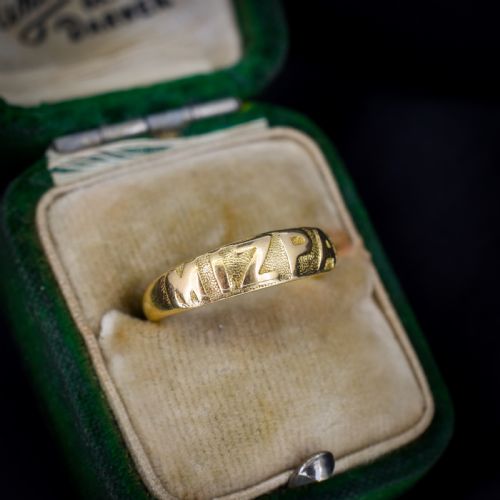
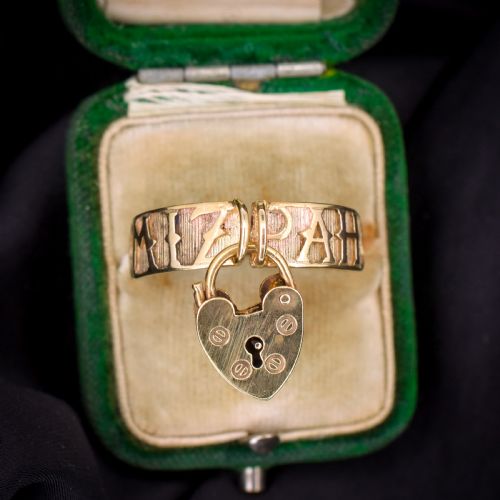
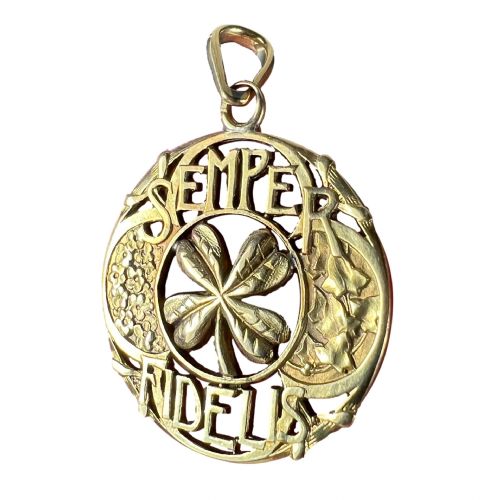
The most common versions met here include inscribed gold bands, heart-shaped lockets and pendants featuring distinct romantic phrases. Pieces frequently incorporate terms like Mizpah or Semper Fidelis, alongside motifs such as the double heart, the padlock and the clover. These objects draw on historical styles spanning Georgian neoclassical work, Victorian ornamentation, French Belle Epoque design and Art Deco geometry.
How vintage sentiment jewellery was made
Goldsmiths constructed these pieces primarily using 18ct yellow gold, 9ct yellow gold and gold back and front techniques, alongside occasional 15ct gold work. Construction methods involved shaping solid gold bands, forming hollow or puffy heart lockets, and fabricating intricate pendant mounts to house glass compartments or gemstone settings.
Surface decoration frequently relied on vitreous enamel to colour inscriptions or motifs, while stone setting techniques incorporated rose cut diamonds and natural rubies. Metalwork styles reflect period-specific manufacturing traditions, from nineteenth-century Birmingham hallmarked bands to French antique workshops.
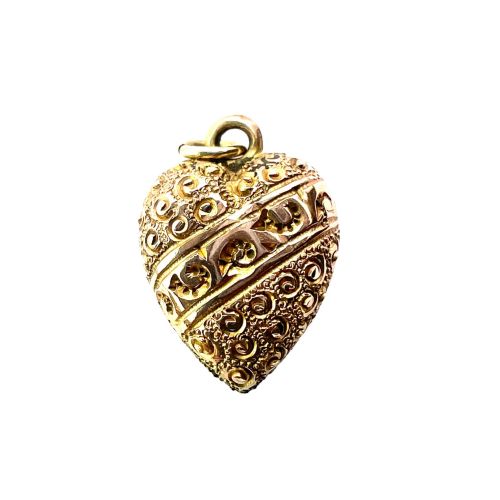
An antique charm reminds an absent lover that they remain divided yet united through the Italian inscription Divisi Ma Sempre Unite.
What varies in quality in vintage sentiment jewellery
Quality in these pieces depends upon the substance of the metalwork and the precision of the engraving or enamelling. Solid gold iterations demonstrate superior structural integrity compared to gold back and front versions, though both require careful preservation of their original surface details. The clarity of inscribed lettering and the integrity of enamel infill distinguish finer examples of sentiment work.
Artistic execution in the shaping of motifs, such as puffy hearts, padlocks and clover leaves, sets individual items apart. Finer pieces maintain crisp relief work and secure gem settings, whether featuring rose cut diamonds or faceted glass photo compartments.
The Vintage Sentiment Jewellery Glossary
- Mizpah
- A Hebrew word meaning a watchtower, used on sentiment jewellery to denote an emotional bond between people separated by distance. It appears frequently on nineteenth-century band rings and love tokens.
- Gold Back and Front
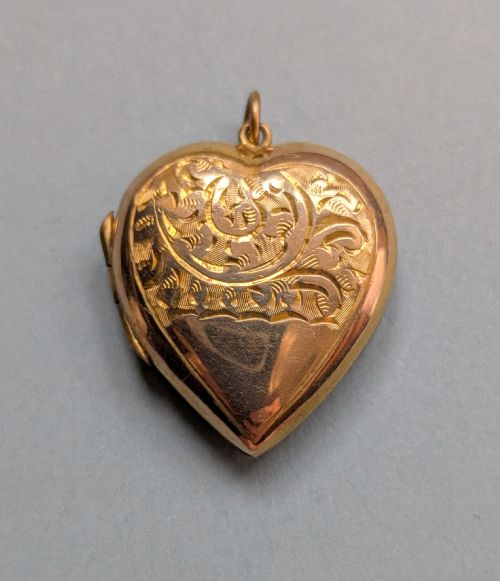
- A method of construction where a thin sheet of gold covers a base metal or supportive core, often utilised for lightweight lockets and pendants. This technique provided the appearance of solid gold while reducing weight and cost.
- Vitreous Enamel
- Glass melted and fused to metal under high heat to create coloured decorative designs. It provides durable colouration for inscribed phrases and motifs on charms and pendants.
- Rose Cut Diamond
- An antique diamond cut featuring a flat base and a domed crown with triangular facets. This style produces a soft, understated reflection characteristic of earlier jewellery.
- Puffy Heart
- A hollow, three-dimensional heart shape formed from two stamped metal halves joined together. This technique allowed jewellers to create substantial pendants with a lightweight interior.
Vintage Sentiment Jewellery: Frequently Asked Questions
What does Mizpah mean on a ring?
Mizpah translates as a watchful gaze between people separated from each other. The word originates from the biblical covenant of Mizpah and served as a popular inscription on Victorian sentiment bands.
Jewellers engraved this term onto gold rings to function as a token of enduring connection and safe return. Wearing the band kept the memory of an absent partner close to the hand.
How do I care for gold back and front lockets?
Gold back and front lockets require gentle handling because their construction involves thin surface sheets over a supportive interior. Avoid submerging them in harsh cleaning solutions that might penetrate hinge mechanisms or glass panels.
Store them separately to prevent scratching the gold surface and keep them away from moisture to protect any internal photograph compartments.
What periods do these pieces come from?
These items span several distinct historical eras, starting from the Georgian period and moving through the Victorian, Edwardian and Art Deco phases. Each era brought specific stylistic choices, from neoclassical restraint to ornate Victorian symbolism.
Twentieth-century pieces also appear, including items from the 1940s and earlier decades that continued traditional romantic motifs. Hallmarks, maker marks and construction techniques help distinguish between these periods.
How were photo lockets used historically?
Photo lockets served as intimate keepsakes designed to hold miniature portraits or locks of hair belonging to loved ones. People wore them close to the heart as a physical reminder of family members or romantic partners.
The inclusion of glass panels allowed the wearer to view the enclosed photograph securely while protecting the paper portrait from daily wear.