



Vintage Scottish Wall Art
These vintage scottish wall art pieces capture rugged landscapes and maritime views through oils and watercolours spanning multiple centuries.
Vintage Scottish Wall Art
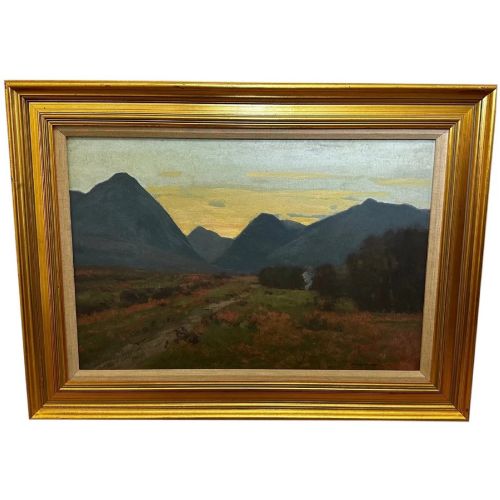
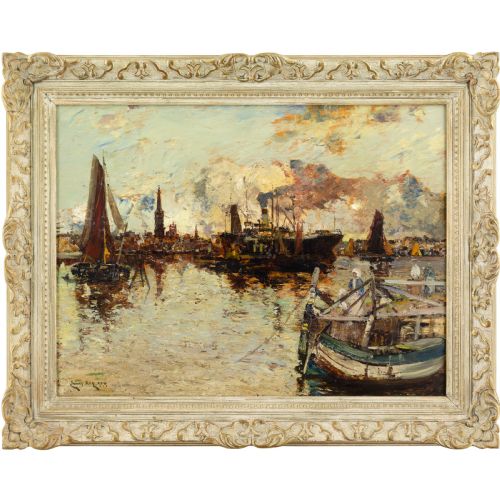
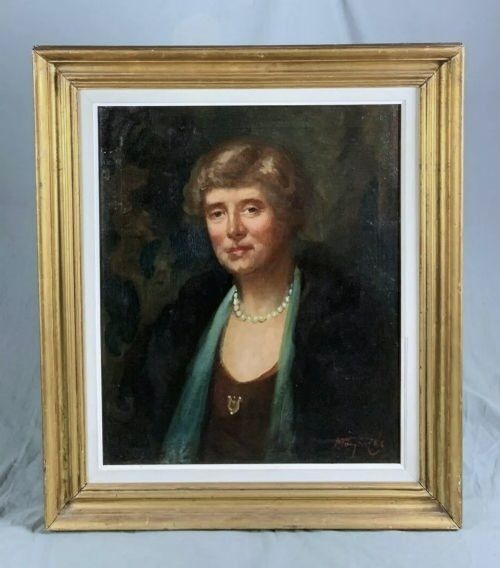
Vintage scottish wall art brings together regional landscapes, coastal scenes and portraits rendered in oils, watercolours and gouache. Buyers encounter everything from traditional Highland views with cattle to mid-century abstract compositions.
The selection ranges from nineteenth-century academic works to mid-century modern interpretations. Pieces on wood panel, canvas and paper reflect distinct regional schools and shifting artistic movements.
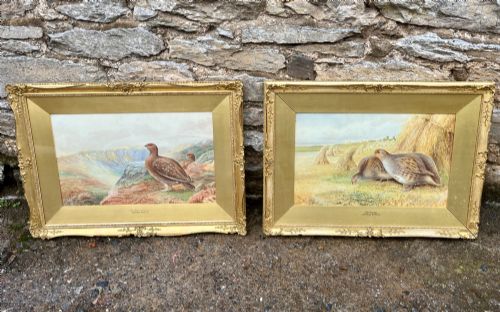
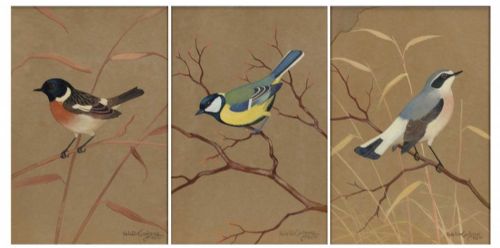
Framed original paintings dominate the selection, offering direct contact with artists who recorded the topography and light of Scotland. Collectors find both intimate watercolours of birds and large oil landscapes.
Materials and execution
Artists built these works using oil paint on canvas, wood panel or board, alongside watercolours and gouache on paper. Ground layers and canvas preparations support heavy impasto strokes in some pieces and thin transparent washes in others.
Gilt framing frequently accompanies the oil paintings, adding weight and depth to the presentation. Traditional mounting protects delicate watercolours behind glass while oils remain open to the room.
Even Scottish sheep had to pose patiently for hours while artists battled midges in the damp Highland air.
Distinctions in quality
Brushwork precision and handling of atmospheric light determine the visual strength of a landscape. Masterly control of pigment gives depth to skies and water, whereas weaker examples rely on formulaic repetition.
Provenance and attribution elevate specific pieces, particularly when a listed Royal Scottish Academician or noted regional artist executed the work. The integrity of the original surface and the condition of the paint layer also dictate the standing of a piece.
Tom Campbell·George Houston·James Kay·Charles James McCall·George Rankin·Ralston Gudgeon·Archibald Kay·Thomas Bromley Blacklock·William Littlejohn·Frank Hider·Donald McIntyre·William Grant Murray·John A. Houston·William McCance·Stanley Orchart·John Charles Tunnard·John Smith of Edinburgh·Sir David Murray·Robert Gemmell Hutchinson·Margaret Laing·AJ Thornton·Owen Bowen·Denys Garle
The Vintage Scottish Wall Art Glossary
- Impasto
- Paint applied thickly to a canvas or panel so that it stands proud of the surface. This technique leaves visible brush or palette knife marks that catch the light.
- Gouache
- An opaque water-based medium that dries to a matte finish. Artists use it to achieve dense colour and solid areas of tone.
- Wood Panel
- A rigid flat support made from timber used by painters before canvas became standard. It offers a stable ground that retains fine detail.
- Watercolour
- Pigments suspended in a water-soluble binder applied in translucent washes to paper. It relies on the white of the paper to provide luminosity.
- Provenance
- The documented history of ownership of an artwork. A clear chain of custody verifies authenticity and tracks the passage of a piece through time.
Vintage Scottish Wall Art: Frequently Asked Questions
How do I care for vintage oil paintings?
Keep paintings away from direct sunlight and sudden temperature shifts to protect the canvas and paint layers. Dust the surface gently with a soft dry brush without applying moisture or cleaning solutions.
Ensure hanging walls remain free from dampness. Professional conservators should handle any deeper cleaning or varnish removal.
What subjects appear in these works?
Landscapes dominate the selection, featuring Highland mountains, lochs, moorlands and coastal harbours. Artists also recorded urban street scenes, golf courses and botanical studies.
Wildlife and animal portraits, particularly game birds and terriers, form another distinct category within the regional school.
How do I distinguish watercolours from oils?
Oils feature a textured paint layer that sits on top of canvas or wood panel, often finished with a protective varnish. Watercolours present a flat matte surface on paper and require framing behind glass.
Reflections under glass immediately identify works on paper, whereas oil paintings show a distinct sheen across the pigment.
Where were these pieces created?
The works originate primarily from artists working across Scotland, capturing specific locations from the Borders to the Highlands and islands. Certain pieces reflect urban centres like Edinburgh and Glasgow.
Regional art societies and academies provided the primary exhibition venues for these painters during the nineteenth and twentieth centuries.