





Vintage Scandinavian Silver Pin
These vintage scandinavian silver pin designs bring mid-century colour and delicate enamel work to a lapel or collar.
Vintage Scandinavian Silver Pin
When you search for a vintage scandinavian silver pin, you encounter a range of brooches, cape clips and small decorative dishes originating primarily from the mid-twentieth century.
The selections span from Victorian antiques and pieces from the 1920s and 1930s through to designs from the 1950s, 1960s and later decades.
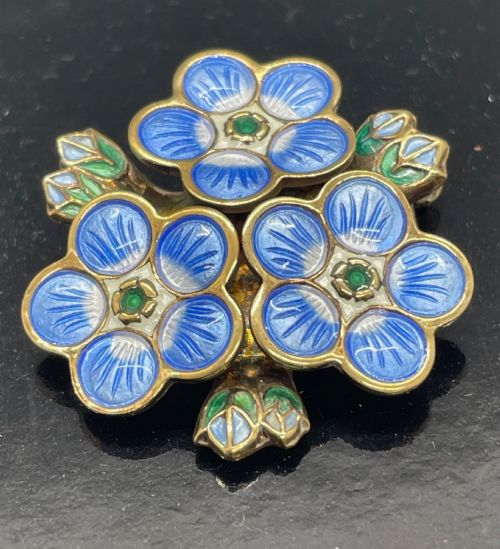
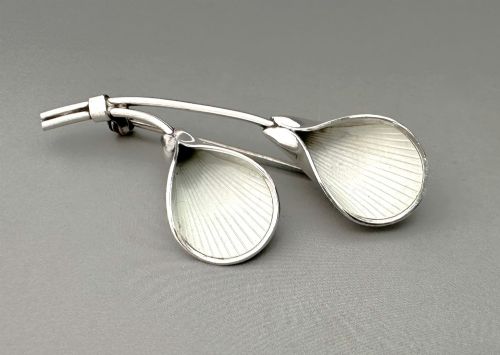
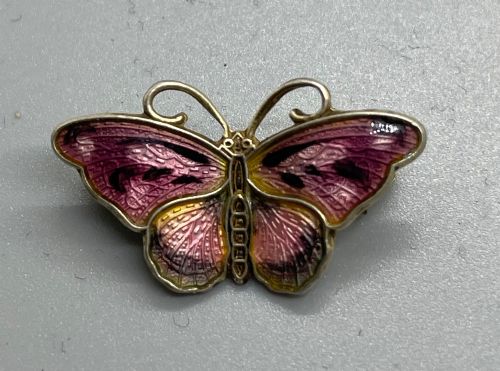
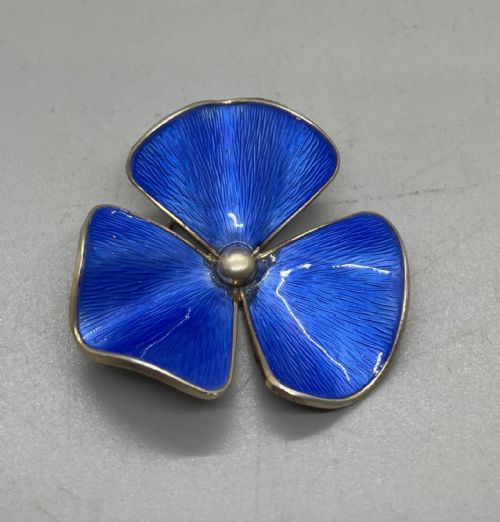
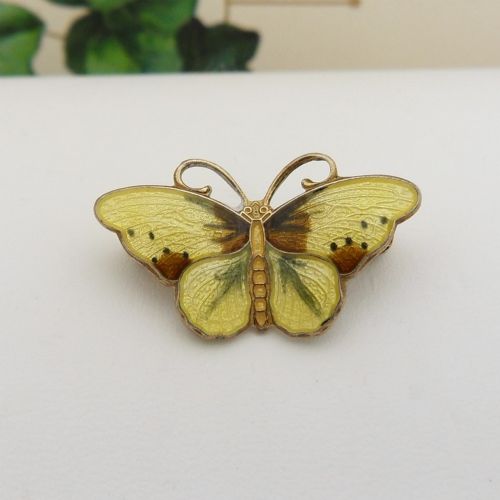
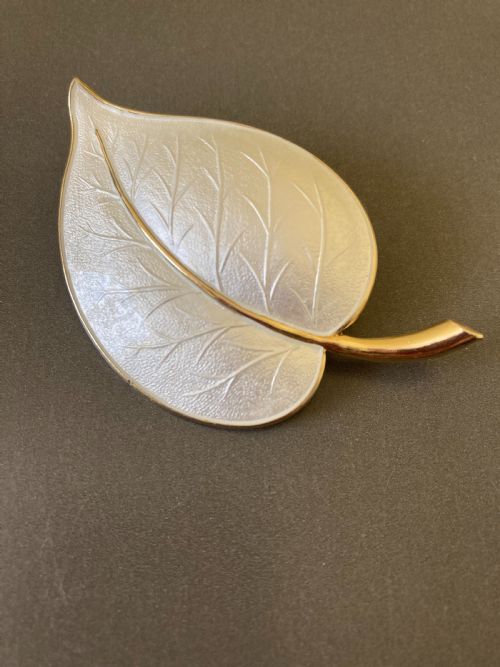
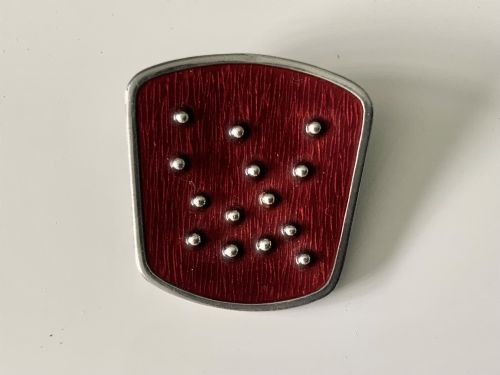
Brooches shaped as butterflies, flowers and geometric bar forms dominate the selection, heavily influenced by Scandinavian Modern and Art Nouveau styles.
How they were made
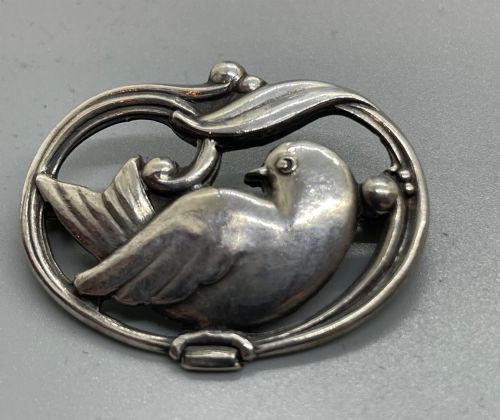
Silversmiths utilised sterling silver, silver gilt and oxidised silver to form the structure of each piece, often applying gold vermeil or gold gilt finishes.
Vitreous enamel and guilloche enamel techniques provided the vibrant red, blue and floral colour fields seen across wings and petals.
Tiny enamel butterflies with outstretched wings flutter across multiple decades of Scandinavian design, refusing to stay still.
What varies in quality
The crispness of the guilloche engine-turning beneath translucent enamel determines the visual depth of the surface pattern.
Makers such as Georg Jensen, Aksel Holmsen, Hroar Prydz and David-Andersen achieved distinct standards of metalwork and enamel preservation that elevate certain pieces above anonymous workshop output.
Aksel Holmsen·Hroar Prydz·Georg Jensen
The Vintage Scandinavian Silver Pin Glossary
- Guilloche enamel
- A decorative technique where an intricate mechanical pattern is engraved beneath a transparent layer of coloured enamel. This method creates a reflective, shimmering surface texture.
- Silver gilt
- Sterling silver that has been coated with a thin layer of gold. It provides the warm appearance of solid gold while maintaining a silver base.
- Skonvirke
- The Danish branch of the Art Nouveau movement. It emphasises organic motifs and traditional craftsmanship.
- Cape clip
- A functional fastener designed to secure heavy cloaks or capes across the shoulders. They often double as decorative brooches.
- Vitreous enamel
- A material made by fusing powdered glass to a metallic substrate by firing. It results in a durable, glossy coloured coating.
Vintage Scandinavian Silver Pin: Frequently Asked Questions
How do I date a silver enamel brooch?
Maker marks, hallmarks and stylistic shifts help narrow down the production period. Mid-century items often favour streamlined butterfly or floral shapes, whereas earlier pieces lean towards traditional Skonvirke or Art Deco geometry.
Examining the pin stem and fastening mechanism also offers clues. Safety catches introduced in later decades differ significantly from simple Victorian c-clasps.
Were these pins used only for clothing?
Most examples function primarily as dress clips, lapel brooches or cape fasteners. Their secure pin backs allowed them to anchor firmly to thick wools and woven textiles.
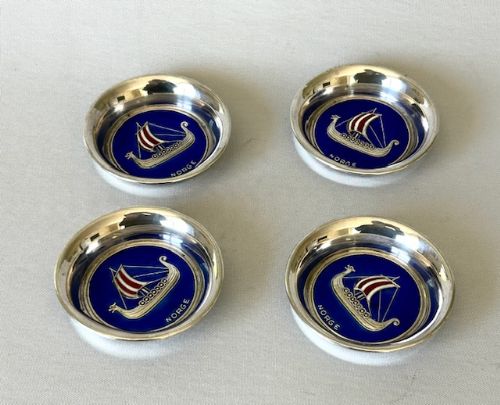
Some related items catalogued alongside them serve as small trinket dishes rather than personal adornment. These miniature vessels share the same enamel and silversmithing traditions.
What is the difference between silver and silver gilt?
Plain silver items display the natural reflective white finish of sterling metal. Over time, this surface can develop a dark patina that requires occasional polishing.
Silver gilt pieces receive an additional microscopic layer of gold over the silver base. This treatment protects the underlying metal from tarnishing while offering a golden hue.
How should I care for enamel jewellery?
Enamel is essentially glass fused to metal, meaning it requires protection from sharp impacts and drops. Store individual pieces away from hard metals to prevent scratching the vitreous surface.
Clean them gently with a soft, damp cloth rather than harsh chemical dips. Submersing vintage enamel in abrasive cleaning solutions can damage the delicate metal settings.