






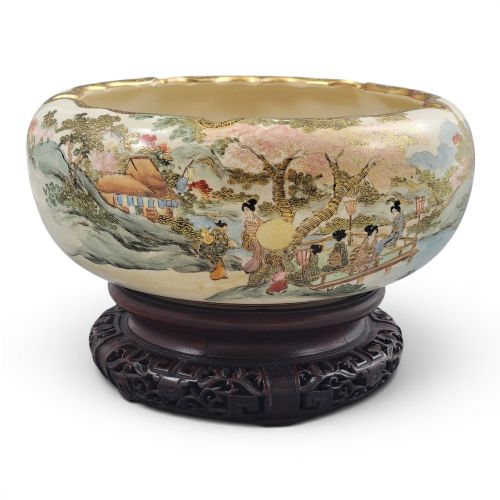


Vintage Satsuma Ceramics
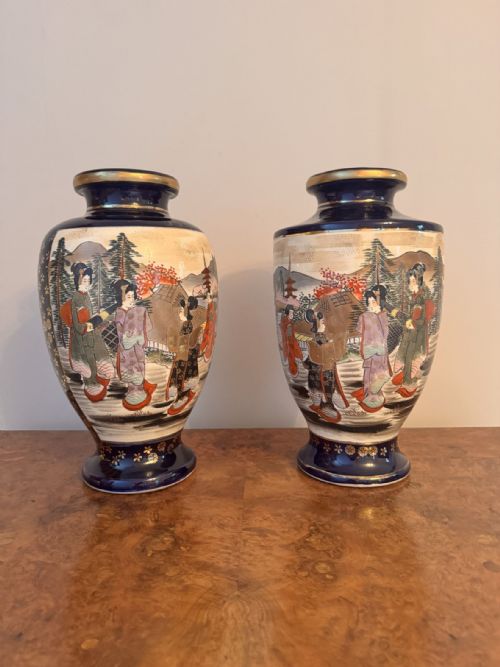
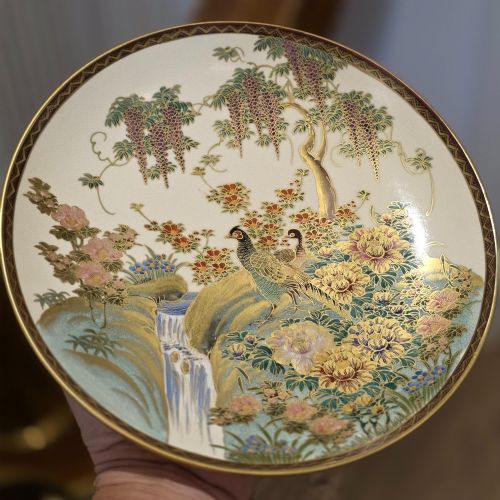
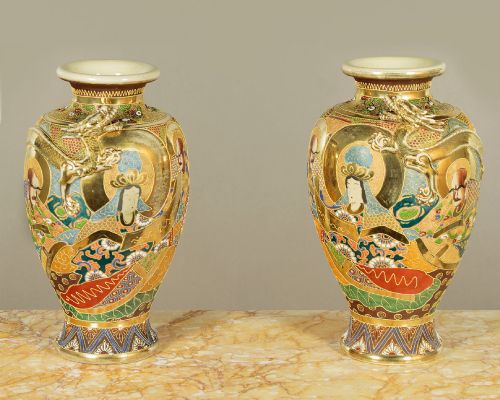
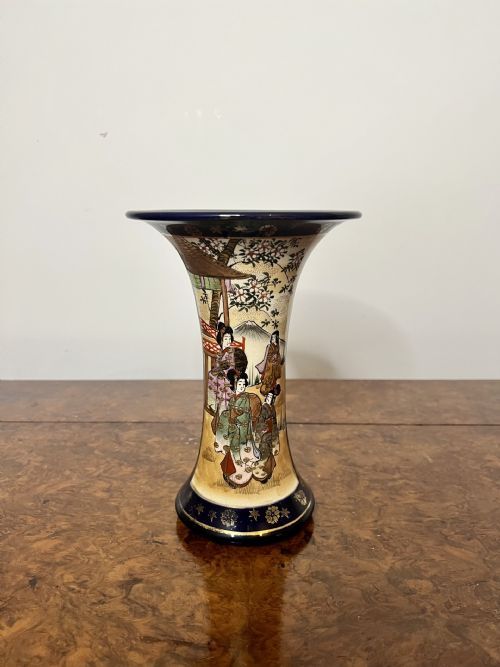
Vintage satsuma ceramics comprise earthenware and porcelain vessels painted with intricate figural scenes and heavy gold leaf, originating mostly from the Meiji period.
Vintage Satsuma Ceramics
Vintage satsuma ceramics encompass decorative vases, table lamps, bowls, and tea sets created primarily during the 19th and early 20th centuries. Buyers searching for vintage satsuma ceramics typically encounter Japanese export pieces featuring detailed figural processions, landscapes, and samurai battles.
The selections span the Meiji, Taisho, and Showa periods, capturing both traditional hand-painted earthenware and later porcelain adaptations. Many examples originate from known manufacturing centres such as Kyoto and Tokyo.
Vessels range from miniature vases to monumental bowls and pairs of converted table lamps fitted with wood and brass bases. The overarching aesthetic merges Japanese motifs with export styles tailored for Western interiors.
How they were made
Makers shaped the body using earthenware or porcelain, frequently applying a fine crackle-glaze that formed the characteristic ivory-toned canvas. Artisans then built up the decoration by hand using polychrome enamel pigments and raised gold leaf.
Many works incorporate intricate gilt figural scenes, geometric inset panels, and traditional mon emblems. Individual workshops utilised specialised painting techniques to render detailed human expressions and dense botanical backgrounds.
Vintage Satsuma Ceramics Retail Price Guide 2026
Typical asking prices for vintage satsuma ceramics among the pieces listed under this phrase on Sellingantiques today, from the lower quarter to the upper quarter. They describe what is for sale here now, not the wider market.
What varies in quality
The standard of painting determines the tier of the piece, separating rapid export wares from works executed by named masters and renowned workshops. Precision in the facial expressions, complexity of the figural processions, and density of the gold leaf application distinguish superior examples.
Scale and form further influence distinction, with monumental bowls and balanced pairs achieving greater presence than standard single vessels. The crispness of the underlying crackle-glaze and the preservation of the enamel pigments also dictate the standing of an object.
Koshida·Shizan·Chosei·Hakusan·Kinkozan·Tokyo Taizan·Hattori·Taniguchi
The Vintage Satsuma Ceramics Glossary
- Meiji Period
- The era in Japanese history spanning from 1868 to 1912, noted for a surge in decorative arts produced for international export. This period yields the majority of highly detailed figural vases and bowls found on the market.
- Earthenware
- Porous pottery fired at lower temperatures, forming the typical absorbent body underneath the crackle-glaze of traditional satsuma wares. It provides a stable texture for the adhesion of enamel colours and gold leaf.
- Mon
- A Japanese heraldic badge or crest used to identify families or clans. These symbols frequently appear in gold on satsuma bowls and vases to denote patronage or association.
- Gilt
- A thin application of gold leaf or powdered gold used to highlight borders, garments, and architectural details. It creates the characteristic metallic shimmer across the surface of the ceramics.
Vintage Satsuma Ceramics: Frequently Asked Questions
What are satsuma ceramics?
Satsuma ceramics are Japanese pottery and porcelain items characterised by an ivory-coloured crackle-glaze decorated with polychrome enamels and gold leaf.
Most pieces date from the Meiji period and were produced specifically for export to Western markets.
How do I care for satsuma lamps?
Satsuma table lamps require gentle dusting with a soft, dry cloth to protect the delicate enamel and gilt decoration from abrasion.
Keep them away from direct sunlight to prevent the fabric shades and painted surfaces from fading over time.
Are all satsuma pieces porcelain?
Traditional satsuma pieces use a fine earthenware body rather than true porcelain, which gives them a slightly softer feel and absorbent base.
Later adaptations and certain export items did incorporate porcelain, alongside the standard earthenware bodies.
How do I identify Meiji period pieces?
Meiji period items are usually identified through their dense figural processions, samurai scenes, and intricate hand-painted enamel work.
Many of these works also feature artist signatures or workshop seals stamped or painted on the base.