

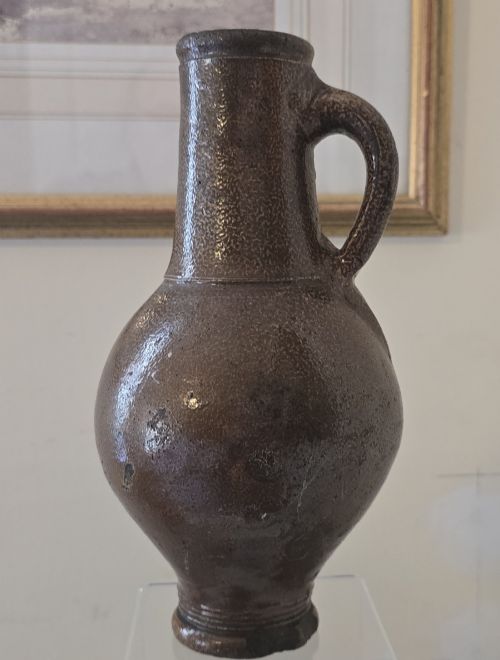
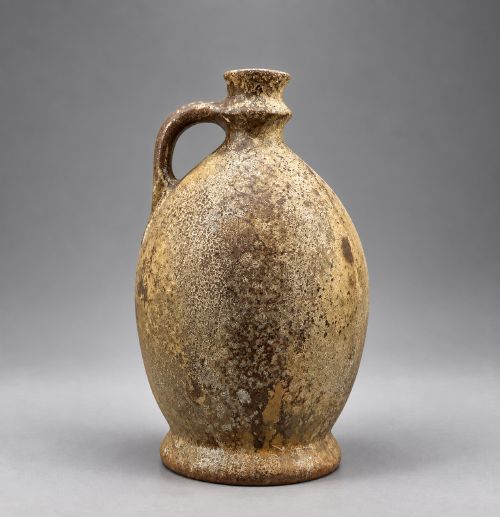



Vintage Salt Glazed Jug
These vintage salt glazed jug pieces are durable stoneware vessels prized for their distinctive pitted texture and historical utility.
Vintage Salt Glazed Jug
When you search for a vintage salt glazed jug, you are examining a category of robust ceramic containers utilised for holding liquids over past centuries. These functional items span periods from the seventeenth century through to the early twentieth century, encompassing Victorian, Restoration, and German styles.
The objects take diverse forms on this page, including flagons, bottles, ewers, and puzzle jugs. You will frequently encounter nineteenth-century examples, particularly harvest jugs and commemorative pieces originating from workshops such as Doulton Lambeth.
Makers shaped these utilitarian forms from dense clay bodies, sometimes mounting them with silver rims or decorating them with cream sprigged motifs. Continental carafes and English vessels alike demonstrate the enduring utility of this hard-wearing ceramic tradition.
How they were made
Potters threw dense clay on a wheel to form the primary body of the jug, occasionally adding handles or spouts by hand. The characteristic texture derived from common salt thrown into the kiln during the high-temperature firing process.
The vaporised salt reacted with the silica in the clay to produce a vitrified, orange-peel glaze across the surface. Artisans sometimes applied cream sprigged reliefs to the exterior before firing to create decorative contrast against the mottled stoneware ground.
Vintage Salt Glazed Jug Retail Price Guide 2026
Typical asking prices for vintage salt glazed jug among the pieces listed under this phrase on Sellingantiques today, from the lower quarter to the upper quarter. They describe what is for sale here now, not the wider market.
The listings span from the seventeenth-century Fulham pottery era through to the twentieth-century Continental carafe forms.
What varies in quality
The distinction between ordinary and exceptional pieces often rests upon the crispness of the moulded sprigging and the uniformity of the speckled glaze. Finer vessels display sharp relief work and balanced proportions without distortion from the kiln.
John Dwight Fulham Pottery·Doulton Lambeth·Royal Doulton
The Vintage Salt Glazed Jug Glossary
- Salt Glaze
- A glossy, translucent finish with a texture resembling an orange peel, created by throwing salt into the kiln at the peak of firing. This chemical reaction bonds sodium with the clay body to form a durable vitreous coating.
- Stoneware
- A heavy, opaque ceramic fired at high temperatures until the clay body vitrifies and becomes impermeable to liquids. It resists chipping better than earthenware and requires no internal lead glaze for holding water.
- Sprigged
- A decorative technique where separate moulded clay reliefs are applied to the unfired surface of a vessel using slip as an adhesive. These raised motifs frequently depict hunting scenes or botanical patterns.
- Flagon
- A large vessel with a handle and narrow neck, traditionally used for holding beverages like wine or ale. These containers often feature heavy stoneware walls to keep contents cool.
- Ewer
- A large jug with a flared spout and an arched handle, historically utilised for pouring water at a basin. Many surviving examples serve a purely decorative function.
- Puzzle Jug
- A ceramic vessel featuring a perforated neck that prevents normal drinking, requiring the user to sip through a hidden tubular spout. These interactive tavern items tested the dexterity of guests.
Vintage Salt Glazed Jug: Frequently Asked Questions
How do I clean a salt glazed jug?
Wash the stoneware gently using warm water and a mild detergent with a soft cloth. Avoid harsh scourers that might damage the historical surface.
Dry the vessel thoroughly with a soft towel to prevent moisture retention in any microscopic fissures.
Can I use these jugs for liquids?
Many historical stoneware vessels remain water-tight due to the vitrified nature of the salt glaze. However, testing with cold water first is advisable before serving drinks.
Keep in mind that pieces with silver rims or structural age cracks should be reserved strictly for display.
How do I date a salt glazed jug?
Examine the form, base manufacturing marks, and decorative style to estimate the period of production. Seventeenth and eighteenth-century pieces often display hand-thrown irregularities and simple incised labelling.
Victorian items frequently bear specific factory stamps or commemorative dates such as jubilee markings that narrow down the timeline.
What is a harvest jug?
A harvest jug is a large ceramic container traditionally filled with ale and carried into the fields during autumn agricultural gatherings. These vessels frequently feature applied hunting motifs and generous loop handles.
Many nineteenth-century examples include silver rims added to reinforce the top rim during heavy communal use.