


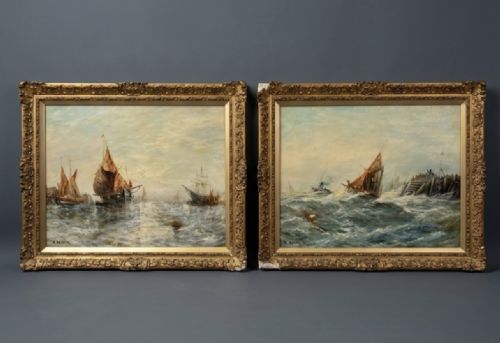
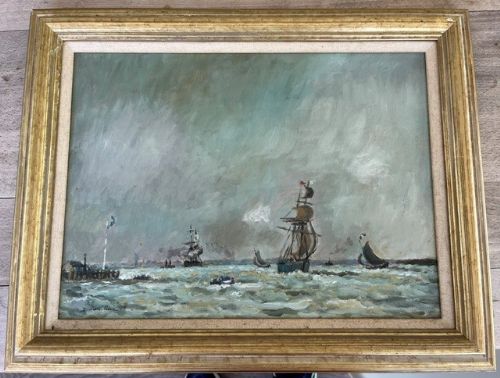
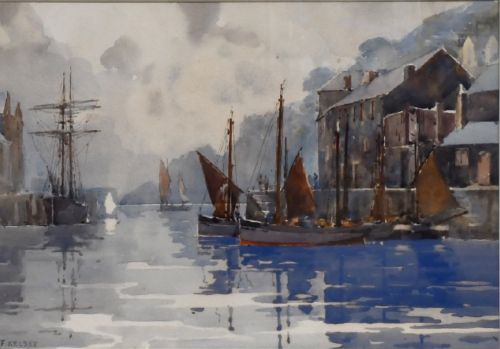
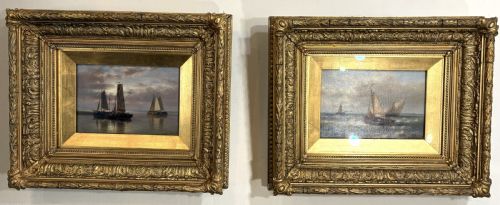

Vintage Sailing Ship Artwork
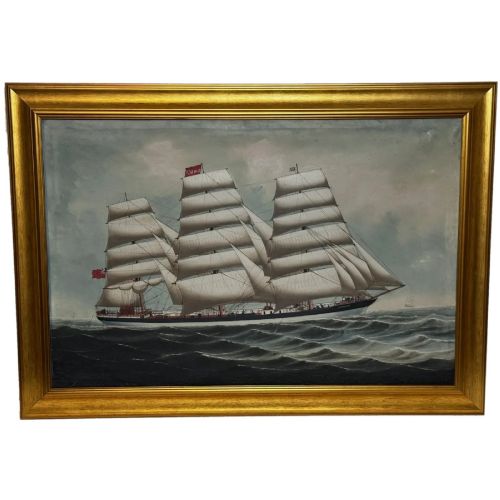
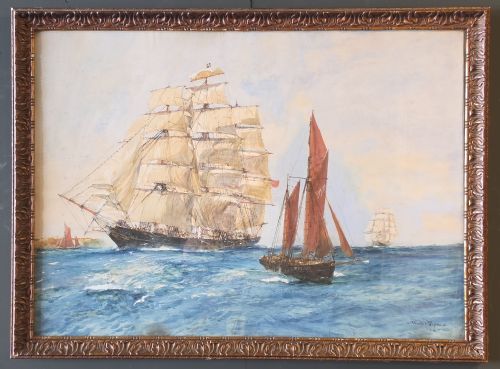
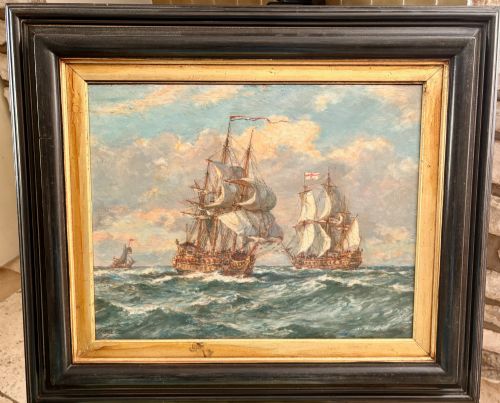
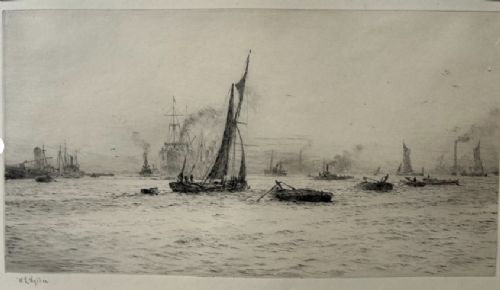
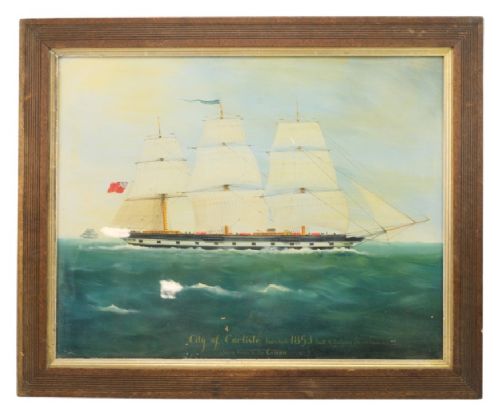
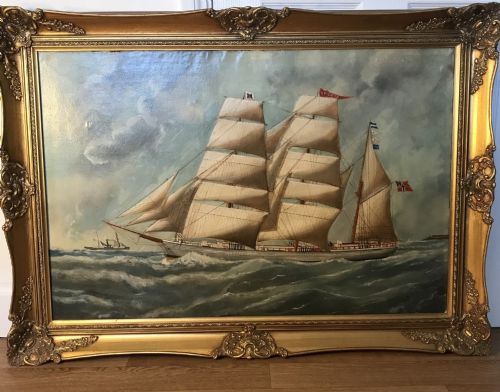
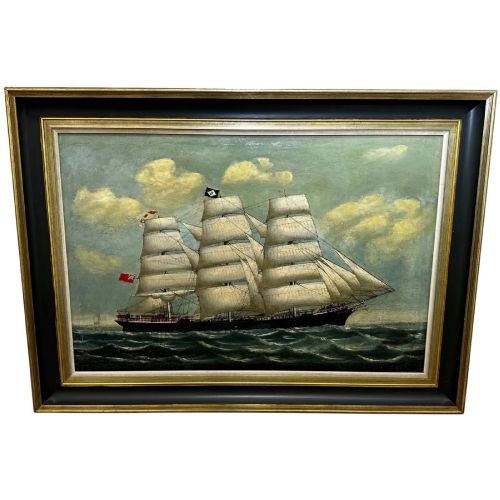
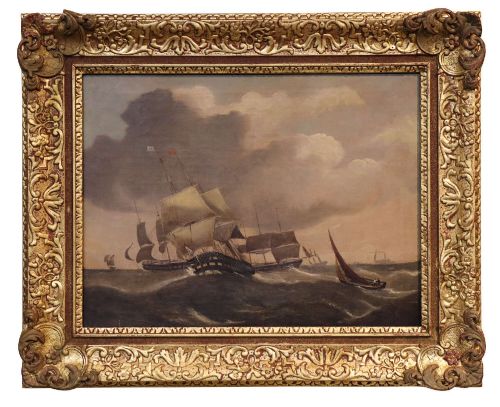
Vintage sailing ship artwork brings the power and scale of historic vessels into a room through oil, watercolour, and mixed media.
Vintage Sailing Ship Artwork
Vintage sailing ship artwork encompasses paintings, watercolours, etchings, and dioramas depicting maritime scenes from the nineteenth and twentieth centuries. Buyers searching for vintage sailing ship artwork encounter depictions ranging from stormy seas and coastal watercolours to precise portraits of named clippers and warships.
The selections span Victorian marine realism, Edwardian coastal scenes, and mid-century maritime interpretations. Pieces on this page originate from British, French, and international hands, recording commercial barques, lighthouses, and naval engagements.
How they were made
Artists relied on oil paint on canvas, board, or card to capture the shifting light on water and the heavy rigging of vessels. Watercolours on paper offered a lighter medium for coastal sketches and detailed harbour views, often finished with pencil or ink.
Framing frequently involved gilt wood and glass to protect delicate watercolours and paper works, while three-dimensional pieces utilised carved wood and mixed materials to construct maritime dioramas.
Listings feature works executed in oil, watercolour, and pencil across the nineteenth and twentieth centuries.
What varies in quality
Quality rests in the precision of the vessel's rigging and hull construction, distinguishing works by trained marine specialists from amateur efforts. The handling of atmosphere, particularly the rendering of turbulent water and changing light, separates finer canvases and watercolours from standard decorative items.
Provenance and attribution to documented painters elevate a work's standing, alongside the original condition of the paint surface and contemporary framing.
Reginald Arthur Borstel·Charles Edward Dixon·Bernard Gribble·William Lionel Wyllie·Abraham Hulk I·William Frederick Settle·Thomas Bush Hardy·William Wyld·Marie-Edouard Adam·Dion Pears
The Vintage Sailing Ship Artwork Glossary
- Watercolour
- A painting method where fine pigment is suspended in water-based solution on paper. It allows for translucent washes that suit coastal skies and gentle seas.
- Oil on Canvas
- A traditional technique using pigments bound in drying oil applied to stretched fabric. This medium provides rich texture and depth suitable for dramatic storm scenes.
- Maritime Realism
- An artistic style focused on accurate depiction of ships, maritime topography, and naval architecture. It requires detailed knowledge of vessel rigging and sea conditions.
- Diorama
- A three-dimensional display incorporating carved and painted models of ships within a framed setting. These constructions often represent specific vessels using wood and mixed media.
Vintage Sailing Ship Artwork: Frequently Asked Questions
How do I identify the period of a maritime painting?
Examine the vessel type, clothing of figures if present, and framing materials. Nineteenth-century works often show wooden sailing ships and heavy gilt frames, while twentieth-century pieces incorporate different mounting styles and subjects.
Material supports also offer clues, as board and specific canvas types shifted in manufacture over time. Signatures and dates, when legible, provide direct confirmation of the execution year.
What is the difference between an oil painting and a watercolour?
Oil paintings utilise pigment mixed with drying oil on canvas or board, yielding thick textures and deep colour layering. Watercolours employ water-soluble pigments on paper, creating translucent effects suited to lighter compositions.
Oils generally require sturdy stretching frames, whereas watercolours need glass protection to prevent moisture damage and paper degradation.
How should I care for antique maritime art at home?
Keep framed pieces away from direct sunlight and areas prone to high humidity, which damages paper and canvas alike. Maintain stable room temperatures to prevent wood warping in frames and cracking in older oil paints.
Dust surfaces gently with a soft, dry brush and avoid chemical cleaners on glass or gilt frames.