




Vintage Sailboat Marine Art
When searching for vintage sailboat marine art, collectors encounter framed paintings and model boats capturing the historic movement of vessels across open water.
Vintage Sailboat Marine Art
Pieces grouped under vintage sailboat marine art encompass framed artworks and three-dimensional model boats originating from the nineteenth and twentieth centuries. The selection spans distinct periods including the Victorian era, Edwardian period, and mid-twentieth century.
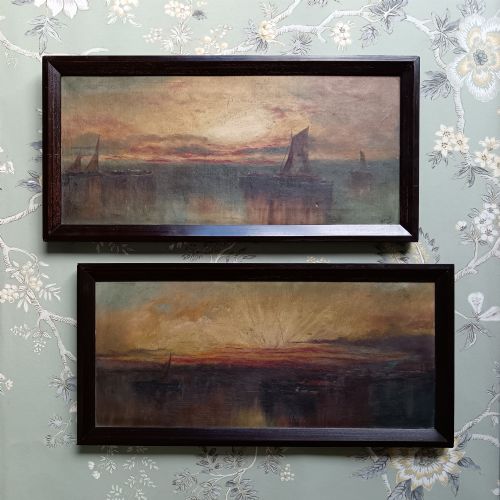
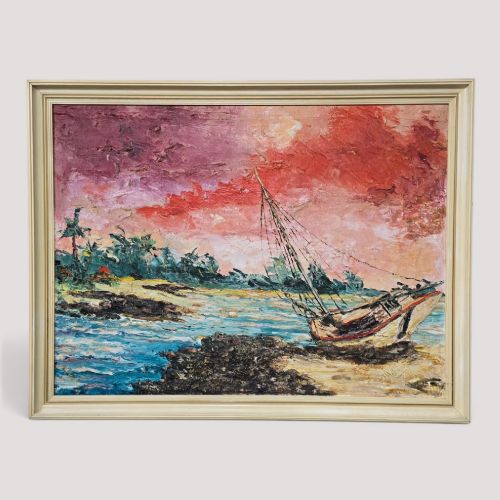
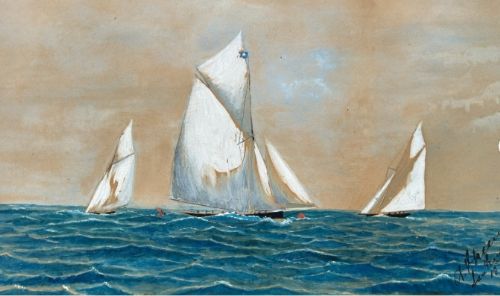
Paintings dominate the selection, featuring oil on canvas, oil on board, and watercolour mediums rendered by British, French, Belgian, and Brazilian artists. Subjects range from racing yachts and trawling luggers to quiet harbour scenes and moonlit seascapes.
Model boats also appear among the offerings, providing tangible representations of historical watercraft constructed during the nineteenth century. Buyers typically meet framed paintings executed in impressionist and maritime styles reflecting coastal topography.
How they were made
Artisans and painters utilised traditional supports such as canvas, paper, wood, and board to execute these marine works. Pigments were applied using oil paint, watercolour, and gouache, occasionally finished with impasto techniques to build texture on the surface.
Framed works frequently incorporate glass protection and gilt mouldings that complement the coastal subject matter. Model boats were constructed from wood, capturing the precise rigging and hull shapes of period vessels.
Several paintings record the precise moment a five-masted ship navigated Drake's Passage, preserving treacherous waters in oil paint.
What varies in quality
The degree of artistic command over light, atmosphere, and maritime perspective distinguishes individual works. Handling of water and sky differentiates standard decorative pieces from accomplished examples created by recognised painters.
Condition of the physical medium, stability of the canvas or paper support, and preservation of the original frame contribute to the overall standard of the object. Works retaining clear provenance or artist attribution command greater attention from collectors.
B. Nash·Elisabeth Bardon·Richard Harry Carter·Louis Suire·Fred Pailhes·Adrian Van Porten·William Tuck·Edward Seago·Hendrik Willebrord Jansen·Samuel Owen·Charles Harmony Harrison·Ernest F. Hill·George Henry Knight·E Tucker·Gustave De Breanski·John McDougal·Paul Jean Clays·Antonio Godoy·Harry Wanless·Charles Euphrasie Kuwasseg·Johan Jens Neumann
The Vintage Sailboat Marine Art Glossary
- Impasto
- Paint applied thickly to a canvas or board so that it stands out from the surface. This technique adds tactile dimension to water and clouds in maritime scenes.
- Lugger
- A type of small sailing vessel featuring lug sails set on one or more masts. These working boats frequently appear in coastal and harbour paintings from the nineteenth and twentieth centuries.
- Seascape
- A work of art depicting the sea, coastal views, or ships operating on open water. This genre forms the core of marine painting traditions.
- Gouache
- An opaque watercolour medium consisting of pigment mixed with a water-bound gum. Artists use it to achieve solid blocks of colour and bright highlights in marine works on paper.
- Provenance
- The documented history of ownership associated with a work of art. Clear records establish the authenticity and timeline of a painting.
Vintage Sailboat Marine Art: Frequently Asked Questions
What periods do these artworks cover?
The listings span from the early nineteenth century through the Victorian and Edwardian eras into the mid-twentieth century. Works reflect distinct historical artistic movements including British impressionism and nineteenth-century maritime traditions.
Individual pieces capture specific decades such as the eighteen-eighties, nineteen-hundreds, and nineteen-fifties. This chronological breadth provides a clear view of evolving marine painting styles.
How should I display framed marine art?
Framed paintings require placement away from direct sunlight to protect pigments and paper supports from fading over time. Stable indoor humidity levels help preserve wooden frames and canvas integrity.
Most pieces arrive ready for wall mounting using appropriate picture wire and secure wall fixings. Matching the frame style to your interior decor enhances the visual impact of the artwork.
What subjects appear in these paintings?
Common subjects include racing yachts, fishing boats, trawling luggers, and merchant ships navigating coastal waters. Scenes frequently feature lighthouses, harbours, and estuaries from British, French, and international locations.
Compositions range from calm daytime anchorages and sunrises to dynamic moonlit seascapes and dramatic open ocean voyages. Each subject reflects the maritime commerce and leisure activities of its period.
Are model boats functional?
Model boats offered in this category serve primarily as decorative display objects and historical artefacts rather than functioning watercraft. They represent traditional vessel architecture from the nineteenth century.
These models capture detailed rigging, wooden hulls, and deck fittings suited for static indoor exhibition. Collectors display them alongside maritime paintings to create cohesive nautical displays.