




Impressionist Coastal Cliff Art
Impressionist coastal cliff art captures the fleeting light and rugged sea-edges of Britain and France through loose brushwork and plein air observation.
Impressionist Coastal Cliff Art
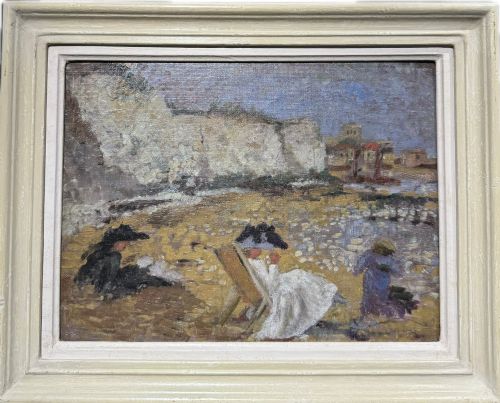
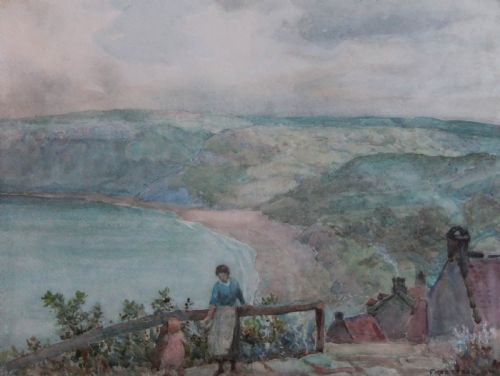
When you search for impressionist coastal cliff art, you are looking at oil paintings, watercolours, and oils on board that record shorelines, headlands, and piers. These works span from the Edwardian era through the nineteen-twenties and nineteen-thirties up to nineteen-fifty, reflecting British and French coastal scenes. The pieces most likely to be met on this page include oils on canvas and watercolours depicting Yorkshire bays, Devon shores, Normandy coasts, and the Riviera.
The subjects range from figures on cliffs and sunbathing scenes to lighthouses, harbours, and tidal rocks. Artists recorded specific locations such as Runswick Bay, Whitby, and Sidmouth alongside anonymous French coastal views. Canvas and paper provide the primary supports, often housed within gilt wood frames that complement the painted light.
Materials and techniques
Paintings in this group rely primarily on oil paint applied to canvas, wood panels, or heavy paper supports. Artists built up surfaces with visible brushstrokes to render the movement of water and the texture of chalk or rock formations. Watercolours on paper capture lighter, more translucent effects for coastal views.
Many of these works are finished in period gilt wood frames that enclose the canvas or paper support. The combination of oil paint and textured wood frames defines the physical presence of these pieces.
Materials recorded across the selection include canvas, oil paint, wood, paper, watercolour, and gilt wood frames.
Assessing quality in coastal art
Quality rests in the handling of light, atmosphere, and the immediacy of the brushwork rather than the mere recording of topographical detail. Stronger works convey the glare of the sea and the weight of coastal cliffs through confident, direct application of pigment.
The sensitivity of the colour palette and the harmony between the painted surface and its period frame elevate certain works above standard topographical views. Greater depth is achieved when the artist uses varied mark-making to distinguish between water, sky, and stone.
Raymond Moritz·Norman Lloyd·William Savage Cooper·James Watson·Rowland Henry Hill·Edward T Jones·Fred Stead·Alfred Egerton Cooper
The Impressionist Coastal Cliff Art Glossary
- Plein air
- Painting outdoors directly from the subject to capture natural light and transient atmospheric effects. This approach defines the core technique behind impressionist coastal scenes.
- Oil on board
- A painting executed on a rigid wooden or composition board rather than stretched canvas. This surface provides a firm ground favoured for smaller, direct studies.
- Watercolour
- A paint consisting of pigment suspended in a water-based solution, applied to paper. It yields transparent washes that suit bright coastal light.
- Gilt wood frame
- A wooden picture frame coated with gold leaf or metallic paint. These frames enhance the visual weight and period context of oil paintings.
- Post-Impressionism
- An art movement following impressionism that extends its use of vivid colours and thick application while emphasising geometric forms or expressive content.
Impressionist Coastal Cliff Art: Frequently Asked Questions
What periods do these paintings come from?
The works date from the early twentieth century, specifically spanning the Edwardian period, the nineteen-twenties, nineteen-thirties, and mid-century up to nineteen-fifty.
This timeframe encompasses both British and French impressionist responses to coastal landscapes.
Are these works painted on canvas?
Many examples are executed in oil on canvas, while others utilise wood panels, boards, or heavy paper supports for watercolours.
Supports varied according to whether the artist worked in the studio or directly on location by the shore.
Which locations are usually depicted?
Identified views frequently feature British coastal spots such as Runswick Bay and Whitby in Yorkshire, alongside Sidmouth in Devon.
French locations including Normandy and the Riviera also appear across the selection.
How should I frame an unframed painting?
Period gilt wood frames suit the aesthetic of these early twentieth-century impressionist works best.
Matching the frame style to the era of the canvas preserves the historical integrity of the piece.