




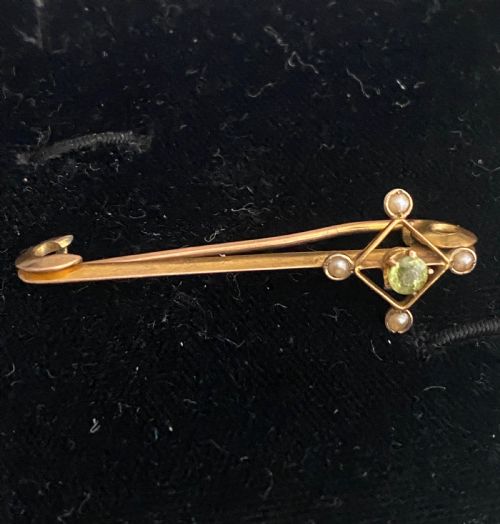


Vintage Safety Pin Brooch
A vintage safety pin brooch turns utility into ornament, offering secure fastening alongside Victorian and Edwardian gold work.
Vintage Safety Pin Brooch
A vintage safety pin brooch takes the functional form of a utilitarian fastener and elevates it into a decorative jewel. These pieces span from the late Victorian and Edwardian eras through the Art Deco period and into the mid-twentieth century.
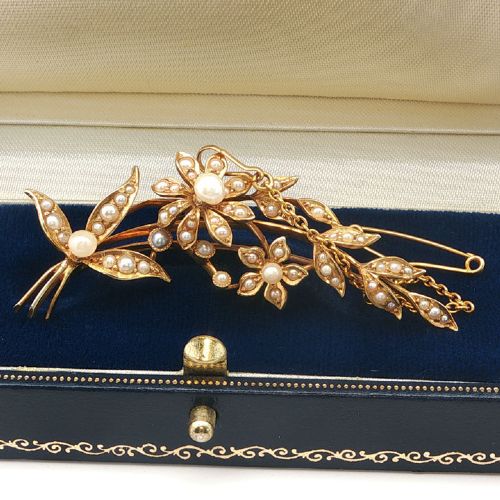
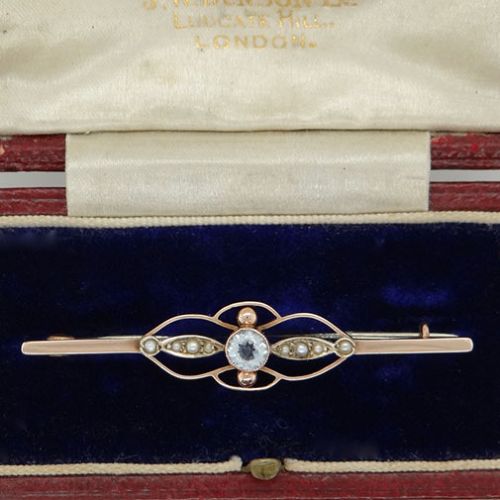
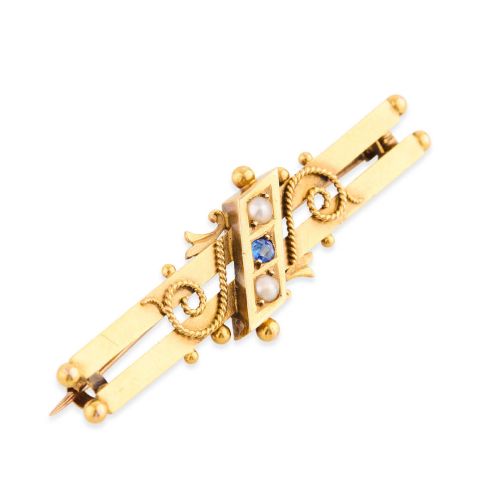
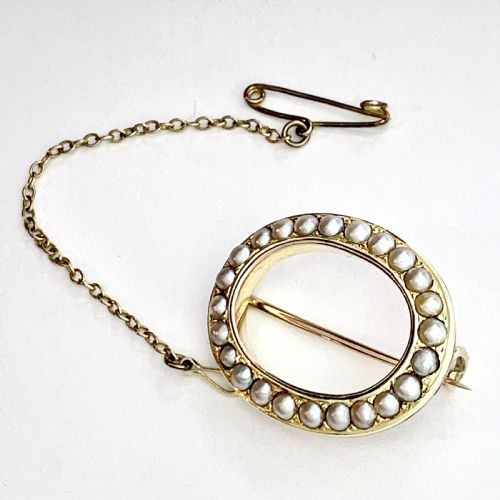
Buyers meet varied forms on this page, including bar brooches, double bar brooches, flower spray designs, and cluster arrangements. Many pieces integrate secure fastenings alongside traditional pin stems, sometimes including removable safety chains.
Origins stretch across multiple decades, showing styles from 1890 through 1950. The heavier gold content tends to appear in the earlier Victorian and Edwardian examples.
How they were made
Maker construction relies heavily on 9ct and 15ct gold, shaped into bars, crescents, and circular clusters. Metalwork techniques involve yellow and rose gold alloys formed into wire frames and solid mountings.
Gemstone setting incorporates pearls, seed pearls, diamonds, aquamarines, sapphires, peridots, opals, garnets, citrines, and turquoise. Stones are secured in collet settings or flush-mounted into the gold structure alongside enamel details.
Vintage Safety Pin Brooch Retail Price Guide 2026
Typical asking prices for vintage safety pin brooch among the pieces listed under this phrase on Sellingantiques today, from the lower quarter to the upper quarter. They describe what is for sale here now, not the wider market.
Some Victorian designers decided that even a humble fastener deserved a heart of turquoise or a spray of golden flowers.
What varies in quality
The distinction between tiers of quality rests upon the weight and purity of the gold, moving from 9ct up to 15ct and 18ct compositions. Heavier metal gauge and substantial construction elevate the stature of a piece.
Quality also depends on the selection and matching of stones, such as uniform pearl clusters, old cut diamonds, or deeply saturated sapphires and aquamarines. The integration of enamel work and complex configurations like double bars or flower sprays adds further distinction.
The Vintage Safety Pin Brooch Glossary
- Seed pearl
- A tiny, naturally formed pearl drilled and strung or set directly into metalwork. These small pearls create delicate floral borders and halo effects.
- Old cut diamond
- A hand-faceted diamond shape common before modern brilliant cutting standards developed. It displays smaller tables and broader facets suited to antique settings.
- Safety chain
- A small secondary chain attached to a brooch pin to prevent loss if the primary clasp fails. Victorian and Edwardian pieces frequently incorporate this practical addition.
Vintage Safety Pin Brooch: Frequently Asked Questions
How do I wear a bar brooch safely?
Pin the piece through tightly woven fabrics to support the weight of the gold and gemstones. Utilising the fitted safety chain provides extra security against loss during wear.
Heavier gem-set designs sit best on tailored lapels, heavy cardigans, or wool scarves. Ensure the pin catch is fully secured before moving.
What periods do these pins cover?
The selection spans from late Victorian and Edwardian eras through Art Deco styles up to the nineteen-fifties. Victorian pieces often use 15ct gold and detailed pearl work.
Later items from the nineteen-twenties and nineteen-forties introduce brighter sapphire and diamond clusters alongside lighter gold standards.
Are these brooches made of solid gold?
The listings feature solid 9ct, 15ct, and 18ct yellow and rose gold constructions. This higher gold purity is typical of pieces made before the mid-twentieth century.
Gold content is usually stamped or hallmarked on the reverse bar or near the pin hinge.
How do I identify an Edwardian pin?
Edwardian examples favour lighter yellow gold frames, airy openwork, and delicate combinations of pearls and peridots. The overall aesthetic leans toward refined, graceful floral motifs.
Victorian counterparts tend to display heavier, denser gold settings with turquoise, garnets, or old cut diamonds.