
Vintage Rustic Kitchen Chairs
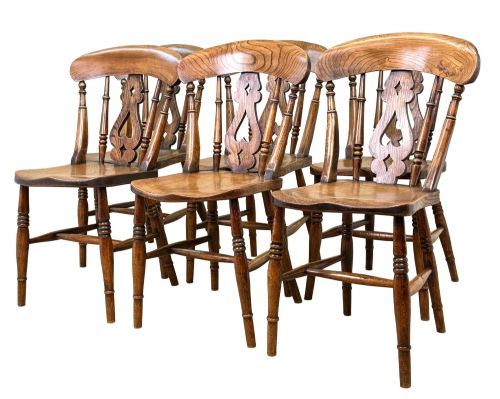
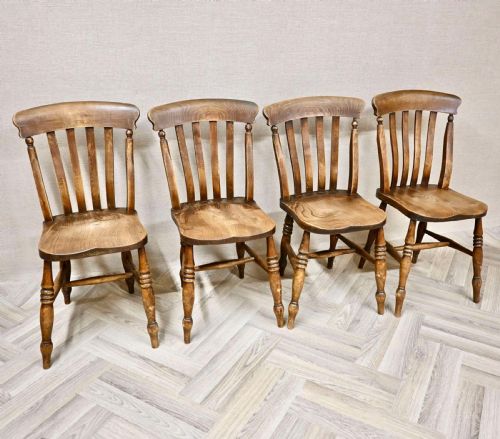
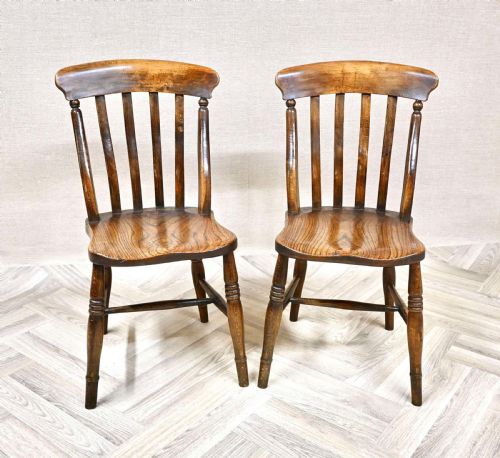
Vintage rustic kitchen chairs bring honest utility to a room, spanning Windsor forms and ladder backs shaped by decades of domestic use.
Vintage Rustic Kitchen Chairs
Vintage rustic kitchen chairs encompass everyday seating built for domestic labour and family meals across the nineteenth and early twentieth centuries. These pieces derive from English country traditions, uniting utility with straightforward construction.
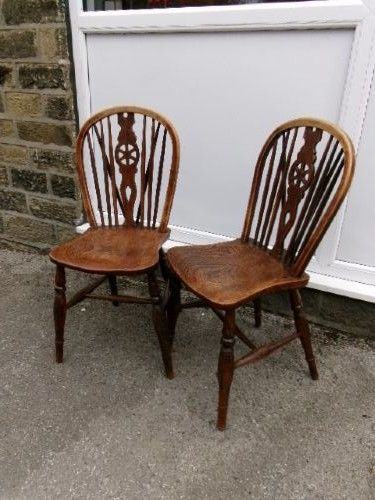
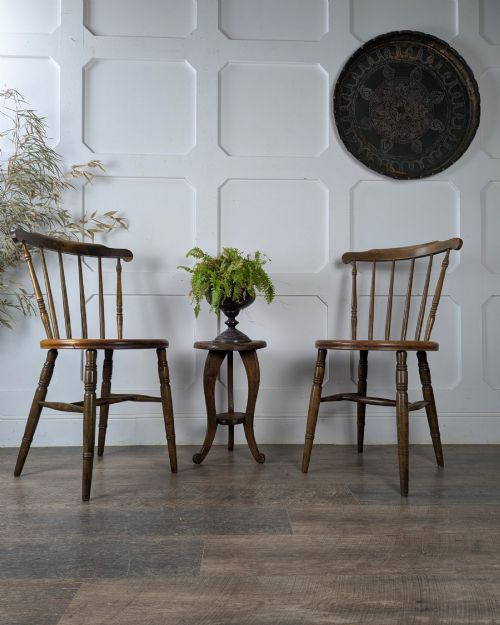
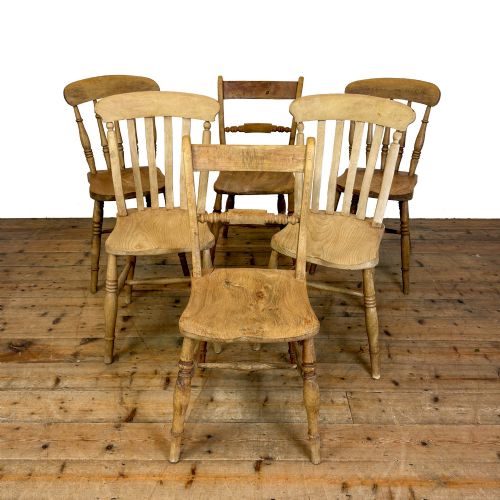
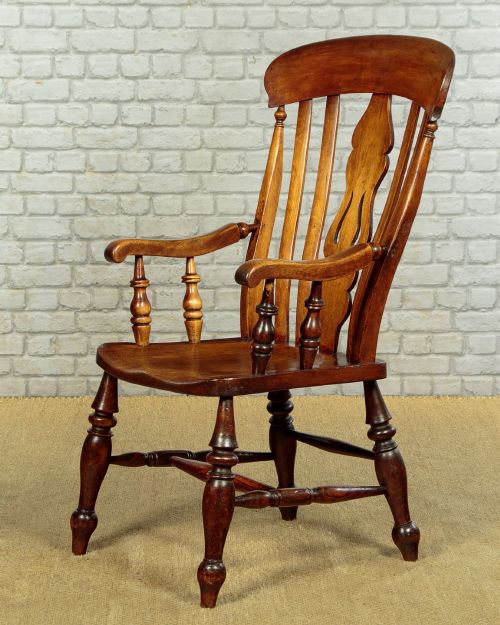
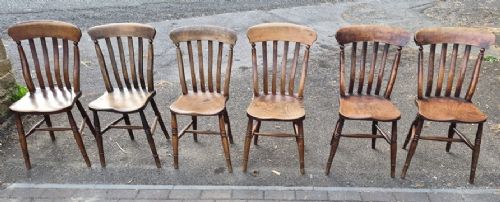
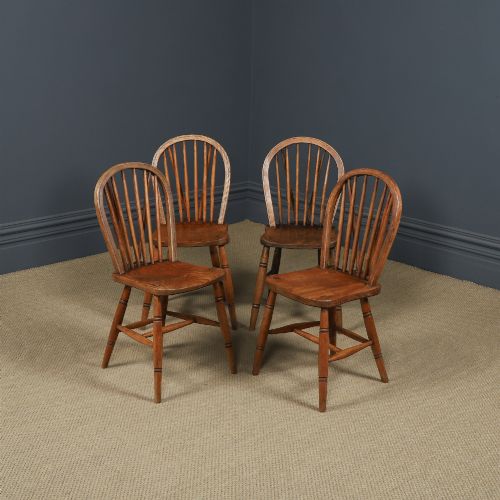
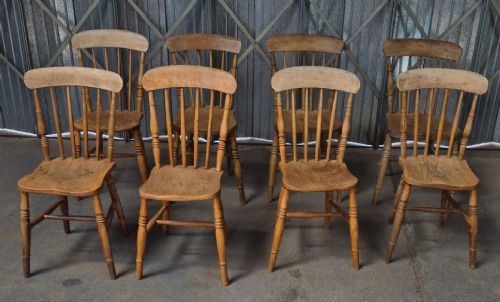
The most common examples on this page are Windsor chairs, often featuring elm seats paired with ash or beech spindles. Sets range from matched groups to harlequin gatherings assembled over time.
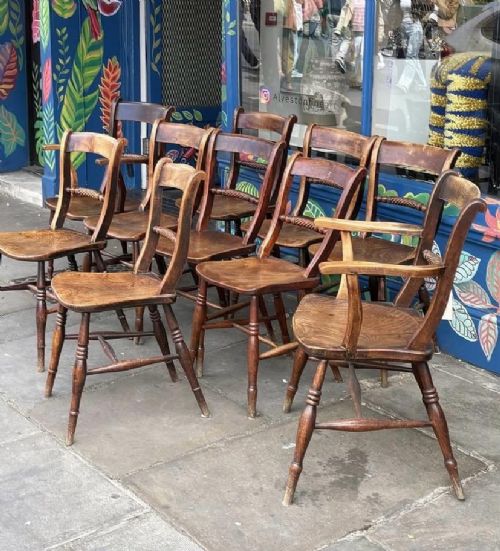
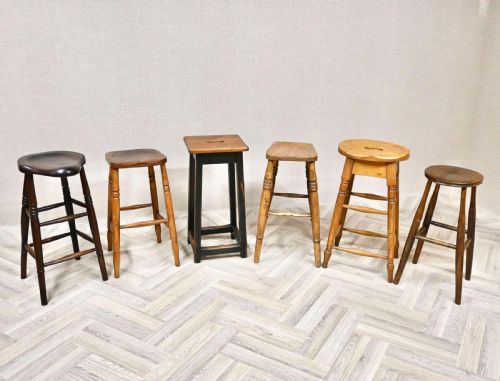
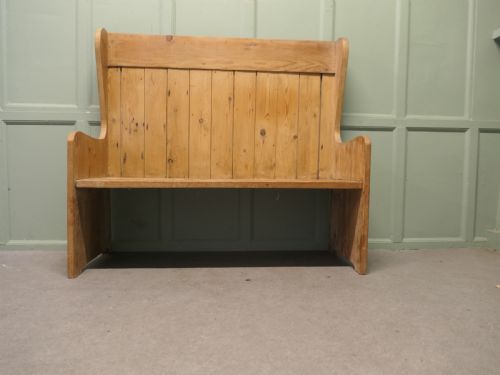
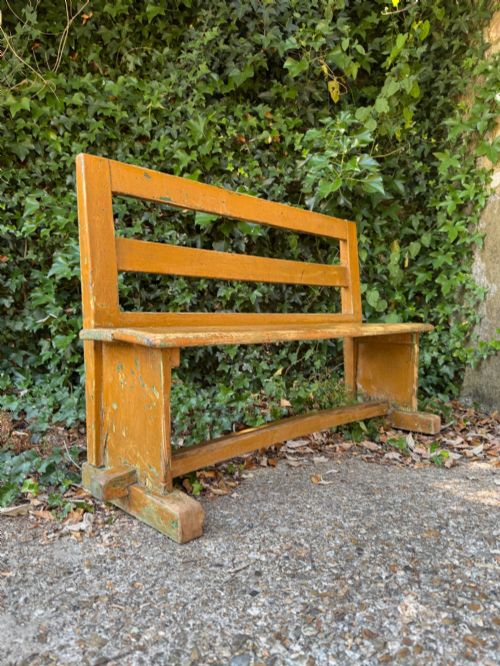
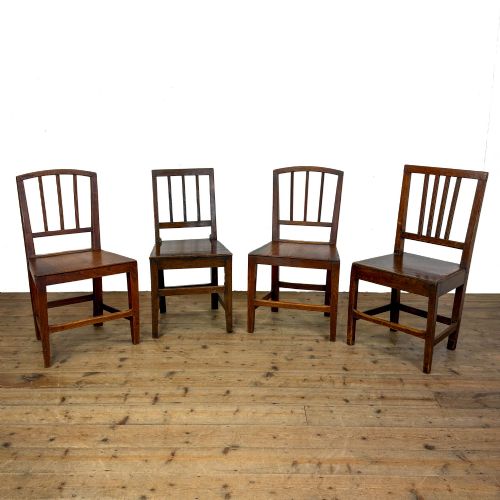
Other forms include ladder backs, bar stools, benches, and settle seats originating from farmhouses, cottages, and country pubs. Each variant reflects the utilitarian demands of rural life.
Materials and construction methods
Construction relies on native hardwoods chosen for strength and resilience, combining elm for solid, saddled seats with ash, beech, and oak for bentwood hoops, legs, and spindles. Pine appears frequently in benches and simpler farmhouse seating.
Makers utilised traditional joinery such as wedged tenons and steam-bending to create sturdy stick backs, hoop backs, and wheelbacks. Double stretchers and robust framing ensured these chairs endured heavy daily wear in busy kitchens.
What distinguishes quality in country seating
Quality rests in the integrity of the timber and the balance of the proportions, where a thick, well-figured elm seat and crisply turned spindles elevate a chair above standard utility work. Wear should appear honest and smooth from use rather than structural compromise.
Matching sets display greater cohesion in turning and timber selection, whereas harlequin groups rely on harmonious heights and shared vernacular styles to sit well together around a table.
The Vintage Rustic Kitchen Chairs Glossary
- Windsor chair
- A wooden chair built with a heavy solid seat into which the legs and back spindles are separately bored. The back typically incorporates a bentwood hoop or bow.
- Harlequin set
- A collection of dining chairs that match in general type, period, or material but vary in individual details and minor design differences.
- Stick back
- A chair construction method where turned wooden uprights form the backrest directly into the seat, rather than using a solid splat.
- Settle
- A wooden bench featuring a high solid back to block draughts and often incorporating a storage box beneath the seat.
- Ladder back
- A chair design featuring horizontal slats between the rear upright posts, commonly found in regional country seating.
Vintage Rustic Kitchen Chairs: Frequently Asked Questions
How do I care for antique kitchen chairs?
Maintain the wood with a traditional beeswax polish applied sparingly to nourish dry timber without building up heavy residues. Avoid placing chairs near direct heat sources that cause wood to split.
Check joints periodically for movement, allowing professional glue repairs before structural failure occurs.
Can I mix different styles at my dining table?
Mixing different styles creates the traditional harlequin look found in many period country homes. Matching seat heights and general proportions keeps the arrangement visually balanced.
Shared materials like elm and ash help unify disparate Windsor and stick back designs.
What is the difference between a Windsor and a ladder back?
A Windsor chair uses a solid wooden seat with separate turned spindles and a bentwood frame. This provides ergonomic support through shaped seats and bow backs.
A ladder back relies on horizontal wooden slats set between vertical rear posts, offering a rigid and upright seating profile.
Are these chairs suitable for daily use?
These pieces were originally built for hard domestic service in farmhouses and kitchens. Their robust hardwood construction handles modern daily dining without issue.
Properly maintained joints ensure they remain functional seating for everyday homes.