





Vintage Rural River Scene
A vintage rural river scene brings the quiet waterways, pastoral riverbanks and gentle streams of past centuries directly onto your wall.
Vintage Rural River Scene
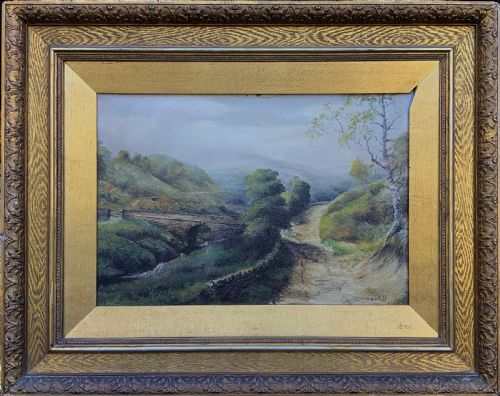
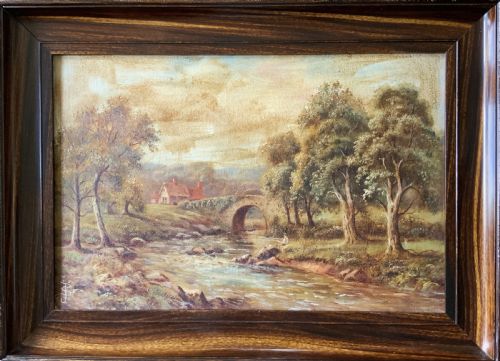
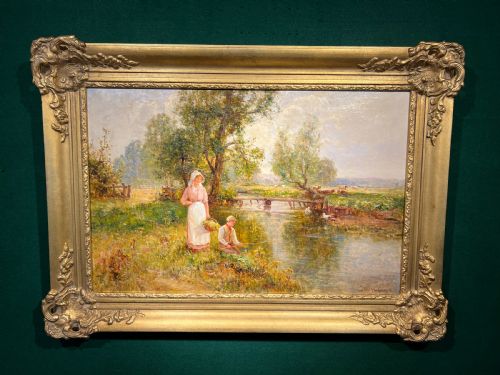
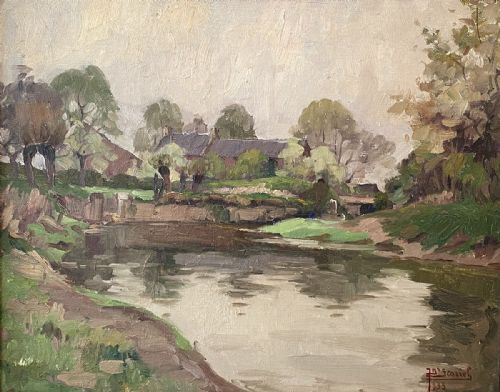
When you search for a vintage rural river scene, you encounter framed oil paintings, watercolours and oil on panel works capturing pastoral waterways, streams and rivers. These pieces span the Victorian and Edwardian eras through to the mid-twentieth century, recording rural life with figures fishing, crossing fords or washing clothes by the water.
The version you are most likely to meet on this page is an oil painting on canvas, often housed in a gilt wood or giltwood frame. Such works depict British and European countryside locations, ranging from quiet Devonshire streams to Yorkshire landscapes and Dutch revival views.
These artworks reflect various artistic movements including British Impressionism, Post-Impressionism, nineteenth-century realism and Victorian pastoral styles. Makers and artists recorded in these listings include George Graham, Sydney Yates Johnson, William Joseph Boyes, Gudrun Sibbons, William Sidney Cooper, Alois Arnegger, George Turner, Henry John Sylvester Stannard, Antoine Bouvard, Wilson, Charles McAuley and Maud Raphael Jones.
Materials and construction
These artworks rely primarily on oil paint or watercolour applied to canvas, wood panels or paper supports. Artists utilised traditional brushwork techniques to capture the play of light on water and the varied textures of foliage, pasture and riverbanks.
Frames are constructed from wood, frequently finished with gilt or giltwood to complement the tonal palette of the painting within. The combination of durable canvas, stable wooden panels and robust wooden framing ensures these works survive across generations.
Subject matter ranges from figures fishing under willow trees to cattle near streams and horse carts crossing fords.
Distinguishing quality in these works
Quality in these pastoral scenes rests on the fidelity of the brushwork and the artist's ability to render light, atmosphere and movement in natural settings. Works by named artists possessing documented exhibition records or distinct stylistic execution display superior depth and compositional balance.
The integration of the artwork with its original wooden or giltwood frame contributes significantly to the integrity of the piece. Superior examples maintain surface stability in the paint layers and show sympathetic framing that preserves the historical context of the canvas or panel.
George Graham·Sydney Yates Johnson·William Joseph Boyes·Gudrun Sibbons·William Sidney Cooper·Alois Arnegger·George Turner·Henry John Sylvester Stannard·Antoine Bouvard·Charles McAuley·Maud Raphael Jones
The Vintage Rural River Scene Glossary
- Oil paint
- A slow-drying paint made by mixing pigments with oils such as linseed, utilised extensively across nineteenth and twentieth century canvas works.
- Giltwood
- Wood carved and covered with a thin layer of gold leaf or gilt, commonly found framing antique landscape paintings.
- Watercolour
- A painting method in which paint is made from pigments suspended in a water-based solution, seen on paper supports in works by artists like William Joseph Boyes.
- British Impressionism
- An art movement focusing on everyday subject matter and loose brushwork, visible in many regional landscape paintings from the period.
Vintage Rural River Scene: Frequently Asked Questions
What periods do these river scenes cover?
The works span the Victorian and Edwardian periods, stretching from the late nineteenth century through the 1920s and into the mid-twentieth century.
Dates recorded on these pieces include the 1890s, 1900, 1910, 1920, 1930, 1940, 1950 and 1960.
What subjects appear in these paintings?
These landscapes portray rivers, streams, cottages, pastoral bridges, and rural activities such as fishing, washing laundry, and crossing fords.
Many compositions also feature animals including cattle grazing next to rural waterways in Kent, Yorkshire, Derbyshire and Devon.
How do I hang a gilt wood framed painting?
Gilt wood frames require sturdy wall fixings due to the combined weight of the wooden structure, stretcher bars, and canvas.
Ensure the hanging wire or brackets on the back of the frame are securely fastened before mounting the artwork on a stable wall.
What is the difference between canvas and panel works?
Canvas paintings utilise stretched fabric primed to receive oil paint, offering a slightly flexible surface often housed in deep wooden frames.
Panel works employ rigid wood supports, providing a solid ground for fine oil paint applications as seen in antique French and British examples.