




Vintage Rural Cottage Art
Vintage rural cottage art captures the enduring appeal of country life through painted views of thatched roofs, quiet farmyards, and rural lanes.
Vintage Rural Cottage Art
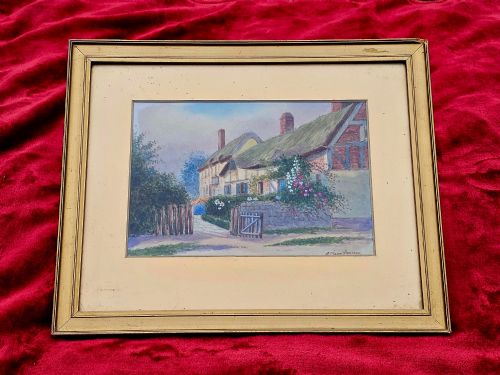
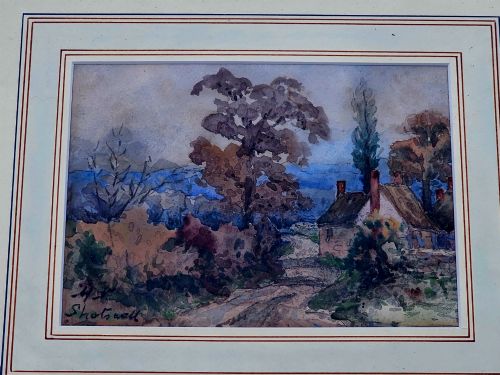
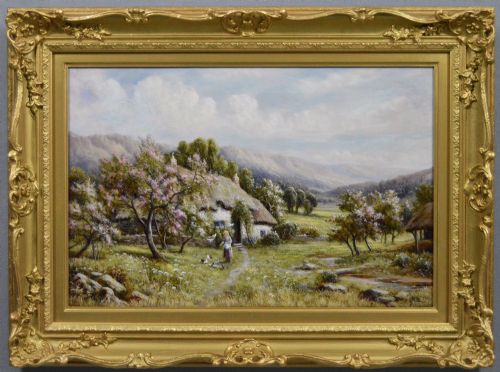
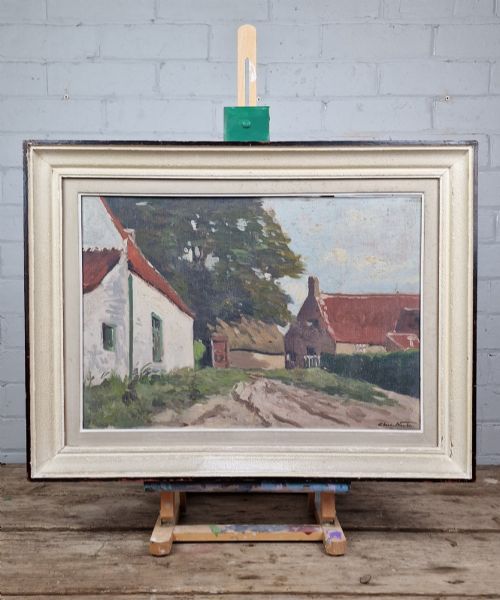
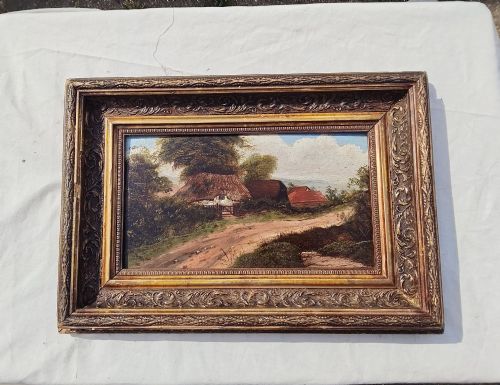
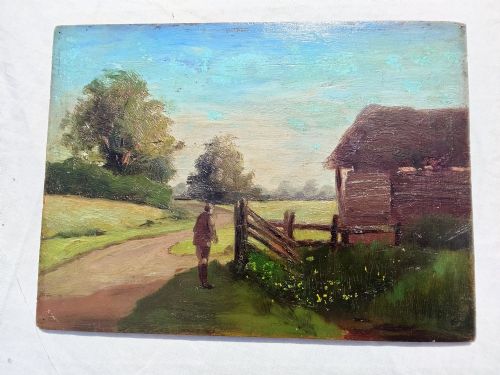
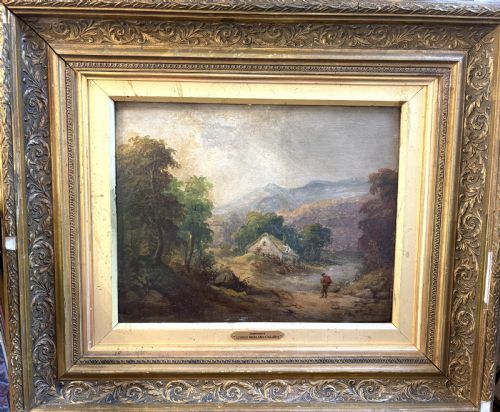
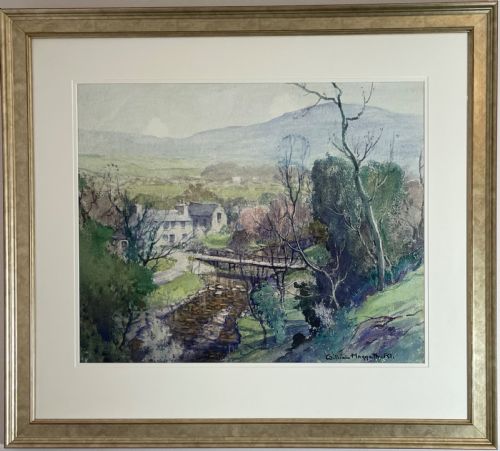
Vintage rural cottage art encompasses paintings and watercolours depicting pastoral scenes, country cottages, and rustic farmyards. These works celebrate the charm of traditional countryside living through varied regional views across Britain.
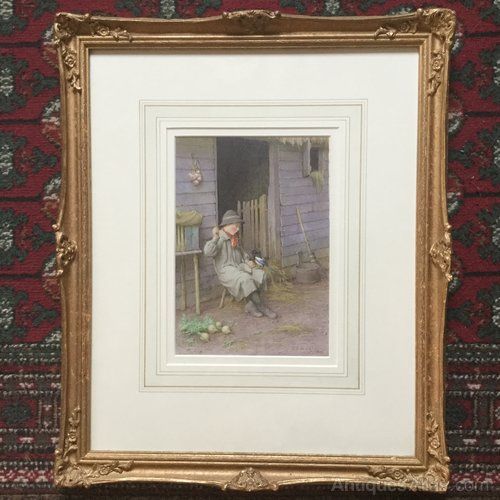
The selections span the nineteenth century through the mid-twentieth century, featuring periods such as the Victorian and Edwardian eras. Painters often placed figures, domestic animals, or poultry outside cottage doors to convey a lived-in atmosphere.
How they were made
Artists worked primarily in oil paint or watercolour, applying pigment to canvas, wooden board, card, or heavy paper. Oil paintings often utilised textured brushwork on canvas or board to build depth within farmyards and landscape backgrounds.
Watercolours relied on fluid washes upon paper to capture light and shadow across thatched roofs and country gardens. Many works received framing in gilt wood to complement the traditional palettes of the period.
Supports include canvas, wood panel, card, and paper utilised across multiple decades.
What varies in quality
Quality rests upon the artist's ability to render light, atmosphere, and architectural proportion with conviction. Stronger examples display confident brushwork or deft watercolour handling that brings immediacy to the rural scene.
Compositional balance and the subtle observation of seasonal light separate routine topographical records from accomplished artistic interpretations. The integrity of the original support and the preservation of the paint surface also influence the standing of each piece.
A. Marie Parsons·Robert John Hammond·Charles Houben·George Morland·Charles Edward Wilson·Reginald Grange Brundrit·Fred Lawson·William Hoggatt·James Hardy Junior·Frederick James Knowles·William Greaves·Charles Vickers·Linnie Watt·Helmut Reuter·Ralph Hedley·Harry Sylvester Stannard·Robert Gemmell Hutchinson·B. Kaufmann·Abraham Hulk Junior·Ernest Walbourn·Henry Sylvester Stannard·Ernest Cox·Herbert Royle·J.V.R.Parsons·Arthur Claude Strachan
The Vintage Rural Cottage Art Glossary
- Oil on canvas
- A painting technique where oil-based pigments are applied to a stretched woven fabric support. This medium allowed artists to achieve rich colour saturation and varied surface textures.
- Watercolour
- A painting method utilising water-soluble pigments on paper. It depends on transparent washes to create luminous effects.
- Board
- A rigid flat support made of wood, card, or panel used instead of stretched canvas. Artists frequently utilised board for smaller plein-air landscape studies.
- Gilt wood
- Wood carved and coated with gold leaf or metallic gilt finish. Frames of this material were standard for framing fine art paintings.
- Genre painting
- Artwork depicting scenes from everyday life, often featuring ordinary people engaged in common activities. These works frequently focus on domestic interiors or cottage doorways.
Vintage Rural Cottage Art: Frequently Asked Questions
What periods do these paintings cover?
The available artworks span from the nineteenth century through the mid-twentieth century, encompassing Victorian, Edwardian, and later periods.
This broad timeline reflects shifting artistic approaches to rural subjects across different generations of painters.
Are these works original paintings?
The selection consists primarily of original oil paintings and watercolours created directly by artists of the respective periods.
Buyers will also find occasional period lithographs produced after original paintings.
How should I frame these artworks?
Many pieces retain their period frames, particularly gilt wood mouldings that complement nineteenth and early twentieth-century aesthetics.
When reframing, select mouldings and mounts that respect the traditional character of the painting.
What subjects typically appear in this art?
Common subjects include thatched cottages, farmyards, figures outside rural dwellings, and agricultural landscapes across Britain.
Artists frequently included domestic animals such as geese, ducks, and cattle to animate the countryside settings.