







Vintage Rummer Glasses
These vintage rummer glasses bring weight, heft and history to the table, offering a tangible link to Georgian and Victorian drinking customs.
Vintage Rummer Glasses
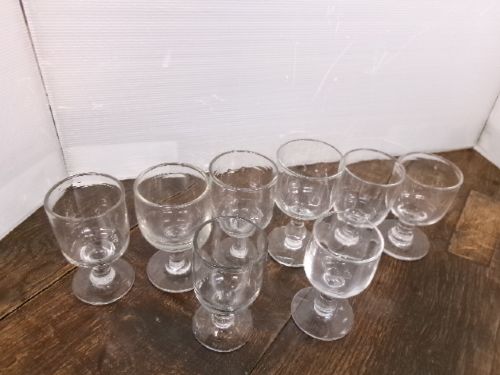
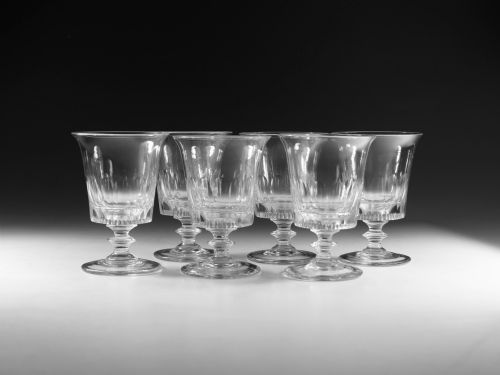
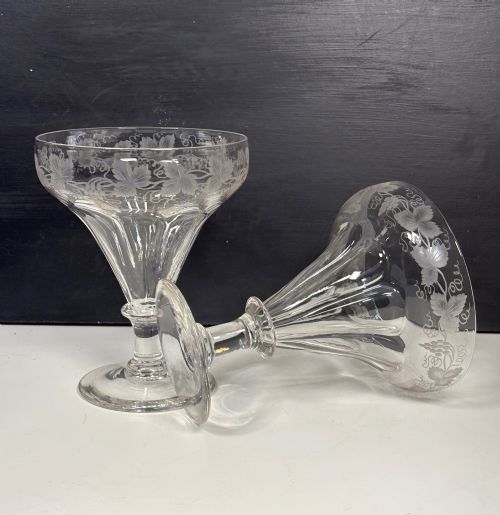
When you search for vintage rummer glasses, you encounter sturdy drinking vessels designed for heavy ales, wines and spirits across the Georgian and Victorian eras. These substantial pieces range from plain utilitarian bowls to large crystal serving goblets engraved with hops and barley.
The version most commonly met on this page is the English or Continental glass featuring a wide bowl and a sturdy stem, spanning periods from the late eighteenth century to the early twentieth century. Sets frequently appear alongside single commemorative or decorative pieces carrying etched bridges, heraldic motifs or polished facets.
How they were made
Makers shaped these drinking vessels using hand-blown lead glass, flint glass and heavy crystal, yielding a thick, resonant wall that withstands daily tavern and parlour use. Artisans manipulated the molten material to form baluster stems and substantial feet, ensuring stability for large, wide-bowled drinking glasses.
Decoration relied on skilled hand-engraving, wheel-cutting, etching and polychrome enamelling. Craftsmen applied intricate motifs such as hops, barley and heraldic designs directly onto the clear or coloured glass surfaces, sometimes combining amber bowls with green stems.
Vintage Rummer Glasses Retail Price Guide 2026
Typical asking prices for vintage rummer glasses among the pieces listed under this phrase on Sellingantiques today, from the lower quarter to the upper quarter. They describe what is for sale here now, not the wider market.
Object forms range from small dram glasses and ale flutes to large crystal serving rummers engraved with hops and barley.
What varies in quality
The distinction between ordinary utility ware and superior pieces lies in the clarity of the metal, the weight of the lead crystal and the depth of the hand-cut facets. Heavy glass with crisp, precise wheel-engraving represents the upper tier of production.
Proportion and balance further separate standard drinking vessels from exceptional display pieces. Well-formed baluster stems and evenly distributed hand-blown bubbles or pontil marks indicate superior craftsmanship and careful workshop execution.
Frits Heckert
The Vintage Rummer Glasses Glossary
- Rummer
- A large, heavy drinking glass popular in Britain during the eighteenth and nineteenth centuries for serving ale, wine and punch. These vessels typically feature a capacious bowl atop a short stem and a sturdy foot.
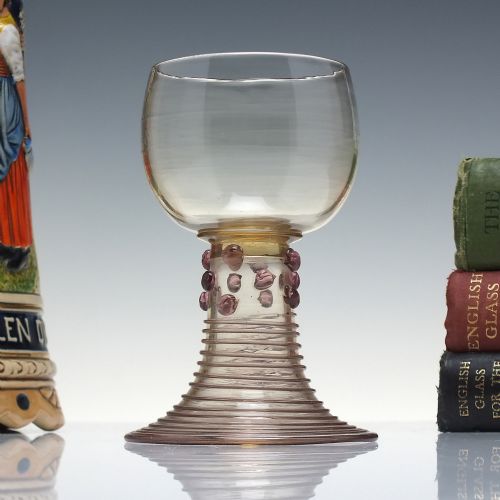
- Roemer
- A continental European drinking glass, often green or amber, characterised by a large spherical bowl and a studded stem designed to ensure a secure grip during festive toasts. They frequently display elaborate enamel heraldic decoration.
- Flint glass
- A clear, brilliant glass containing lead oxide, developed to improve the refractive index and weight of tableware. This heavy material allows for deep cutting and polishing.
- Baluster stem
- A turned stem shape resembling an architectural baluster, featuring swelling nodes that provide a comfortable and secure handhold on heavy drinking vessels.
- Pontil mark
- The rough scar left on the base of blown glassware where the pontil iron was detached after shaping. Its presence confirms traditional hand-blown manufacturing methods.
Vintage Rummer Glasses: Frequently Asked Questions
What were vintage rummer glasses used for?
These robust vessels served primarily for drinking heavy ales, beers, wines and spirits in domestic and tavern settings throughout the Georgian and Victorian periods. Their substantial capacity made them practical for daily consumption.
Larger examples functioned as serving or rum punch rummers, passed around the table during social gatherings and celebratory toasts.
How do I date an old rummer glass?
Dating relies on observing the form, weight, pontil marks and manufacturing materials such as lead crystal or coloured glass. Georgian pieces often display thick metal and simple bucket bowls, while Victorian iterations introduce heavier cutting and baluster stems.
Stylistic cues like German Historismus enamelling or Jugendstil influences help pinpoint later nineteenth and early twentieth century production dates.
Can I use vintage rummers for drinks?
These sturdy glass vessels remain functional for serving wine, ale or water during meals, provided they are handled with proper care. Their thick walls and heavy lead crystal construction give them durability.
Hand washing in warm water without abrasive detergents preserves the historical glass surface and any delicate engraved decoration.
What is the difference between a rummer and a roemer?
A rummer is typically an English or Irish drinking glass featuring a wide bucket or pan bowl on a short stem and heavy foot. They often display cut facets or engraved agricultural motifs.
A roemer is a continental European form, traditionally made from green or amber glass with a spherical bowl and a raspberry-prunt or studded stem.