




Vintage Round Foyer Table
These vintage round foyer table pieces are grand centre tables and occasional tables that anchor an entrance hall with scale and presence.
Vintage Round Foyer Table
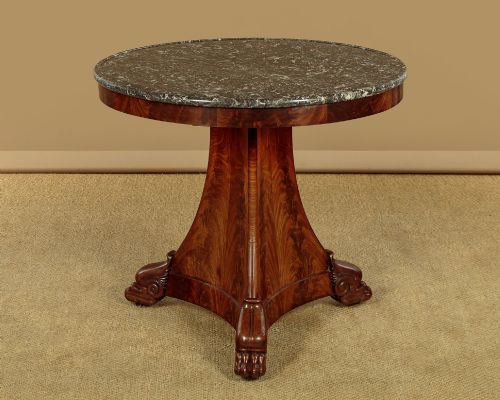
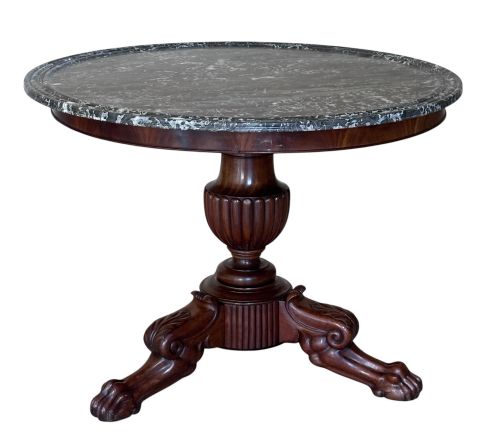
When you search for a vintage round foyer table, you are looking at substantial centre tables and occasional tables designed to sit in the middle of a hallway or reception space. The pieces appearing here span the nineteenth century, the Regency period, Victorian eras, and twentieth-century movements including Art Deco.
The forms you are most likely to meet on this page are circular gueridon tables and centre tables, often featuring stone tops or decorative inlays. They originate from British, French, German, Scandinavian, and Anglo-Indian workshops, bringing varied regional cabinet-making traditions to the entrance hall.
How they were made
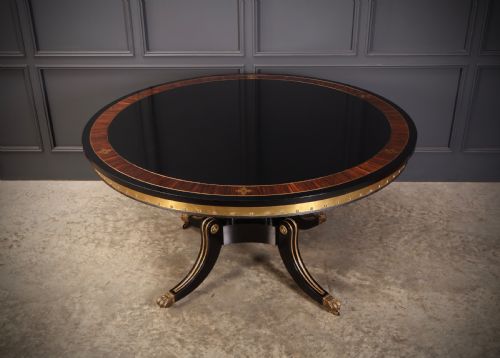
Cabinet-makers utilised dense hardwoods such as mahogany, walnut, rosewood, and burr elm as the structural base, often applying fine wood veneers or ebonised finishes to the surfaces. Some examples incorporate contrasting brass inlay or painted details to accentuate the circular geometry of the top.
Many of these tables employ heavy marble inserts for the upper surface, supported by bronze ornaments or robust wooden pedestals and tilt-top mechanisms. The combination of stone, cast metal, and figured timber demanded precise joinery to balance the weight of the materials.
Vintage Round Foyer Table Retail Price Guide 2026
Typical asking prices for vintage round foyer table among the pieces listed under this phrase on Sellingantiques today, from the lower quarter to the upper quarter. They describe what is for sale here now, not the wider market.
The periods represented span from Regency and Victorian eras through to 1940s Art Deco designs.
What varies in quality
The distinction between standard production and exceptional work lies in the selection of figured timber veneers, such as burr walnut or burr elm, and the crispness of any brass inlay. Higher quality pieces show tighter grain matching and superior control in the turning of the central pillar.
Execution of decorative elements like bronze mounts, painted motifs, and marble edge profiles also defines the tier of the piece. Workshops that invested greater skill in these secondary details produced tables with sharper proportions and deeper visual resonance.
The Vintage Round Foyer Table Glossary
- Gueridon
- A small French round table, typically supported by a central column or three legs, often utilised as a centre or display piece in a hall. These tables frequently feature marble tops or delicate wood veneers.
- Tilt-top
- A tabletop constructed on a hinge mechanism that allows the surface to fold vertical when not in use. This clever design saved floor space in grand nineteenth-century interiors.
- Ebonised
- Wood that has been chemically treated or stained to imitate the dark, dense appearance of ebony. This technique provided a sharp, contrasting ground for brass inlay during the nineteenth and early twentieth centuries.
- Veneer
- A thin layer of finely figured wood applied over a secondary timber base to create decorative patterning. Master craftsmen selected burls and exotic grains to produce striking visual movement across circular tabletops.
- Ormolu or Bronze Ornaments
- Cast bronze details applied as feet, capitals, or mounts to enrich the silhouette of the table. These metal elements added weight and visual punctuation to French and continental designs.
Vintage Round Foyer Table: Frequently Asked Questions
Where should I place a round foyer table?
These tables work best positioned directly in the centre of an entrance hall or large landing where they can be viewed from multiple angles. Their circular footprint allows foot traffic to flow easily around the perimeter.
They also provide a natural surface for a central floral arrangement, a decorative bowl for keys, or a bronze ornament to greet visitors upon arrival.
How do I care for a marble top table?
Marble surfaces require gentle cleaning with a damp cloth and mild, neutral soap to avoid dulling the natural polish. Acidic liquids like citrus juice or vinegar should be wiped away immediately to prevent etching.
Using coasters and trays will protect both the stone and the underlying timber frame from moisture rings and heavy impacts over time.
What is the difference between a centre table and an occasional table?
Centre tables are traditionally built with finished details on all sides, intended to stand freely in the middle of a room rather than against a wall. They generally possess greater structural weight and a commanding presence suited to grand halls.
Occasional tables are typically smaller and lighter in scale, designed for more flexible placement while still serving a functional surface purpose.
How do I identify an Art Deco table?
Art Deco tables from the 1920s and 1930s often feature streamlined geometric forms, sleek polished surfaces, and minimal ornamentation. Designers frequently used exotic birch, walnut, or contrasting inlays to create bold visual patterns.
Unlike ornate nineteenth-century revivals, these pieces rely on clean silhouettes and the natural grain of the wood for their decorative impact.