





Vintage Rosewood Seating
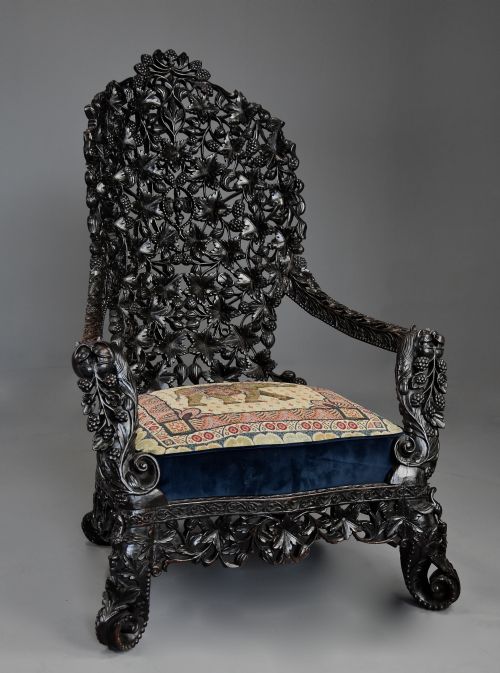
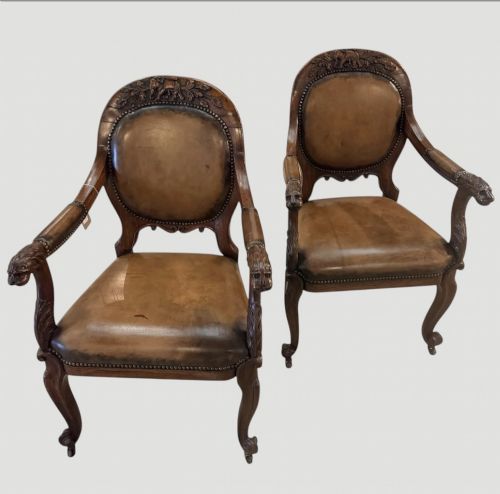
Vintage rosewood seating delivers rich timber grain and classic forms to any room, ranging from robust dining chairs to library armchairs.
Vintage Rosewood Seating
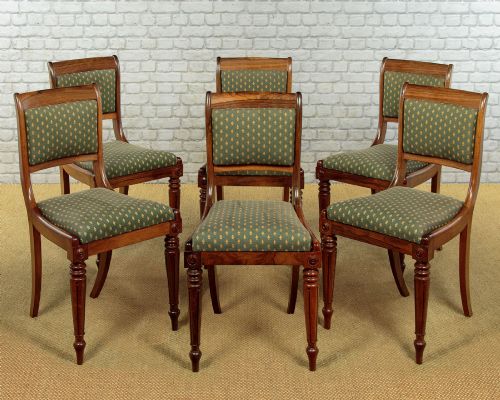
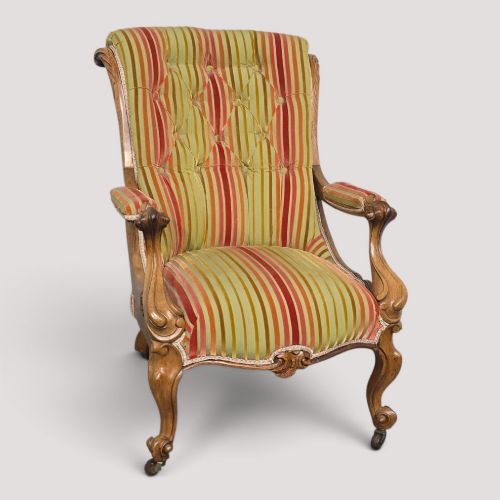
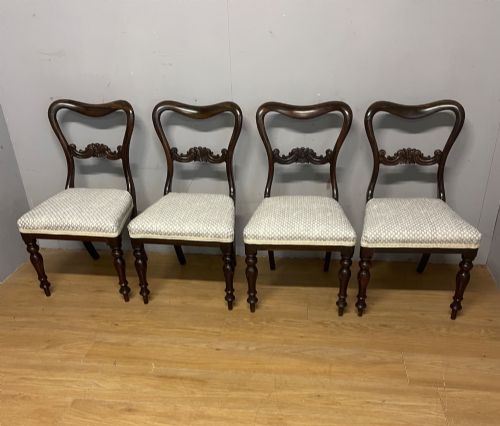
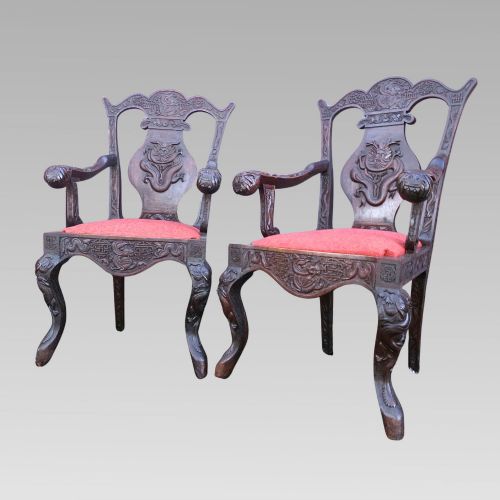
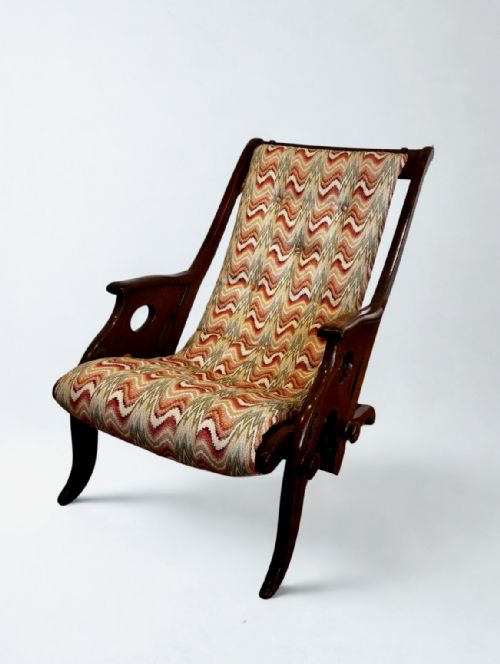
Vintage rosewood seating encompasses a variety of timber frames designed for dining, resting and working, spanning several historic periods. Buyers encountering vintage rosewood seating on this page will most commonly find sets of dining chairs alongside individual armchairs, library seats and piano stools.
How they were made
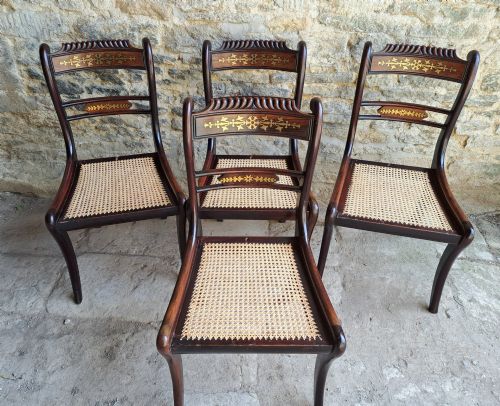
Cabinet makers utilised dense rosewood timbers, often paired with contrasting brass inlay, mother of pearl, or carved details to ornament the frames. Upholstery techniques incorporated leather, velvet, cane, and woven textile coverings secured over padded seats.
Joinery methods relied on solid timber construction, seen in turned legs, cabriole supports, and cross-frame designs. Artisans shaped the wood by hand, creating curving armchairs, upright dining sets, and adjustable piano stools.
Listings feature solid rosewood, brass inlay, cane, and velvet across periods spanning the Georgian era to the early twentieth century.
What varies in quality
The standard of execution depends on the crispness of the wood carving, the precision of brass or mother of pearl inlay, and the integrity of the underlying frame. Chairs featuring matched sets of six or eight pieces demonstrate higher workshop coordination than isolated single items.
Material selection divides standard examples from superior ones, visible in the depth of the rosewood grain and the quality of the original leather, velvet, or cane surfaces. Maker attributions or signatures from documented cabinet makers further separate ordinary furniture from exceptional pieces.
Gillows·J. Herbert McNair
The Vintage Rosewood Seating Glossary
- Bergere
- An enclosed upholstered armchair with wooden framing and cane or upholstered sides. It typically dates to the Regency period and offers deep seating comfort.
- Cabriole leg
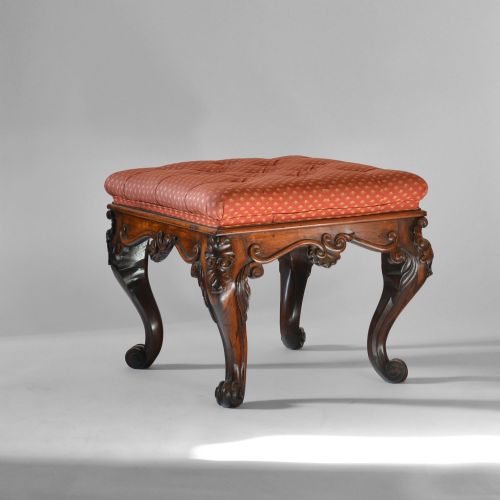
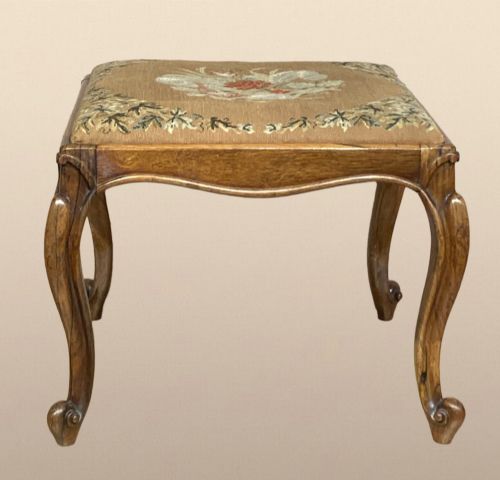
- A furniture leg that curves outward and then tapers inward, ending in a pad or foot. This stylistic element appears frequently on Victorian stools and chairs.
- Campaign armchair
- A portable folding or dismantling chair designed for travel and military use. These solid rosewood pieces combine robust construction with collapsible frames.
- Faux rosewood
- Timber painted or grained to imitate genuine rosewood figures. Artisans utilised this technique during the Regency period to achieve a decorative finish.
- Settee
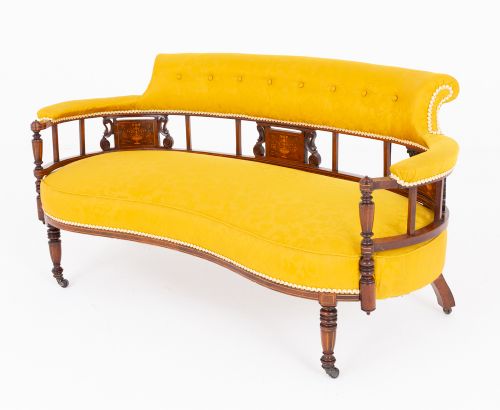
- A long upholstered seat with a back and arms designed for multiple occupants. These pieces appear in Victorian and Anglo-Indian styles.
Vintage Rosewood Seating: Frequently Asked Questions
What periods do these chairs date from?
The pieces span the Georgian, Regency, William IV, Victorian, and Edwardian eras. Many date through the nineteenth century.
Specific stylistic clues such as brass inlay or cabriole legs help distinguish between earlier Regency designs and later Victorian forms.
How do I identify a piano stool?
Piano stools often feature adjustable height mechanisms and compact square seats. They were built for musicians at keyboard instruments.
Revolving tops and cross-frame supports are common structural traits found in these nineteenth-century examples.
Are dining chairs sold as sets?
Dining chairs appear both as matched sets of four, six, or eight, and as individual pieces. Sets are typically gathered from the Regency or Victorian periods.
Matching sets maintain uniform timber grain and upholstery materials across all chairs.