



Vintage Rooster Figurines
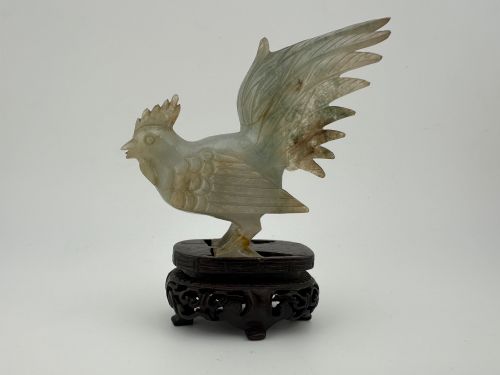
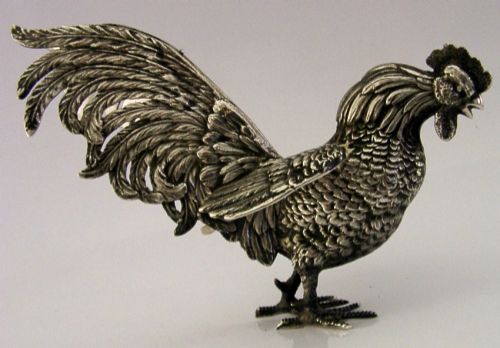
These vintage rooster figurines bring character to a room, ranging from carved jade cockerels on wooden stands to heavy solid silver table ornaments.
Vintage Rooster Figurines
Vintage rooster figurines encompass decorative sculptures, table ornaments, and car mascots modelled as cockerels and chickens. When searching for vintage rooster figurines, buyers encounter a diverse selection spanning the nineteenth century through the mid twentieth century.
The assortment includes Chinese jade carvings on hardwood stands, sterling silver models from British and continental makers, and Italian terracotta pairs. Mid-century silver pieces and earlier Qing dynasty porcelain examples frequently appear across the listings.
Function varies from purely decorative statues to functional items such as French tin donation boxes and money banks. Most pieces originate from British, European, and Asian workshops working in metal, stone, ceramic, and wood.
How they were made
Makers utilised traditional casting and carving techniques suited to their chosen medium, whether shaping hardstone like pale green jade or working with solid silver and 833 silver. Metal figures often involve detailed chasing of feathers and stance, whilst ceramic and terracotta versions rely on moulding and glazing.
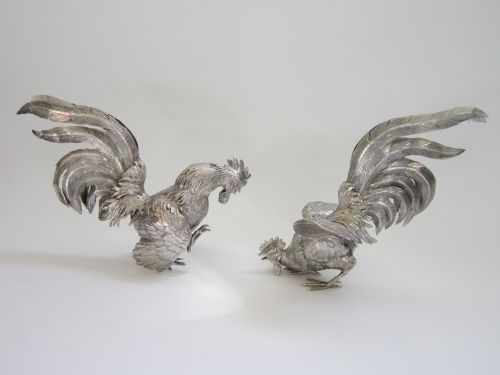
Organic materials such as hardwood serve as fitted bases for carved stone cockerels, providing stability and elevation. Silver plated and solid silver pieces demonstrate silversmithing methods including construction from multiple components to achieve realistic fighting or standing postures.
Vintage Rooster Figurines Retail Price Guide 2026
Typical asking prices for vintage rooster figurines among the pieces listed under this phrase on Sellingantiques today, from the lower quarter to the upper quarter. They describe what is for sale here now, not the wider market.
Listings feature items from the Victorian period, 1900, 1910, 1920, 1940, and 1960, executed in jade, silver, terracotta, and hardwood.
What varies in quality
Quality in these figurines depends upon the natural material's clarity and the precision of the carving or casting. Finer examples show careful attention to anatomical detail in the feather work and posture, particularly in fighting cockerel models.
The integration between figure and base marks the distinction in mixed-media pieces, such as jade cockerels mounted on bespoke hardwood stands. Hallmark clarity on silver items and the artistic execution of the form separate standard production from superior craftsmanship.
The Vintage Rooster Figurines Glossary
- Car mascot
- An ornamental figure mounted on the radiator cap or bonnet of an automobile during the early twentieth century. Rene Lalique produced notable glass examples.
- Hardstone
- A semi-precious stone category including jade, used for small carved sculptures and decorative objects. These stones require specialist abrasive cutting techniques.
- Sterling silver
- A silver alloy containing 92.5 percent pure silver by mass and 7.5 percent other metals, usually copper. This standard ensures durability for decorative figurines and tableware.
- Terracotta
- A porous reddish-brown earthenware clay used for sculptural figures and architectural elements. It is typically fired at lower temperatures than stoneware.
- Republic Period
- A period of Chinese history spanning from 1912 to 1949 characterised by diverse artistic production in porcelain and jade. Works from this era often adapted traditional motifs.
Vintage Rooster Figurines: Frequently Asked Questions
What materials are used for these roosters?
The materials vary widely across the selection, encompassing jade, hardstone, sterling silver, solid silver, terracotta, and earthenware.
Some examples also incorporate hardwood for fitted display stands or feature silver plating over a base metal.
How do I date a silver cockerel?
Dating relies on hallmarks stamped into the metal, which indicate the assay office, standard of silver, and year of manufacture.
Stylistic cues such as mid-century proportions or Victorian chasing techniques also help establish the period.
Were these figures meant for display?
Most functioned as decorative table ornaments, statues, or sculptural pairs intended for interior display on furniture or mantelpieces.
Certain items served specific practical purposes, including car mascots for automobiles and donation boxes for collections.
How are jade roosters mounted?
Carved jade and hardstone figures are frequently mounted on custom-carved hardwood stands that follow the contours of the stone.
These wooden bases provide stability and elevate the carving for display.