



Vintage Roll Top Secretary
A vintage roll top secretary brings clever concealed compartments and sliding covers together, offering both workspace organisation and classic character.
Vintage Roll Top Secretary
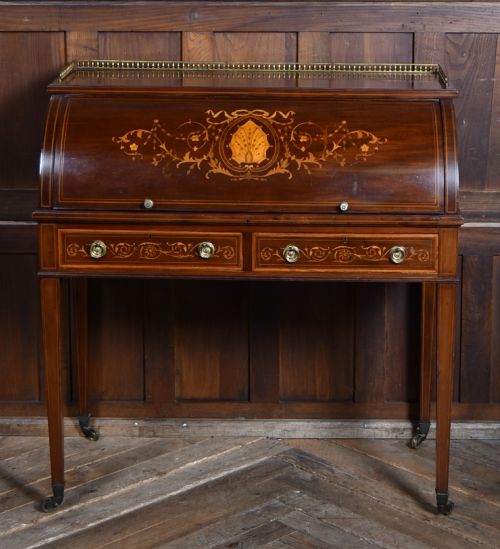
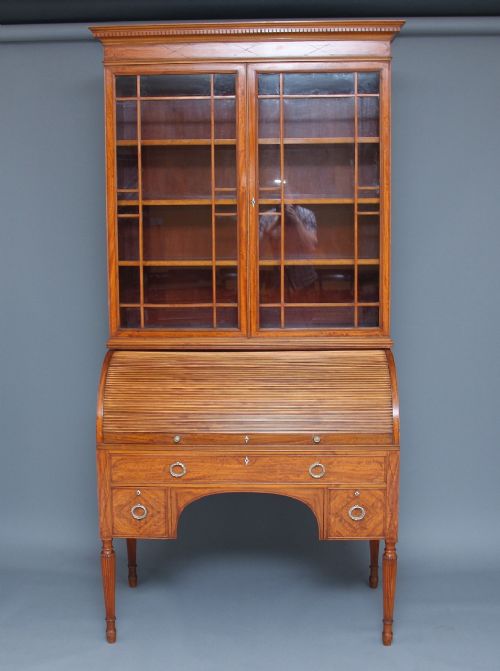
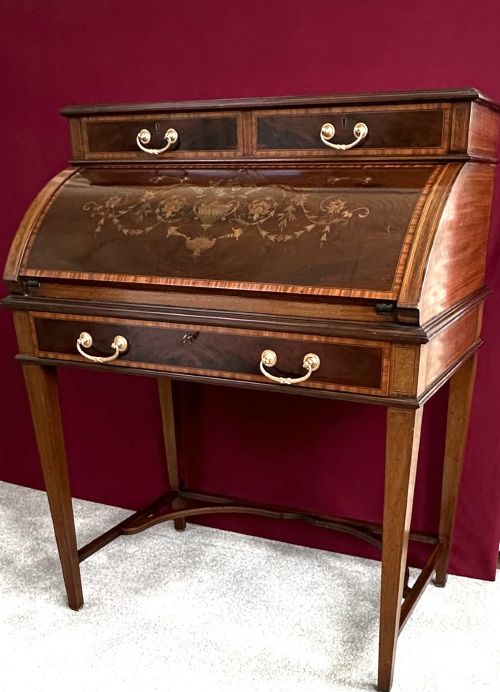
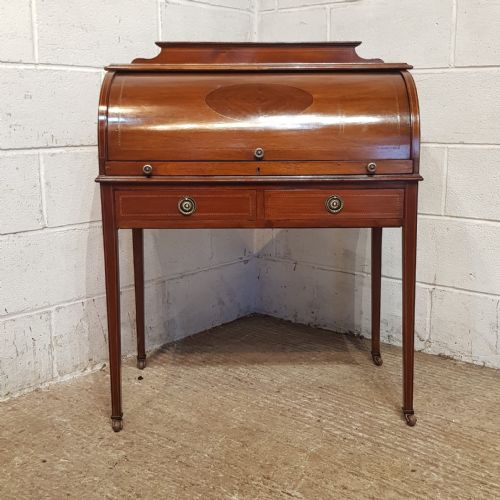
A vintage roll top secretary combines a dedicated writing surface with enclosed shelving or pigeonholes, often taking the form of a desk or bureau bookcase. These pieces span periods from the Georgian and Regency eras through to the Victorian, Edwardian, and early twentieth century. Walnut and mahogany dominate the offerings, alongside oak and satinwood.
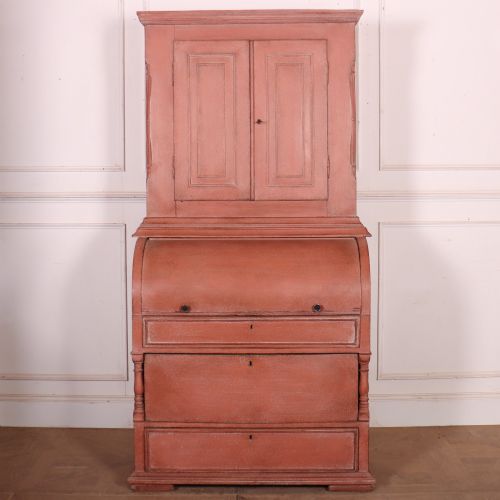
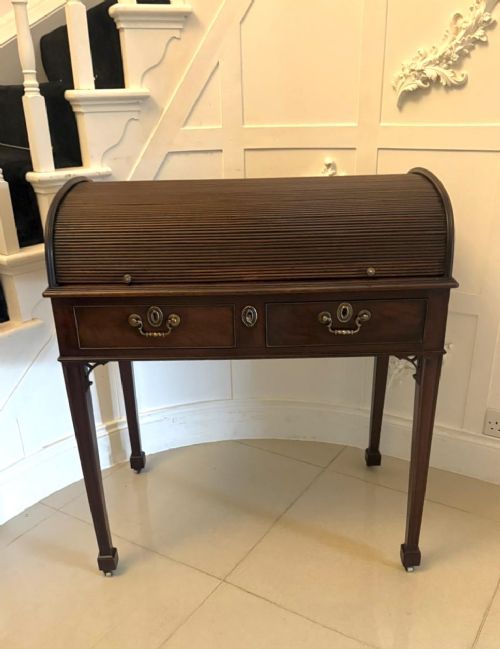
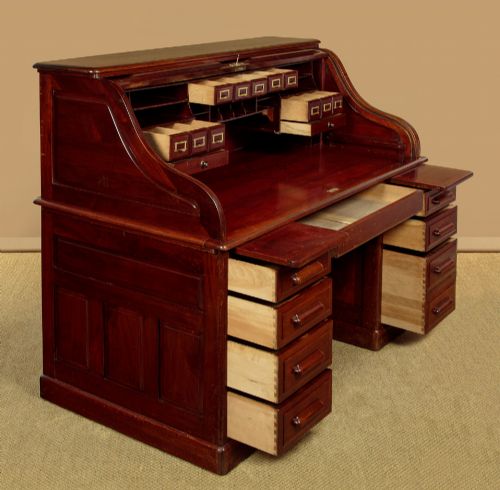
The defining characteristic is the flexible slatted cylinder or tambour closure that conceals the inner writing compartment and drawers. Buyers encounter various regional interpretations, including Scandinavian country pieces and continental baroque designs alongside English examples. The form serves as both a practical workstation and a striking architectural furniture piece.
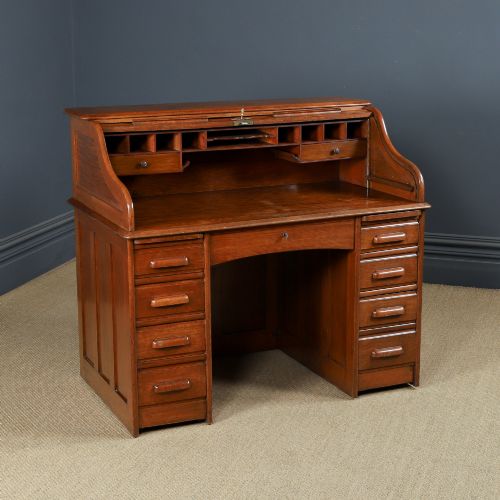
Many examples incorporate upper bookcase sections with glass doors, creating a dual-purpose furniture item for storage and display. The scale ranges from compact ladies writing tables to large kneehole office desks and grand bureau bookcases. This variety ensures a suitable proportion for studies, living rooms, and home offices alike.
Materials and construction methods
Cabinet makers utilised dense hardwoods such as mahogany, walnut, and oak to build the robust carcases of these desks. Satinwood often appears as a contrasting timber for internal fitments and decorative stringing. Brass handles, key escutcheons, and hinges provide functional hardware details across multiple periods.
Vintage Roll Top Secretary Retail Price Guide 2026
Typical asking prices for vintage roll top secretary among the pieces listed under this phrase on Sellingantiques today, from the lower quarter to the upper quarter. They describe what is for sale here now, not the wider market.
Some Edwardian roll tops feature hidden coin drawers specifically designed for keeping tram fare close at hand.
Distinctions in construction and design
The smoothness of the rolling tambour action dictates much of the daily utility and mechanical success of the piece. Superior examples exhibit tight, even slat alignment that moves effortlessly within the runners without binding.
Timber selection and decorative inlay work separate standard production items from finer craftsmanship. Finely figured mahogany or walnut veneers combined with intricate satinwood stringing elevate the visual presence of the desk significantly.
Edwards & Roberts
The Vintage Roll Top Secretary Glossary
- Tambour
- A flexible shutter made of narrow wooden strips glued to canvas, allowing a desk cover to slide around a curved track. This mechanism conceals the writing surface when pulled down.
- Cylinder desk
- A writing table featuring a rigid quarter-circle rolling lid rather than slatted slats. It performs a similar function to the roll top by hiding the interior when shut.
- Kneehole desk
- A freestanding desk with a central recess for the user's legs, flanked by pedestals of drawers. Large Victorian iterations provide substantial storage capacity.
- Stringing
- A narrow strip of contrasting timber inlaid flush into the surface of a panel or drawer front. Cabinet makers used this technique to define borders and enhance visual depth.
Vintage Roll Top Secretary: Frequently Asked Questions
How do I maintain the roll top mechanism?
Keep the wooden tracks clean and free from dust build-up over time. Apply a suitable cabinet wax sparingly to the runners if the movement becomes stiff.
Avoid using heavy liquid polishes that might gum up the fabric backing behind the slats. Regular gentle operation prevents the mechanism from sticking through lack of use.
Where did the cylinder desk originate?
The form evolved in eighteenth-century European workshops as a development of the bureau table. Cabinet makers sought secure ways to cover paperwork without clearing the entire writing surface.
English and continental designers refined the tambour and cylinder mechanisms throughout the Regency and Victorian periods. These innovations catered to the growing demand for private, organised home office furniture.
Will a large bureau bookcase fit in a modern room?
Measure both your ceiling height and floor space carefully before purchasing a tall bureau bookcase. These pieces offer vertical storage, which maximises room capacity without taking up excessive floor area.
Consider the clearance needed to pull out internal writing slides or drop down fall fronts. Many models separate into upper and lower sections for easier transport and positioning.
How can I identify an Edwardian roll top?
Edwardian pieces often display lighter oak timbers and simpler decorative motifs compared to heavy Victorian designs. Many incorporate practical updates from the era, such as dedicated typewriter wells.
Hardware tends to be brass with simpler stamped or cast profiles. Construction methods reflect early twentieth-century workshop standards while retaining traditional dovetailing.