



Vintage Rocking Cot
These vintage rocking cot pieces offer traditional sleeping forms for infants, combining period timber and metalwork with practical rocking mechanisms.
Vintage Rocking Cot
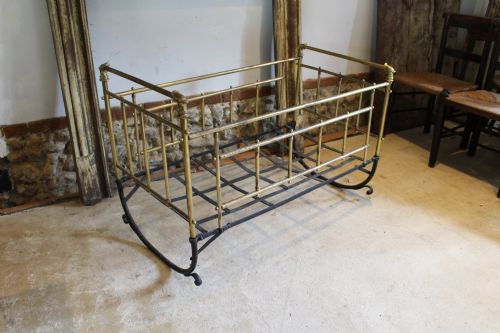
A vintage rocking cot is a nursery furniture piece designed to soothe infants by swaying or rocking on curved runners or a suspended frame. Buyers searching this phrase encounter forms spanning the sixteenth century to the Edwardian era, including cradles, cribs, and bassinets.
The pieces listed on this page appear in various timber and metal configurations, from panelled oak and mahogany to wrought iron, pine, and cane. Regional vernacular pieces sit alongside formal Victorian designs, offering both hood-backed enclosures and open rail structures.
How they were made
Maker construction relies heavily on solid hardwoods such as mahogany and oak, alongside painted pine and vernacular softwoods. Joinery methods range from traditional pegged panel construction on sixteenth-century examples to turned spindles and curved rocking members on later nineteenth-century pieces.
Metal elements appear in brass and wrought iron, utilised for structural stability, decorative rails, or pivoting crib mechanisms. Surface treatments include original blue paintwork, Scandinavian painted finishes, and polished mahogany polishes.
Some nineteenth-century examples feature metamorphic designs that transform a simple infant bed into something entirely unexpected.
What varies in quality
Quality separates simple utilitarian workshop output from refined cabinetmaking, evident in the crispness of timber mouldings, panel carving, and turning details. Superior pieces maintain their original surface finishes, such as period paint or polished mahogany, rather than modern refinishing.
Structural integrity relies on the retention of original rocking hardware, sound joinery in the cradle body, and intact secondary materials like cane panels or brass fittings.
The Vintage Rocking Cot Glossary
- Cradle
- A low bed for an infant, designed to rock or swing. These pieces often feature integrated curved runners beneath the base.
- Crib
- A small bed with high sides for an infant, sometimes interchangeable with a cot in older terminology.
- Hood
- A protective canopy or cover integrated into one end of a cradle to shield the infant from drafts. This feature is particularly prominent on earlier panelled examples.
- Vernacular
- Domestic or utilitarian items built by local craftsmen using regional traditions and materials rather than following high-style metropolitan designs.
- Metamorphic
- Furniture designed to transform into another form or function. In this context, it describes a piece adapting between a cot and another configuration.
Vintage Rocking Cot: Frequently Asked Questions
How do I date a rocking cot?
Dating relies on identifying timber species, joinery techniques, and stylistic markers associated with specific eras like the Victorian or Edwardian periods. Hand-planed boards and pegged joints usually indicate earlier centuries.
Later pieces often incorporate machine-cut elements, brass hardware, or cane panels that reflect the manufacturing standards of the late nineteenth and early twentieth centuries.
Are these cots safe for daily use?
While these pieces were built for infant care, vintage rocking cots often lack modern safety certifications regarding slat spacing, drop sides, and contemporary mattress dimensions.
Buyers frequently utilise them for decorative display, nursery staging, or gentle supervised daytime settling rather than standard overnight sleeping.
What is the difference between a cradle and a cot?
Historically, cradles referred specifically to smaller, rocking enclosures designed for newborns, often featuring hoods or low sides. Cots generally denote larger stationary or rocking structures with upright sides for slightly older infants.
Terminology in older listings often overlaps, with pieces described interchangeably as cribs, cots, or cradles regardless of their exact proportions.
How do I care for antique painted pine?
Painted pine surfaces require protection from direct sunlight and excessive humidity to prevent paint flaking or timber movement. Dusting with a dry microfiber cloth preserves the original pigment without introducing moisture.
Avoid chemical cleaning products or abrasive polishes, which can strip historic layers of paint or Scandinavian finishes.