

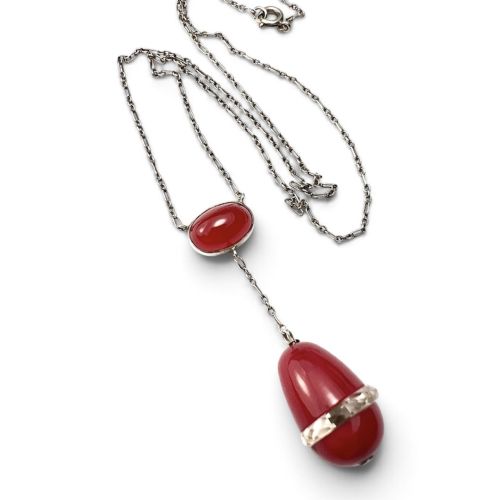
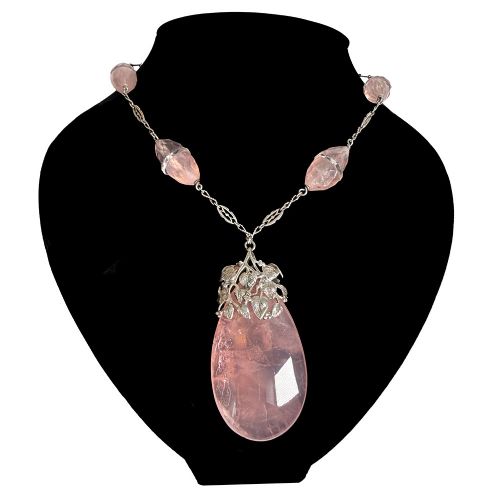


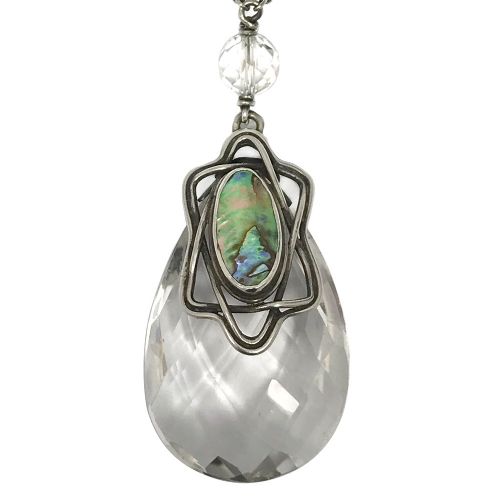

Vintage Rock Crystal Jewellery
Vintage rock crystal jewellery is transparent quartz fashioned into clear pendants, drop earrings and necklaces that catch the light with sharp brilliance.
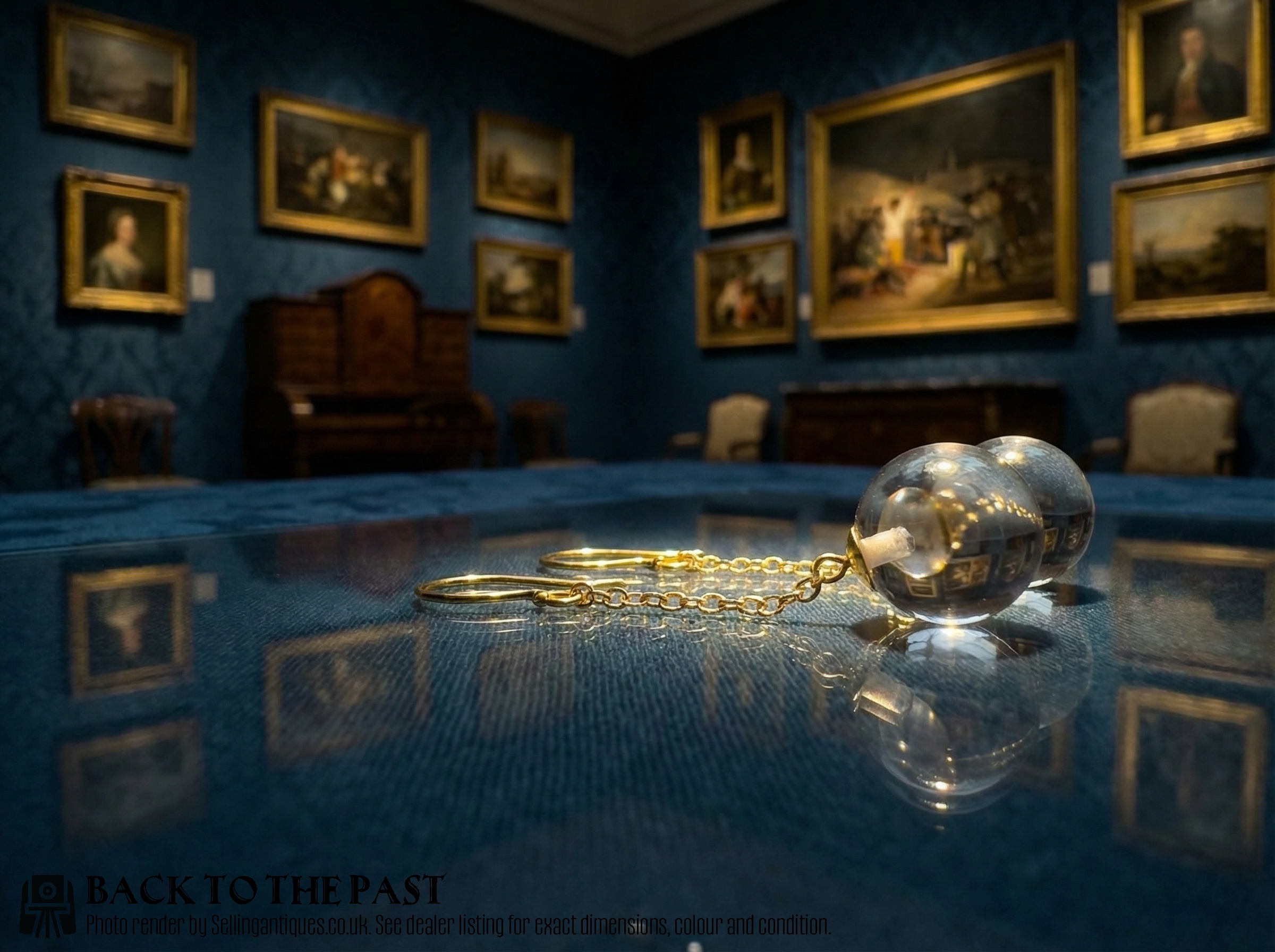
Vintage Rock Crystal Jewellery
Vintage rock crystal jewellery encompasses clear quartz pieces shaped into pendants, drop earrings, brooches and necklaces spanning from the Victorian era through the Edwardian period and into the Art Deco and Art Nouveau movements. You will most frequently encounter Art Deco designs alongside Arts and Crafts silver necklaces, reflecting the popularity of transparent quartz during the early decades of the twentieth century.
The selection ranges from Victorian gold drops to 1960s spherical dangly earrings and intricate Edwardian screwback designs. Makers of the period often paired the transparent stone with rose quartz, carnelian, diamonds, opals and abalone to create contrasting colour and texture within silver and gold settings.
How they were made
Lapidaries cut and polished natural quartz into faceted drops, intaglios and spherical beads to maximise transparency and light refraction. The resulting clear stones were then set into silver, nine-carat gold, fourteen-carat yellow gold or white gold mountings.
Craftsmen utilised traditional hand-working techniques, securing the crystals with bezel or prong settings. Many pieces incorporate decorative elements such as marcasite, black onyx, chrysoprase and pearls to complement the central quartz.
Vintage Rock Crystal Jewellery Retail Price Guide 2026
Typical asking prices for vintage rock crystal jewellery among the pieces listed under this phrase on Sellingantiques today, from the lower quarter to the upper quarter. They describe what is for sale here now, not the wider market.
Early twentieth-century makers ensured nobody lost a pendant by fastening them to chains sturdy enough to survive an impromptu tea dance.
What varies in quality
Quality depends upon the clarity and purity of the quartz crystal itself, alongside the precision of the facet cutting and polish. Stones free from internal cloudiness or natural inclusions command greater appreciation for their water-clear transparency.
The complexity and execution of the metalwork also determine distinction, distinguishing standard commercial mounts from pieces featuring detailed wirework, maker attributions or supplementary gemstones like diamonds and opals.
Amy Sandheim·George Hunt
The Vintage Rock Crystal Jewellery Glossary
- Rock crystal
- A colourless, transparent variety of quartz used extensively in jewellery manufacture. It is valued for its glass-like clarity and ability to be faceted or carved.
- Sautoir
- A long necklace, often featuring a pendant or tassel at the end. This style gained particular favour during the early twentieth century.
- Intaglio
- A gem or stone carved with a design depressed beneath the surface. This technique creates a reverse image that appears in relief when viewed from certain angles.
- Essex crystal
- A technique where a rock crystal cabochon is reverse-carved and painted to create a three-dimensional illusion. These subjects typically depict animals or insects.
- Witches heart
- A piece of jewellery shaped like an asymmetric heart with a twisted tail at the tip. This historic motif often symbolises affection or protection.
Vintage Rock Crystal Jewellery: Frequently Asked Questions
How do I clean vintage rock crystal jewellery?
Clean rock crystal using warm soapy water and a soft brush to remove dust from behind the settings. Dry thoroughly with a lint-free cloth to restore the natural sparkle.
Avoid harsh chemical cleaners or ultrasonic machines, particularly if the piece contains softer accompanying stones like opal, pearls or rose quartz.
Are these pieces made from real quartz?
Yes, vintage rock crystal jewellery utilises natural quartz rather than synthetic glass. The material is cold to the touch and possesses the natural hardness characteristic of quartz.
Under magnification, genuine pieces may occasionally show minute natural inclusions that distinguish them from modern manufactured glass.
How can I tell an Edwardian piece from Art Deco?
Edwardian pieces generally feature delicate, lacy silver and gold work with flowing lines, often incorporating pearls, tourmalines or intricate scroll motifs. Screwback earring findings are also common in this era.
Art Deco items favour geometric precision, streamlined shapes and stark contrasts, frequently pairing clear rock crystal with black onyx, chrysoprase or diamonds.
Can I wear vintage rock crystal every day?
Quartz is a durable mineral with a hardness of seven on the Mohs scale, making it suitable for regular wear. Pendants and brooches experience minimal physical impact during daily activities.
Earrings and rings require more careful handling to protect delicate metal settings and older fastening mechanisms from accidental knocks.