
Antique Style Crystal Drops
Antique style crystal drops catch the light in chandeliers and wall sconces, bringing brightness and period character to a room.
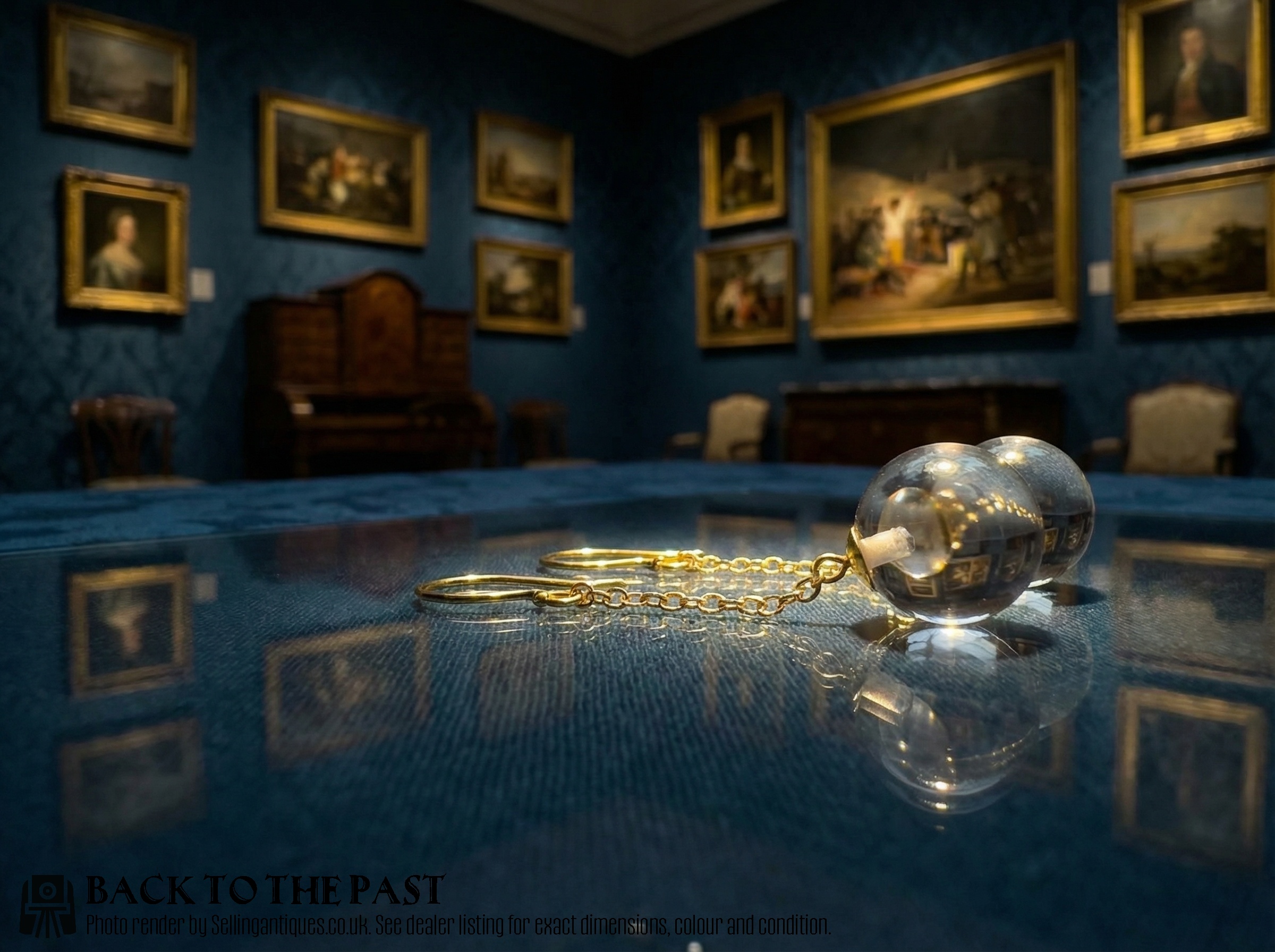
Antique Style Crystal Drops
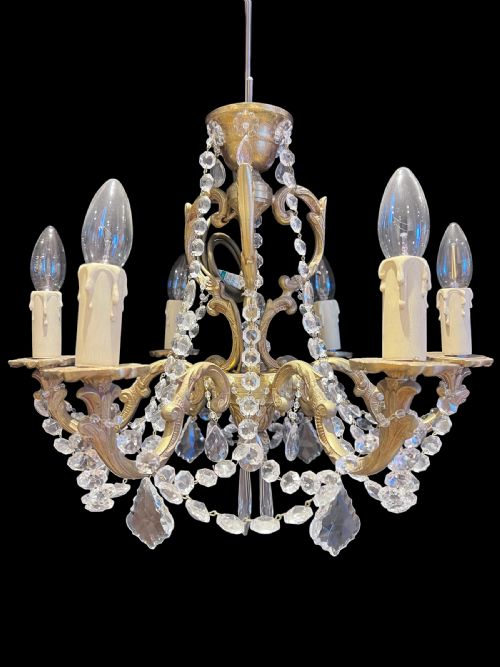
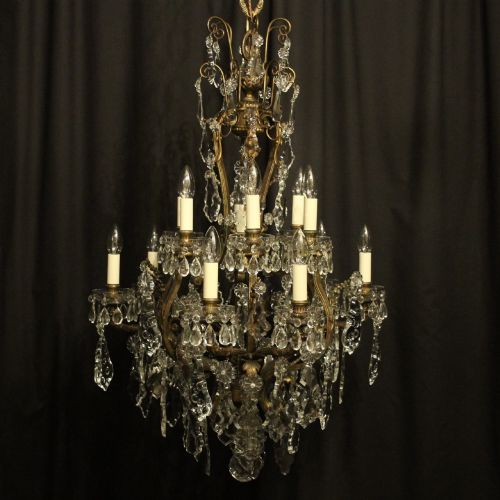
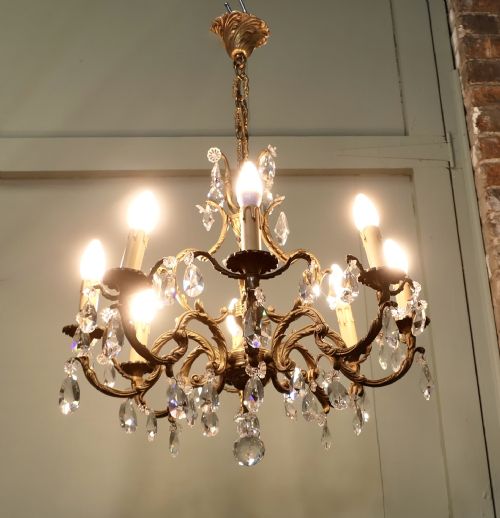
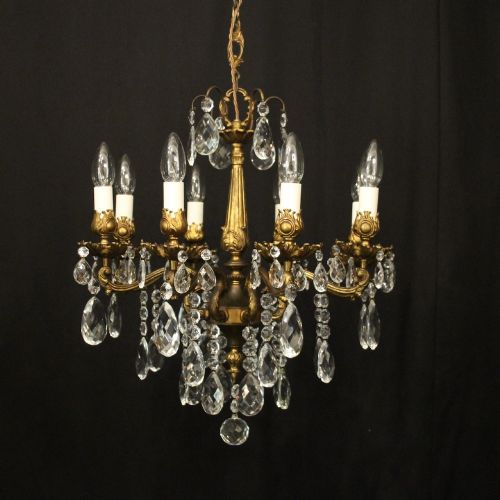
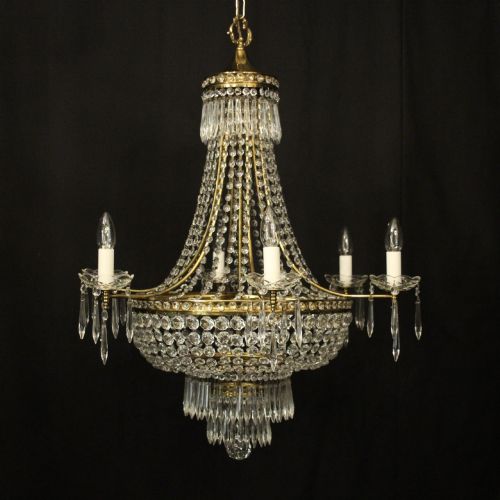
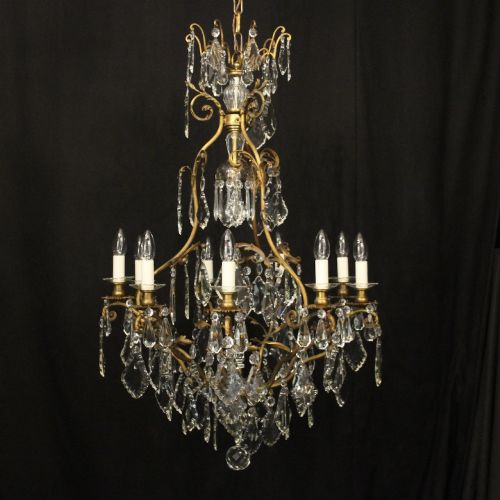
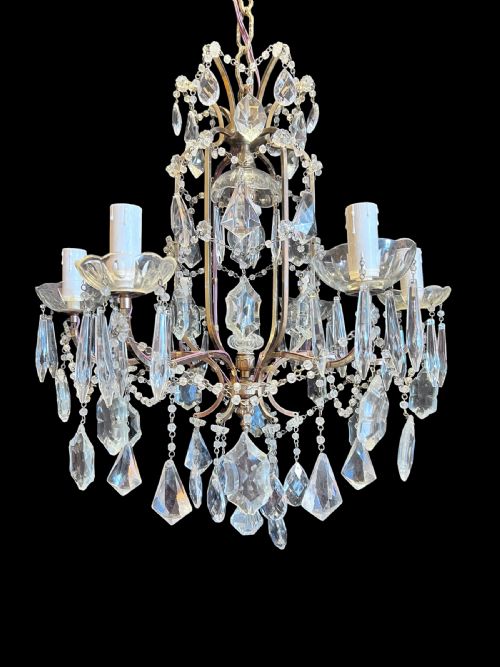
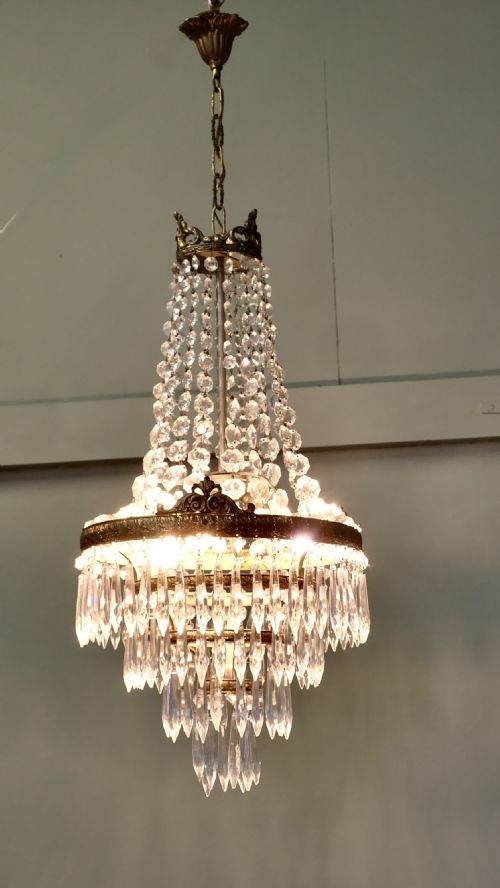
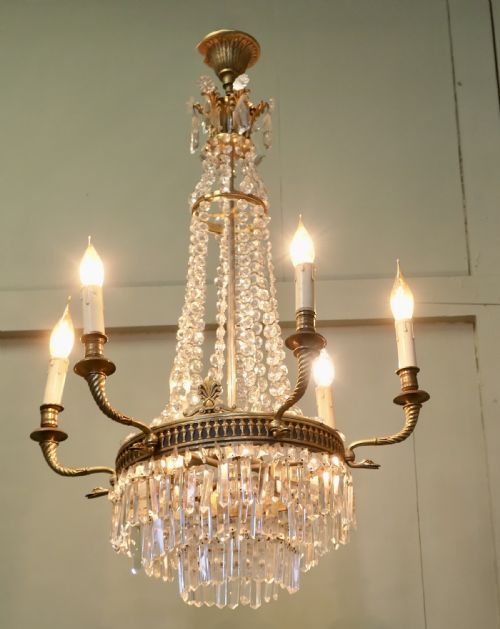
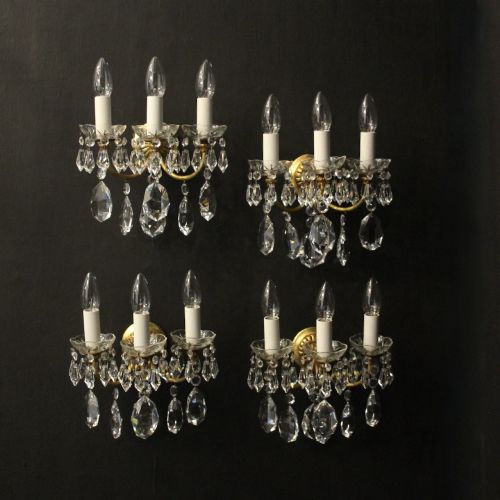
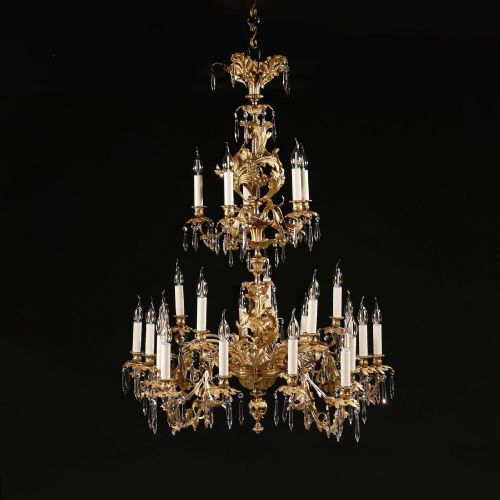
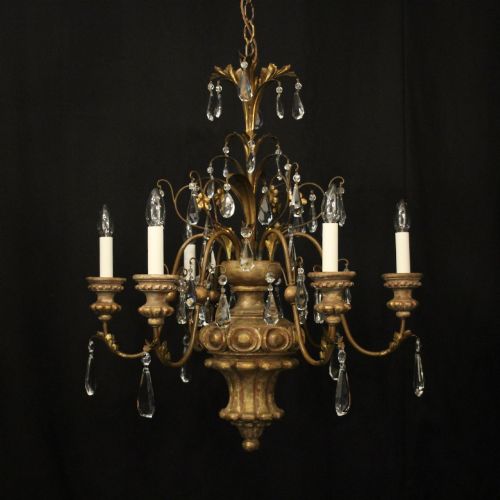
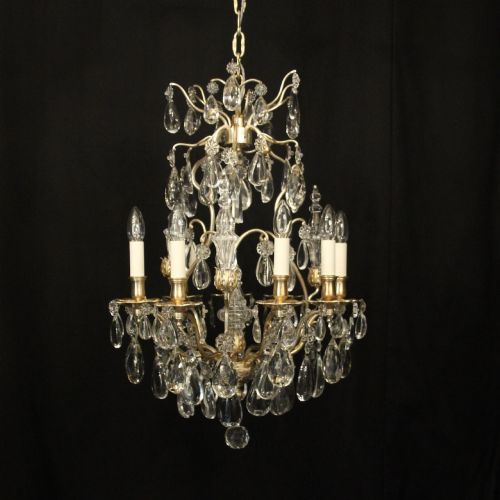
When you search for antique style crystal drops, you encounter lighting fixtures dominated by French and Italian designs from the nineteenth century through the early twentieth century. The selection spans grand tent and waterfall chandeliers, intimate birdcage forms, and matching wall sconces.
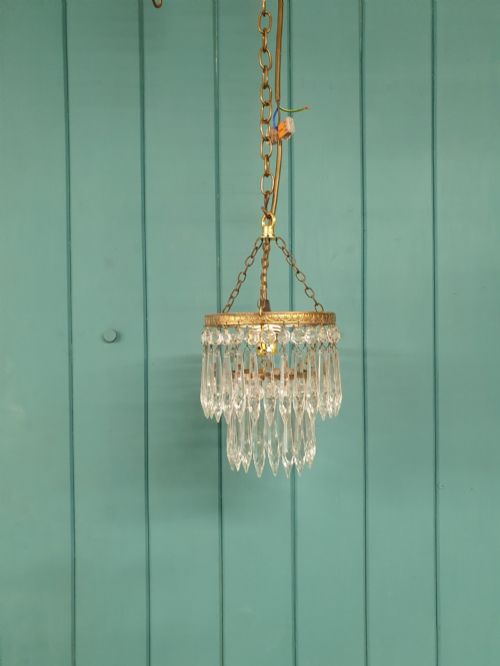
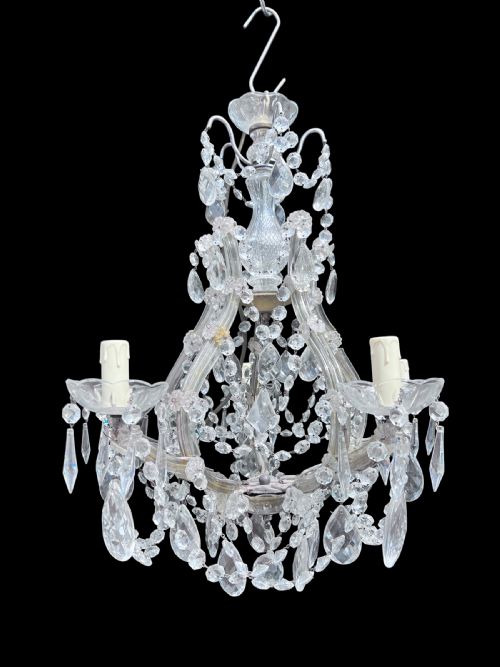
Most examples originate from the 1920s and 1930s, alongside pieces dating back to the 1890s and Edwardian era. Alongside larger ceiling fixtures, smaller bag chandeliers and occasional drop earrings appear in the inventory.
Materials and construction
The physical structure relies on brass, gilt brass, gilded bronze, and wrought iron to form the arms and frames that hold the hanging elements. These metal mounts are paired with cut glass, crystal glass, and plain glass components.
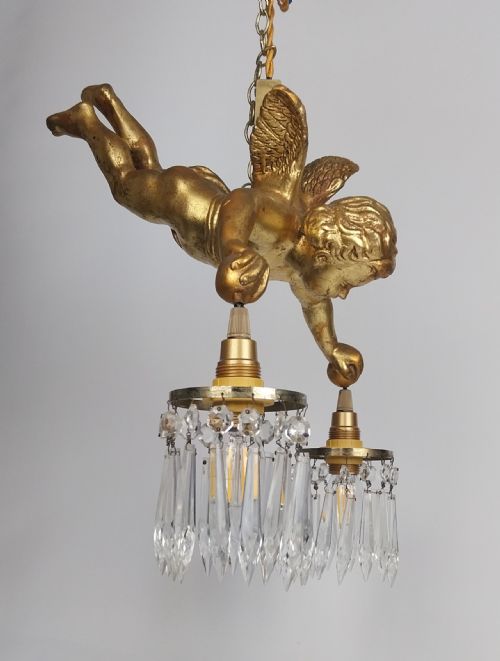
Lighting assemblies incorporate distinct drop formations such as spikes, lustres, and faceted beads arranged in tents, waterfalls, or bags. Colour accents sometimes emerge in amber and mauve fruit motifs or silver gilded finishes.
Some playful chandeliers come decorated with crystal amber and mauve fruits, proving that past dining rooms enjoyed a touch of whimsy with their sparkle.
Assessing quality and manufacture
Quality rests upon the crispness of the metal casting in the frames and the depth of the hand-cut facets on the crystal drops. Finer examples display meticulous gilt work and heavier brass mounts that secure the glass firmly.
The complexity of the arrangement dictates the character of the piece, moving from simple single-tier fixtures to multi-layered tent and waterfall configurations with extensive crystal drapery.
The Antique Style Crystal Drops Glossary
- Crystal drops
- Small cut glass pendants hung from a chandelier frame to refract light. They catch illumination from the bulbs and scatter it across the room.
- Tent and waterfall
- A chandelier style where strings of crystals form an upper canopy resembling a tent, cascading down into a wider waterfall configuration. This design maximises the quantity of suspended glass.
- Bag chandelier
- A lighting fixture featuring a flattened or pear-shaped mass of close-set crystal beads suspended beneath a brass ring. The dense formation creates a solid mass of sparkling glass.
- Gilt brass
- Brass coated with a thin layer of gold leaf or gilt finish. This treatment gives the metal frame a warm, reflective sheen.
- Lustre
- A pendent glass prism or drop hung from the arms of a light fitting. Lustres sway gently and amplify the brightness of the candles or bulbs.
Antique Style Crystal Drops: Frequently Asked Questions
What periods do these crystal lights come from?
The pieces originate primarily from the late nineteenth century through to the 1930s. Edwardian examples and items from the 1920s feature prominently.
Design influences span French Chateau, Rococo, Empire styles, and Italian Florentine traditions. Each era brings distinct metal mounts and crystal arrangements.
How were crystal drop chandeliers used historically?
These fixtures served to illuminate formal rooms while demonstrating the status and wealth of the household through sparkling glass. Placed centrally in salons or dining spaces, they multiplied the light from candles or early electric bulbs.
Smaller wall lights and sconces provided supplementary illumination along hallways and dark corners. The hanging drops ensured that even modest light sources filled the space with reflections.
What materials make up the frames?
Metal frames are constructed using brass, gilt brass, gilded bronze, and occasionally wrought iron. These sturdy materials support the heavy weight of the glass components.
Surfaces often feature silver gilding or polychrome details to complement the interior decorative styles of the period. The combination of gilded metal and clear crystal creates a balanced visual weight.