


Vintage Religious Charm
A vintage religious charm carries centuries of devotion in miniature, worn close as a pendant or added to a bracelet.
Vintage Religious Charm
When you search for a vintage religious charm, you encounter devotional jewellery spanning the nineteenth and twentieth centuries. These objects take the form of small pendants, crosses, and medals designed to be suspended from chains or charm bracelets.
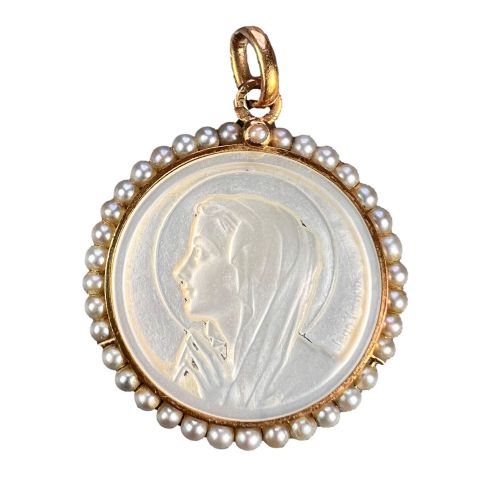
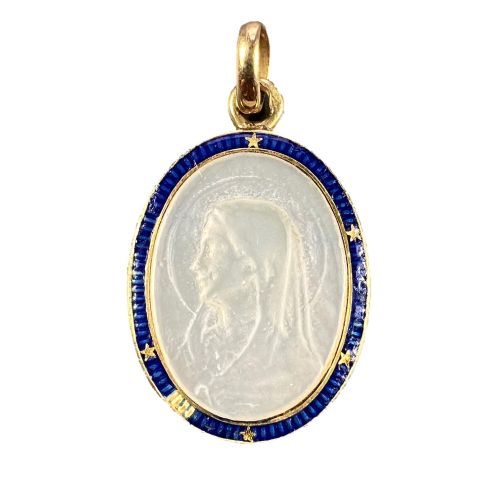
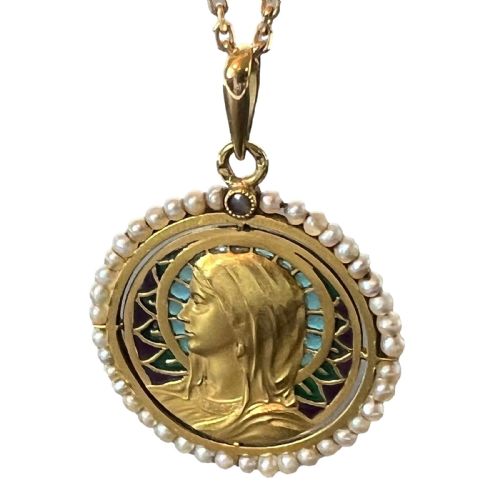
The most common pieces on this page originate from French workshops of the early twentieth century. They depict figures such as the Virgin Mary, the Madonna and Child, and various saints rendered in precious metals.
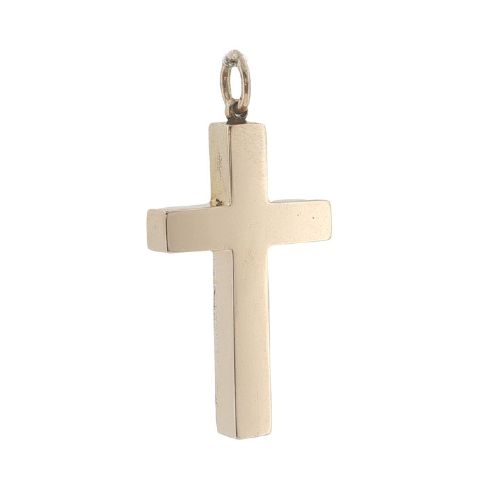
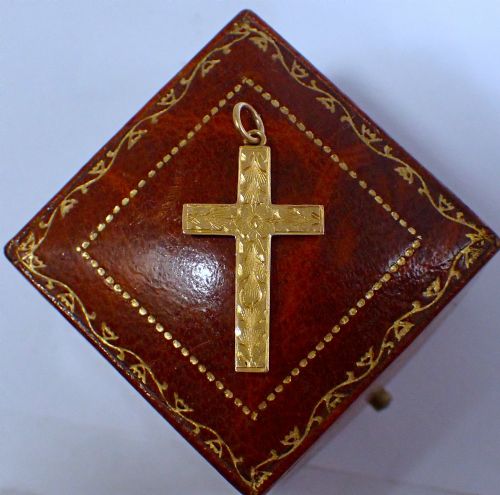
Alongside French devotional medals, British examples appear in the form of engraved gold crosses from the Victorian and Edwardian eras. These items combine personal faith with the refined metalwork of their respective periods.
Materials and technique
The makers of these items relied heavily on yellow and rose gold, frequently utilising eighteen carat standards alongside lower nine carat alternatives for British pieces. Metals were cast, stamped, and hand-engraved to create detailed portraits and borders.
Enamel work frequently enhances the metal surfaces, employing techniques like plique-a-jour to let light through translucent colours. Mother of pearl and seed pearls also appear as background panels or decorative borders behind sacred figures.
Listings span from the nineteenth century through the nineteen fifties, featuring gold, enamel, and mother of pearl.
Judging the work
Quality in these devotional items rests upon the crispness of the stamp and the depth of the hand-engraving. Master medallists achieved remarkable detail in miniature facial expressions and drapery folds.
The choice of supplementary materials elevates certain pieces above standard production. The inclusion of translucent enamel, genuine seed pearls, or diamonds marks out superior workshop output.
Emile Monier·Paul Brandt·Mazzoni·Guilbert·Vernon·Emile Dropsy·Sellier·Rasumny·Tairac
The Vintage Religious Charm Glossary
- Plique-a-jour
- An enamelling technique where enamel is applied without a backing, resembling miniature stained glass. It allows light to pass directly through the translucent colour.
- Medal
- A flat piece of metal struck with a commemorative or devotional design. These were often worn to mark significant life events or personal protection.
- Maltese cross
- A cross form with four arrowhead-shaped arms meeting at a central point. It appears frequently in nineteenth and twentieth century pendant designs.
- Marcasite
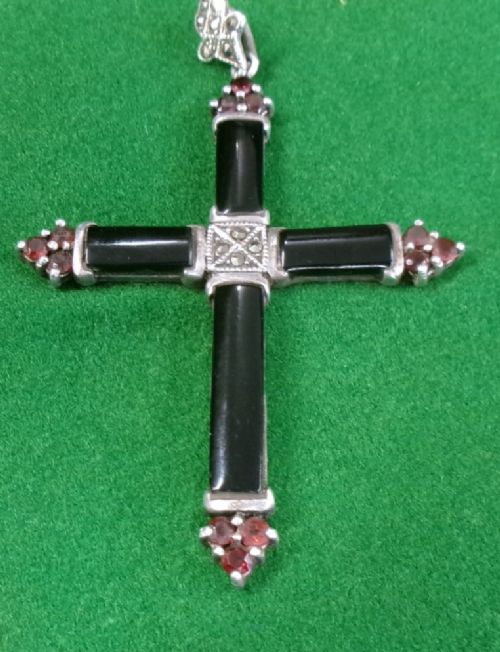
- Small faceted pyrite stones set into silver to provide a dark, metallic sparkle. This material was often used to frame crosses and religious plaques.
- Virgin Mary
- The most common subject on devotional medals found in this collection. She is depicted in various traditional poses, sometimes accompanied by inscriptions.
Vintage Religious Charm: Frequently Asked Questions
How do I wear a religious pendant?
Most pieces include a small suspension loop that accommodates a fine neck chain or a bracelet link. Their compact size allows them to be worn daily against the skin.
Pairing a gold medal with a matching chain keeps the focus entirely on the historical metalwork and engraved details.
How are periods told apart?
Victorian and Edwardian items often feature hand-engraved crosses and hallmarks indicating British assay offices. These tend to have a heavier, solid construction.
Twentieth century French pieces frequently utilise eighteen carat gold combined with enamel work or mother of pearl backgrounds.
What materials were used?
Gold forms the primary metal base, appearing in yellow, rose, and white variations across different carat levels. British pieces often utilise nine carat gold.
Decoration includes coloured enamel, mother of pearl panels, seed pearls, and occasionally small diamonds or marcasite stones.