



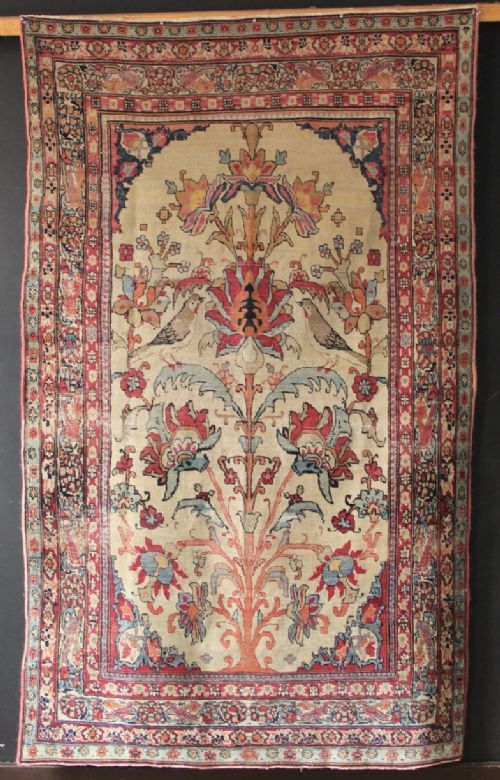
Vintage Red Floral Carpet
When seeking a vintage red floral carpet, collectors find woven Persian and Caucasian room-sized carpets and smaller rugs that anchor traditional interiors.
Vintage Red Floral Carpet
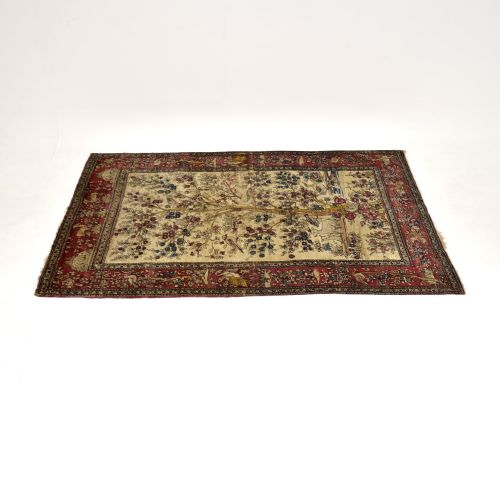
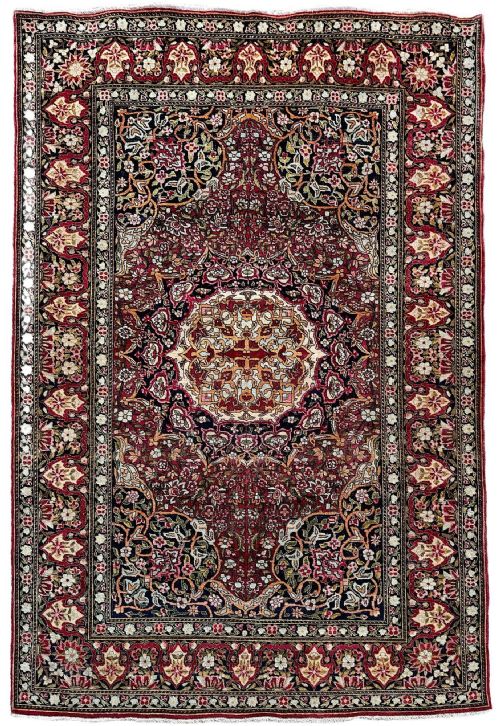
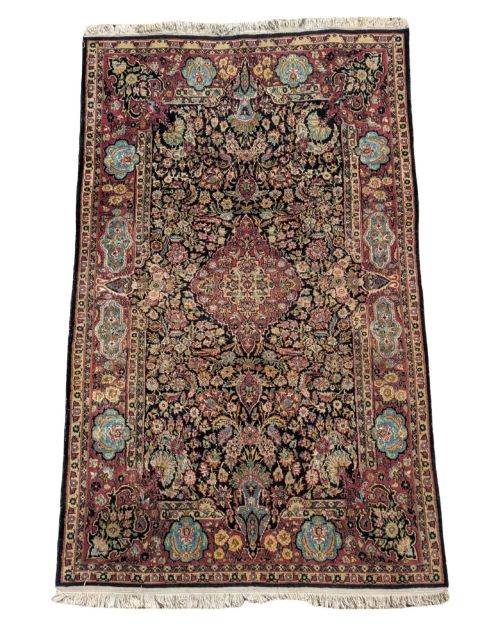
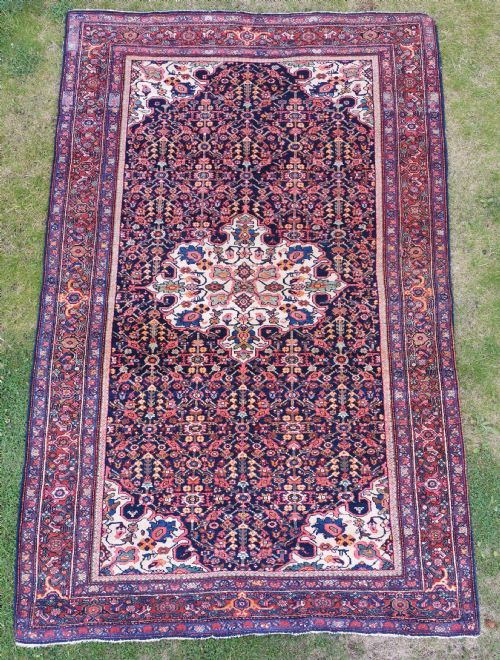
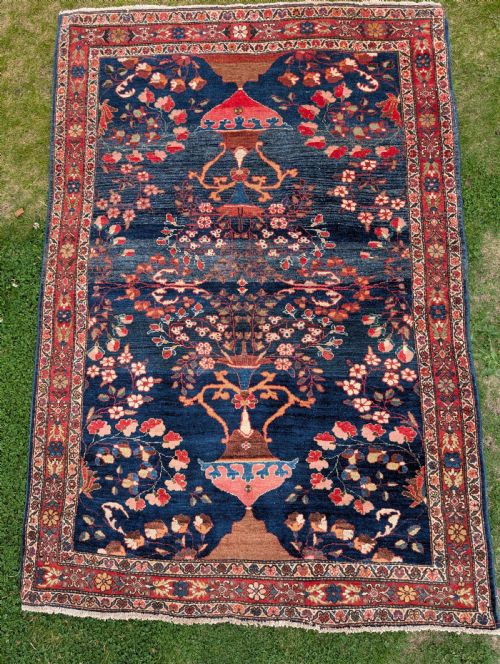
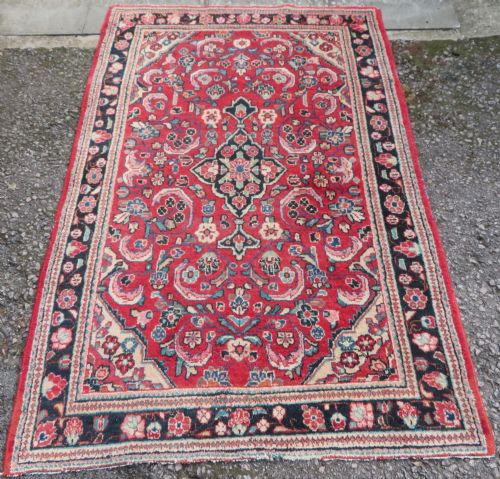
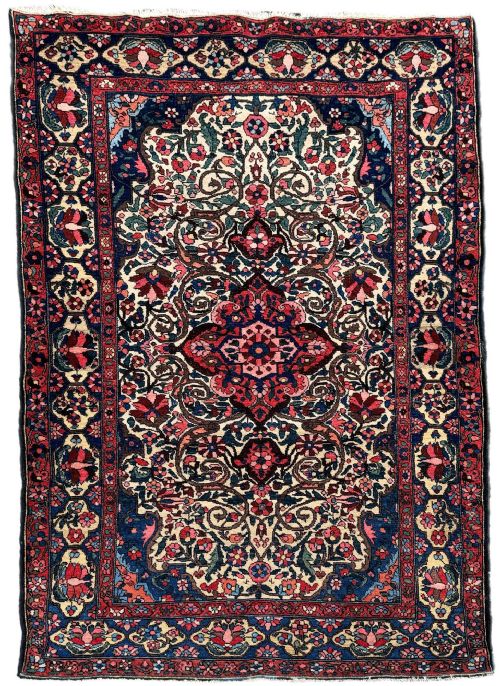
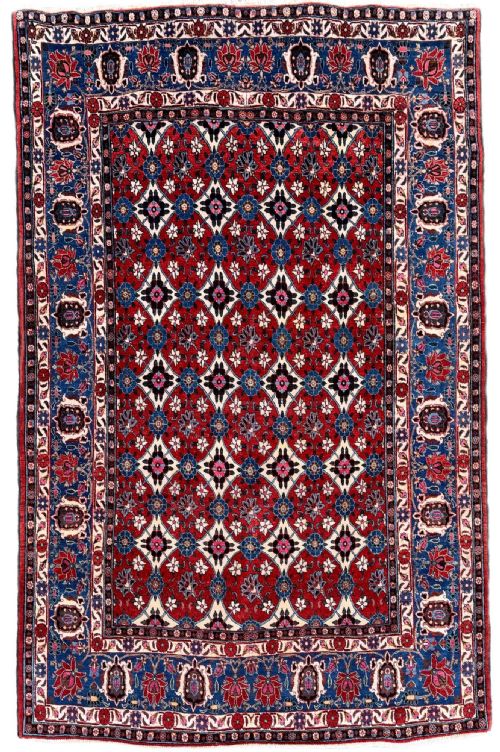
A vintage red floral carpet encompasses hand-woven room-sized carpets, area rugs, runners, and village carpets originating primarily from Persia and the Caucasus. These floor coverings date from the mid-nineteenth century through the early twentieth century, spanning periods such as the 1850s, 1890s, 1900s, 1910s, 1920s, and 1930s.
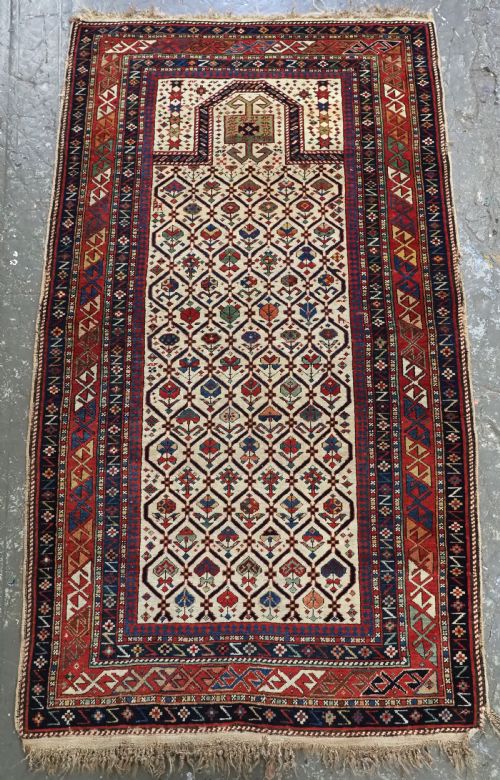
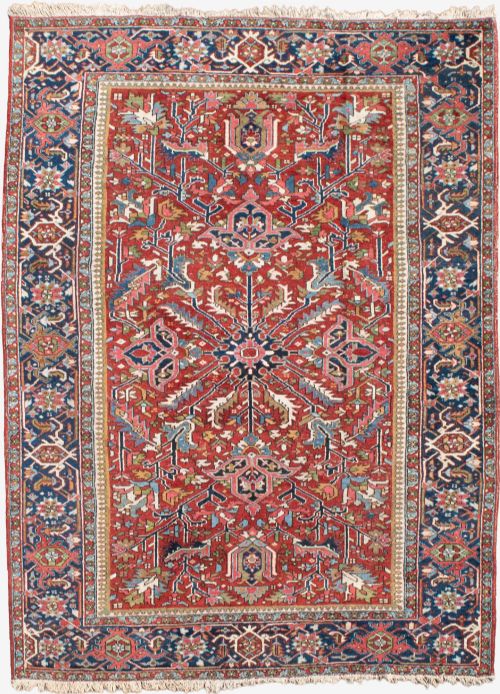
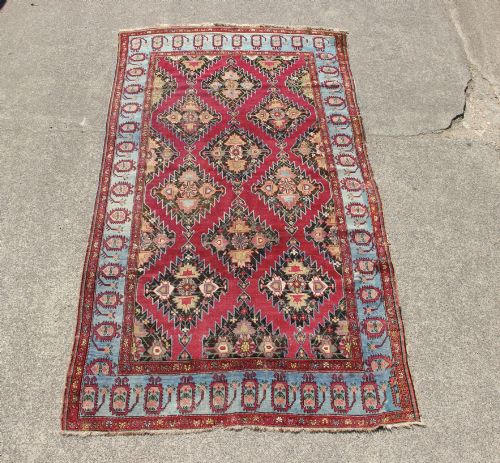
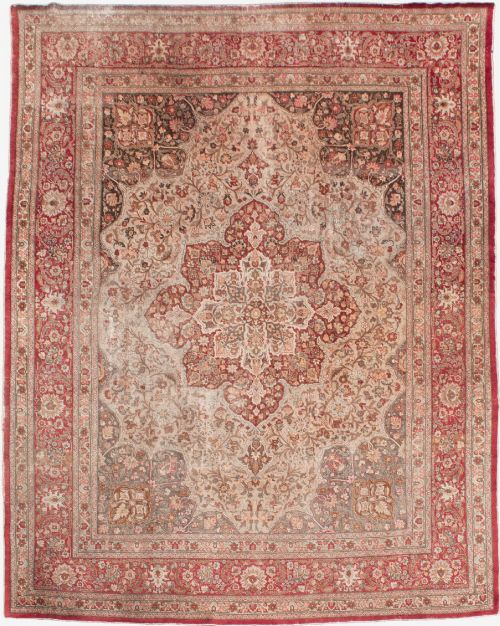
The versions most commonly met on this page include traditional Persian room-sized carpets and village rugs bearing classic floral motifs, medallion designs, and all-over patterns. Specific regional types such as Heriz, Kashan, Bakhtiar, Saroukh, Mahal, and Caucasian prayer rugs appear frequently across the inventory.
How they were made
These woven textiles utilise natural materials predominantly consisting of wool and cotton, with silk highlights appearing in select Isfahan pieces. Wool provides the durable pile, whilst cotton forms the sturdy foundation warp and weft threads.
Weavers knotted these materials by hand on upright looms, employing traditional regional techniques handed down through generations in centres such as Tabriz, Kirman, Ushak, and Hamadan.
Country house carpets often survived decades of spirited family gatherings, muddy hound footprints, and shifting drawing-room pianos without losing their charm.
What varies in quality
The standard of knot density and precision of execution separates fine village rugs from standard room-sized carpets. Tighter knotting allows for sharper delineation of intricate floral lattice designs and medallion contours.
The depth and saturation of dye colours also dictate quality, where rich, harmonious madder-red grounds and well-balanced secondary tones elevate the visual presence of a piece.
Ahmadi Isfahan
The Vintage Red Floral Carpet Glossary
- Pile
- The upright yarn loops or tufts that form the usable surface of the carpet. This layer takes the wear of footsteps and displays the pattern.
- Warp
- The stationary longitudinal threads stretched tightly on the loom before weaving begins. The foundation fringe consists of these visible end threads.
- Weft
- The horizontal threads passed alternately over and under the warp threads to bind the knots in place. This structure gives the carpet its lateral stability.
- Medallion
- A large central ornamental design motif placed in the middle of the field. Many traditional Persian carpets use this focal geometry.
- Prayer rug
- A small format rug featuring a mihrab or niche design at one end. Historically utilised for daily Islamic prayers.
- Kilim
- A flat-woven carpet or rug produced without a pile. These pieces rely on interlocking weft techniques to create geometric patterns.
Vintage Red Floral Carpet: Frequently Asked Questions
How do I identify a Heriz carpet?
A Heriz carpet typically displays a bold geometric central medallion balanced by prominent corner spandrels. The colour palette often relies heavily on deep red grounds contrasting with navy blue and ivory.
These pieces originate from the Heris district in northwest Persia and are recognised for their robust, hard-wearing wool construction.
Where were Kashan rugs made?
Kashan rugs originate from the historic city of Kashan in central Persia, long known for refined urban weaving. These pieces frequently feature intricate central medallions, elaborate floral vase motifs, and curving arabesques.
The weavers employed fine wool foundations and dense knotting to achieve high levels of detail.
What is a village rug?
A village rug is produced by independent weavers working in small rural settlements rather than large urban manufactories. These pieces often exhibit more geometric interpretations of traditional floral designs.
Makers relied on local materials and personal design variations, resulting in charming irregularities.
How do I care for a vintage wool carpet?
Vacuum these wool and cotton textiles gently with a suction-only attachment, avoiding rotating brush heads that can catch the pile. Rotate the carpet periodically to ensure even exposure to light and wear.
Professional specialist cleaning is recommended to preserve the natural lanolin in the wool.
What distinguishes Caucasian rugs?
Caucasian rugs originate from the Caucasus region and are celebrated for their strong geometric structures and crisp colour contrasts. Designs often incorporate stylised floral lattices, crosses, and tribal motifs.
These older pieces, including Dagestan and Karabagh examples, offer a starker aesthetic compared to floral Persian carpets.