



Vintage Red Dining Chairs
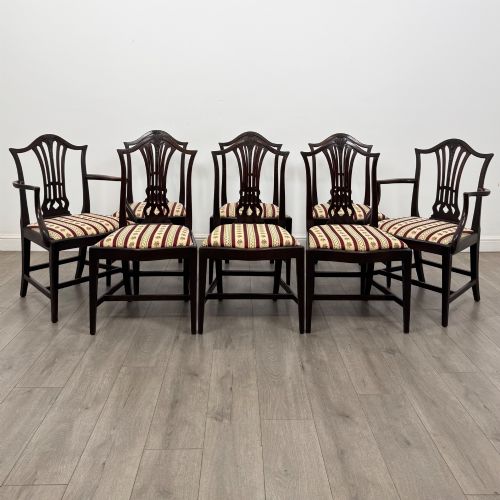
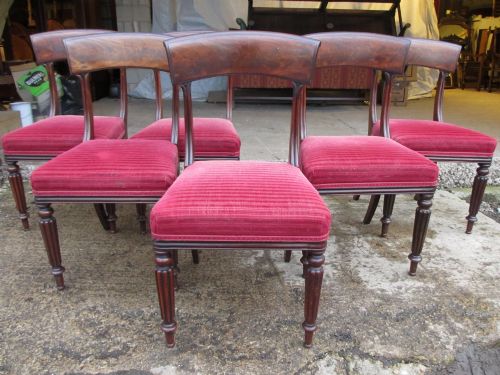
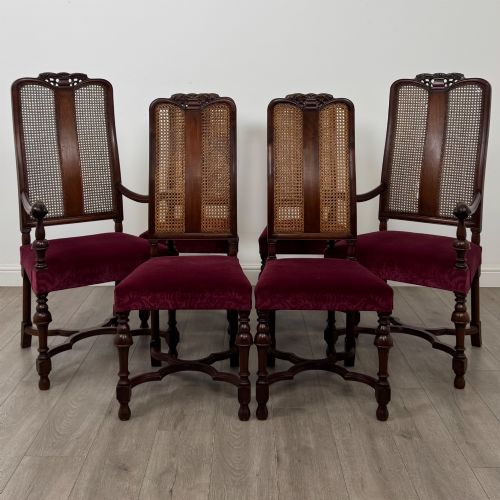
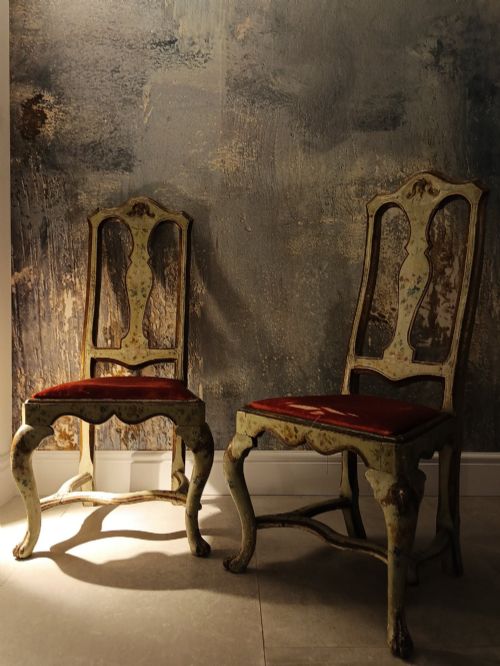
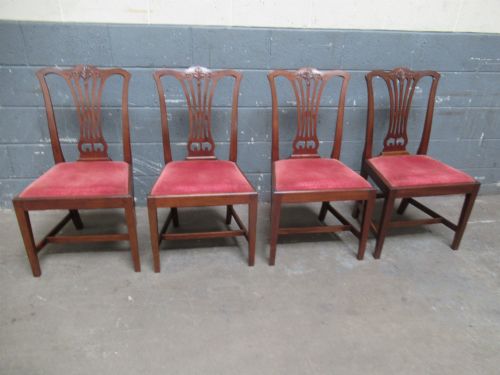
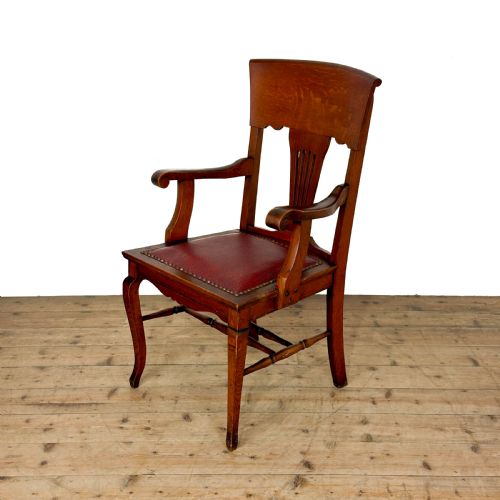
These vintage red dining chairs bring warmth and distinct period character to a room, spanning styles from Georgian mahogany to Edwardian oak.
Vintage Red Dining Chairs
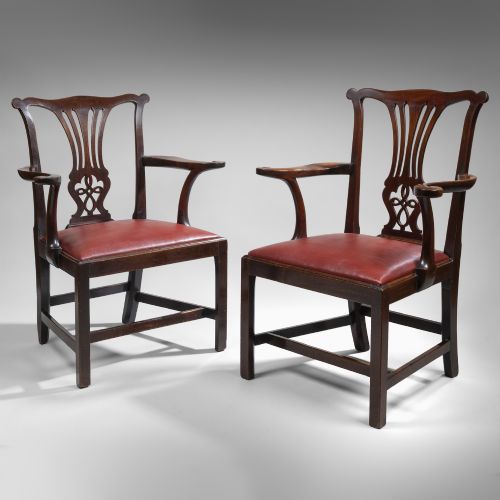
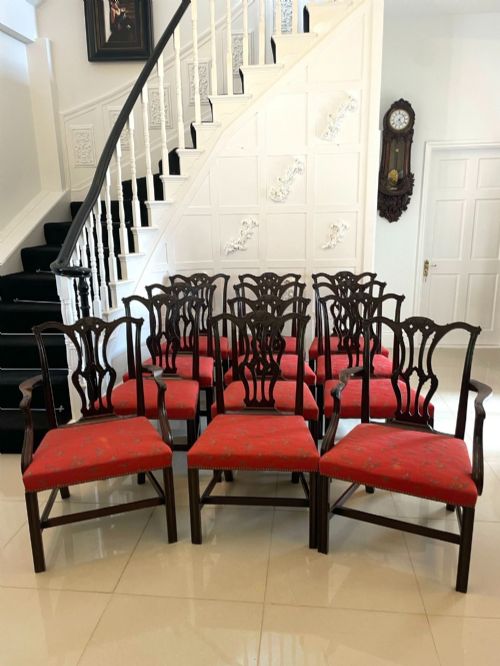
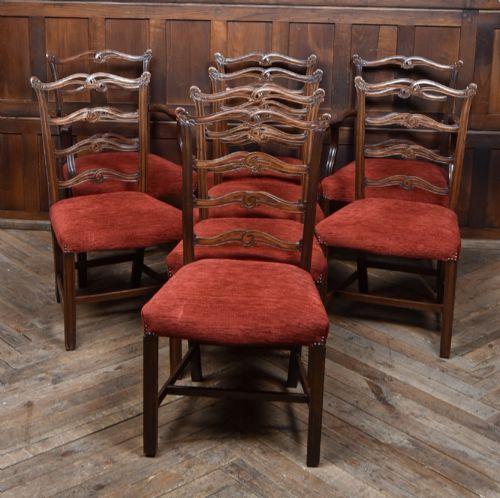
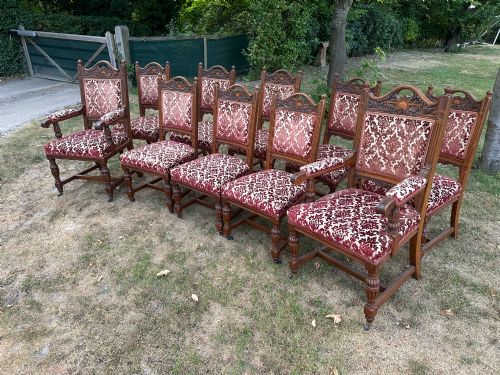
When buyers search for vintage red dining chairs, they encounter seating dressed in striking crimson and burgundy textiles, often upholstered in leather, velvet, and various upholstery fabrics. These pieces function as both practical dining room seating and strong visual statements around a table.
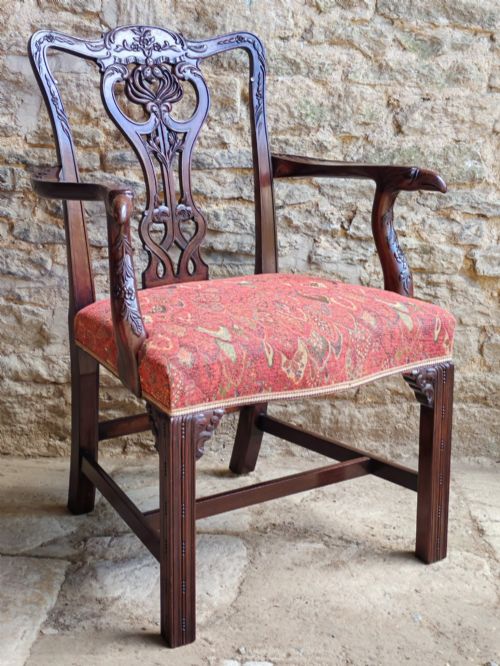
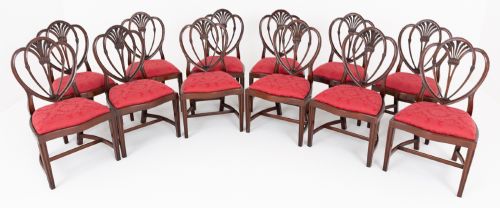
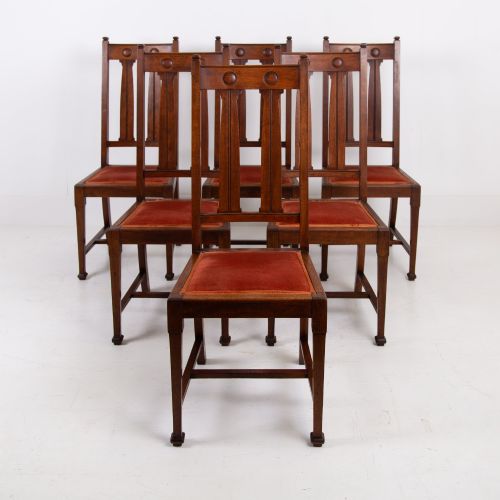
The selection here encompasses side chairs, armchairs, hall chairs, and carvers originating from periods spanning the eighteenth century through to the 1930s. Sets range from pairs up to twelve matching seats, reflecting formal dining traditions of past eras.
Stylistic influences observed on this page draw heavily upon Hepplewhite, Regency, Chippendale, and Jacobean revivals. Buyers frequently find mahogany and oak frames supporting these red upholstered seats, bridging centuries of British and continental cabinet making.
Materials and Construction Methods
Cabinet makers constructed the frames primarily from dense hardwoods such as mahogany, oak, walnut, and rosewood. These timbers provided the structural integrity required to support frequent use around the dining table over generations.
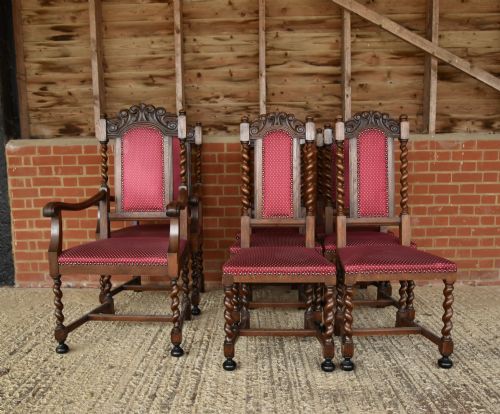
Upholstery techniques combined traditional stuffing methods with tactile surface materials including durable leather, rich velvet, and woven textile fabrics. Brass inlays, studs, cane backs, and elaborate carved details such as barley twists or shield backs further enhanced the finished appearance.
Vintage Red Dining Chairs Retail Price Guide 2026
Typical asking prices for vintage red dining chairs among the pieces listed under this phrase on Sellingantiques today, from the lower quarter to the upper quarter. They describe what is for sale here now, not the wider market.
Listings feature mahogany and oak frames paired with red leather, velvet, and textile upholstery across multiple centuries.
Judging Quality in Period Seating
Distinction across the range lies in the crispness of timber carving, the choice of primary wood, and the integrity of the frame construction. Superior examples exhibit tightly fitted joinery and hand-carved motifs that remain sharp and deep.
The quality of the covering material and the fidelity of revival styles also set pieces apart. Original or sympathetic period upholstery utilising fine leather or velvet elevates the overall standard of an assembly.
Howard and Sons·Alfred Allen of Birmingham
The Vintage Red Dining Chairs Glossary
- Carver
- An armchair designed to sit at the head of a dining table, often matching a set of side chairs. These typically feature arms for added comfort.
- Shield Back
- A chair back shaped in the outline of a heraldic shield, popularised during the late eighteenth century. This design often incorporates carved splats and intricate woodwork.
- Balloon-Back
- A chair back characterised by a rounded, continuous curved top rail resembling a balloon. This form gained prominence during the Victorian and William IV periods.
- Barley Twist
- A turning technique where timber is shaped into a spiral resembling twisted barley sugar. It appears frequently on the legs and stretchers of Jacobean and later revival oak chairs.
- Sabre Leg
- A chair leg that curves outwards in a concave sweep reminiscent of a cavalry sabre. This profile is commonly found on Regency and early nineteenth-century seating.
Vintage Red Dining Chairs: Frequently Asked Questions
How many chairs come in a typical set?
Sets on offer vary considerably, ranging from pairs and small groups of four or six up to large dining sets of ten or twelve. Buyers can select numbers that suit their specific table dimensions.
Matching larger assemblies often requires patience, as historical dining sets were frequently dispersed or expanded over time.
Are these chairs suitable for daily use?
Most hardwood dining chairs from these periods remain sturdy enough for regular seating when properly maintained. Solid timber frames and robust leather or fabric upholstery handle everyday dining well.
Placing felt pads beneath the legs helps protect both the wooden feet and modern floor surfaces from excessive wear.
How do I identify a revival style?
Revival pieces adopt the aesthetic hallmarks of earlier eras, such as Chippendale or Jacobean designs, while utilising the manufacturing methods of their actual date of production. Examining the construction inside the frame helps reveal the true period.
Cabinet makers in the nineteenth and twentieth centuries frequently reinterpreted classical proportions to satisfy contemporary domestic tastes.
What maintenance do leather seats require?
Leather upholstery benefits from occasional conditioning to prevent the hide from drying out over the years. Gentle cleaning keeps the red dye vibrant and preserves the natural texture.
Avoiding direct sunlight helps protect both the leather and the timber frames from fading.