


Vintage Reclining Leather Chair
A vintage reclining leather chair offers deep comfort and mechanical ingenuity, making it a prized seating choice for studies and libraries.
Vintage Reclining Leather Chair
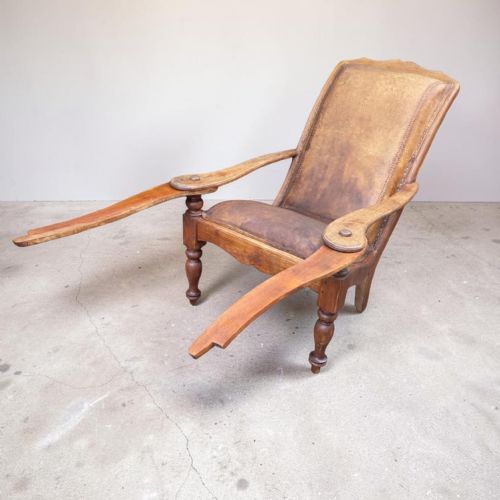
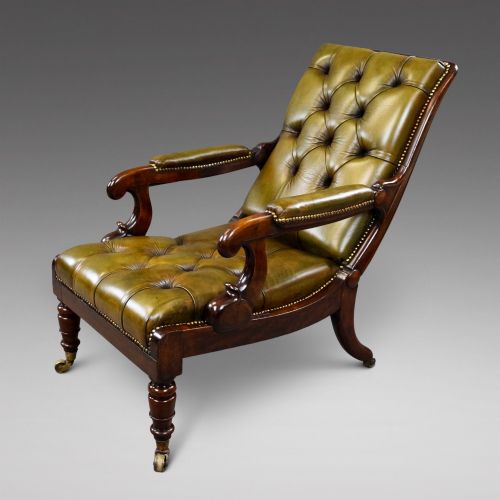
When you search for a vintage reclining leather chair, you encounter a remarkably varied selection of seating designed for rest, recovery, and reading. These historic pieces range from campaign chairs and planter's chairs with extending arms to sophisticated library armchairs and metamorphic designs.
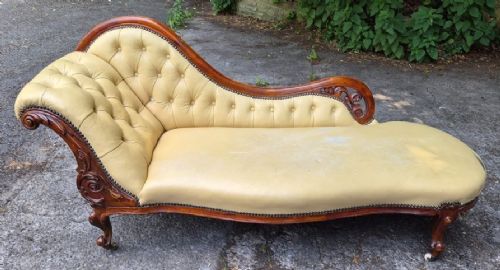
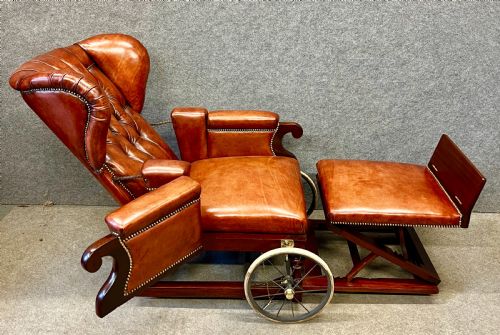
The selections span numerous periods, notably the nineteenth century, Victorian era, Regency, and even earlier seventeenth-century examples. Alongside traditional armchairs, the listings include chaise longues and invalid wheel chairs that showcase the era's focus on personal comfort.
Origin styles also cross international borders, featuring Anglo-Indian colonial pieces alongside English mahogany and oak frames. Buyers seeking a vintage reclining leather chair will find diverse forms that each served a specific domestic or colonial purpose.
How they were made
Master cabinetmakers utilised solid timbers such as mahogany, teak, oak, rosewood, and hardwood to construct robust frames capable of housing adjustable mechanisms. These structural woods were frequently carved, particularly in Victorian and colonial workshops.
Upholstery traditionally involved durable leather, often buttoned, paired with brass hardware and occasionally cane or fabric elements. Ingenious internal engineering allowed seats to adjust, metamorphic functions to operate, and footrests or extending arms to deploy smoothly.
Some nineteenth-century invalids enjoyed wheeled chairs equipped with hidden reading desks and footrests for touring the parlour.
What varies in quality
The distinction between standard examples and the finest pieces often rests in the complexity of the patent mechanism and the integrity of the original timber frame. Pieces bearing attribution to known makers or possessing fully operational adjustable actions command greater attention from discerning collectors.
Subtleties in hand-carving, the quality of the leather hide, and the retention of original brass fittings elevate certain items above simpler domestic seating. A higher grade of execution is evident in pieces designed for specialised uses, such as library research or convalescence.
Robert Daws·John Ward·Foot and Sons·Heals of London
The Vintage Reclining Leather Chair Glossary
- Campaign chair
- Portable folding furniture made for officers on military campaigns abroad. These clever designs easily disassembled or collapsed for transport.
- Metamorphic armchair
- Seating that transforms into another form of furniture, such as a bed or a chair with an integrated writing slope. Such clever pieces solved space issues in period homes.
- Planter's chair
- A colonial chair featuring unusually long extending arms designed for resting legs upon. They provided ventilation and relaxation in warm climates.
- Chaise longue
- An upholstered long chair for reclining, combining a chair and a footstool into a single piece. Victorian iterations often featured carved mahogany frames.
- Button leather
- Upholstery secured with deep tufting and buttons that pull the leather into diamond patterns. This technique kept the internal padding evenly distributed.
Vintage Reclining Leather Chair: Frequently Asked Questions
How do the reclining mechanisms work?
Many period chairs use ratchets, brass hinges, or adjustable backrests that lock into various angles by shifting body weight or adjusting side arms. These mechanical systems allowed the user to move smoothly from an upright seated position to a relaxed reclined posture.
Inventors patented numerous clever designs during the nineteenth century to improve ease of movement. Examining the brass hardware reveals how each specific mechanism was intended to operate.
What is a campaign chair?
A campaign chair is a portable, knock-down piece of furniture built for travel, military campaigns, or colonial posting. They were constructed to fold or disassemble compactly without sacrificing stability.
These pieces utilised durable hardwoods and robust leather to withstand rigorous transport. Today, they remain popular for their functional cleverness and distinct historical character.
How do I identify a Victorian reclining chair?
Victorian examples frequently display heavy mahogany or walnut frames, deep buttoned leather upholstery, and elaborate hand-carving. They often incorporate patent adjustment mechanisms for library or invalid use.
Comparing the stylistic markers against Regency or Arts and Crafts pieces helps clarify the date. The combination of dense timber and substantial brass fittings usually points toward nineteenth-century production.