
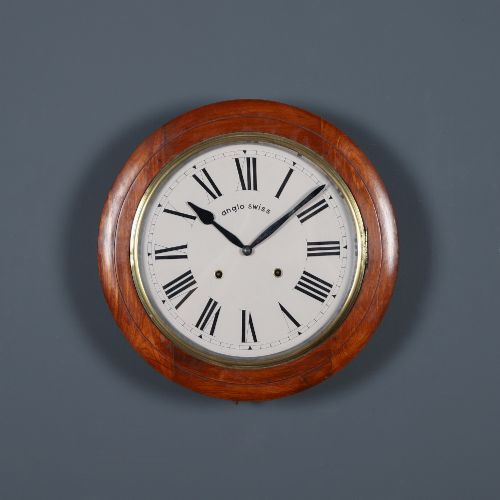
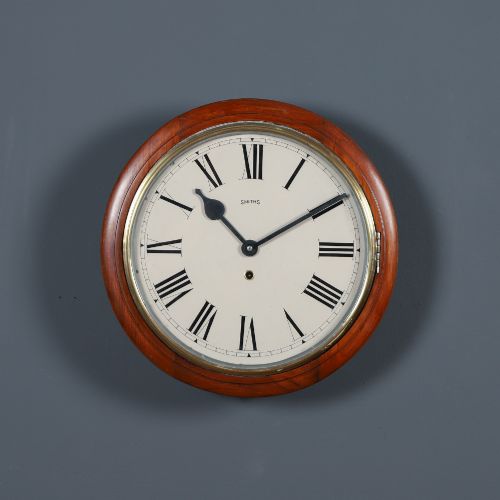
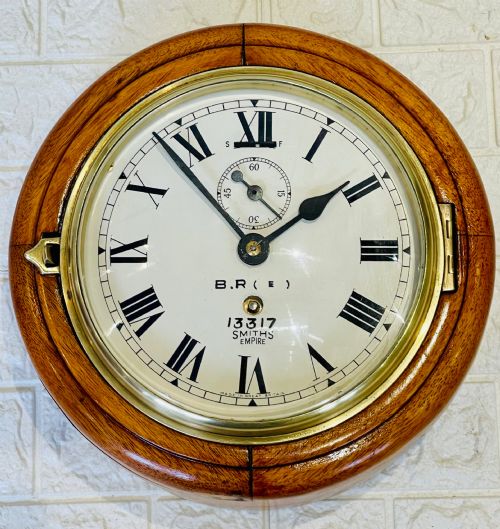
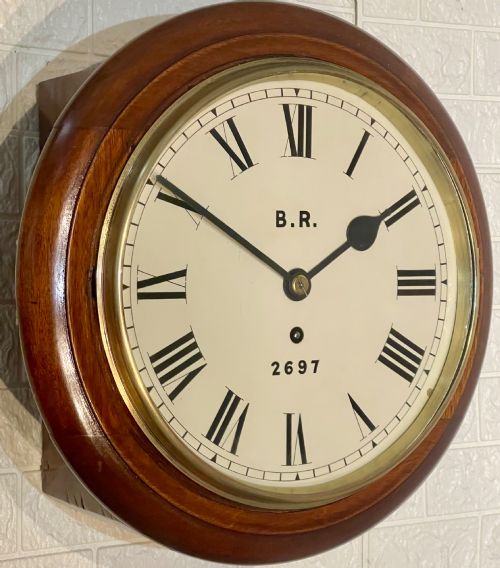

Vintage Railway Wall Clock
A vintage railway wall clock brings the functional architecture of the Victorian and mid-century transport network directly into a modern interior.
Vintage Railway Wall Clock
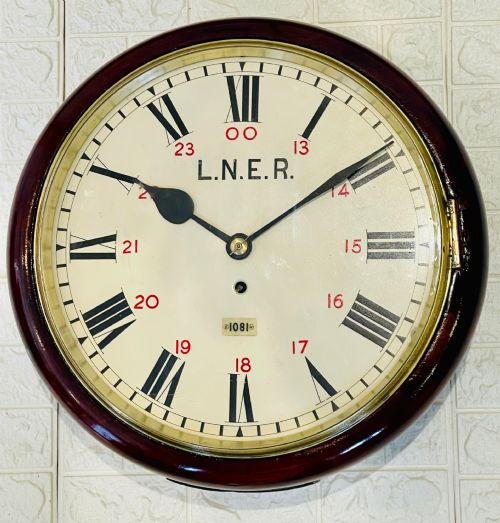
A vintage railway wall clock is a robust timepiece originally commissioned for the operational demands of nineteenth and twentieth-century transport networks, including major companies like the L.N.E.R., G.W.R., and British Railways.
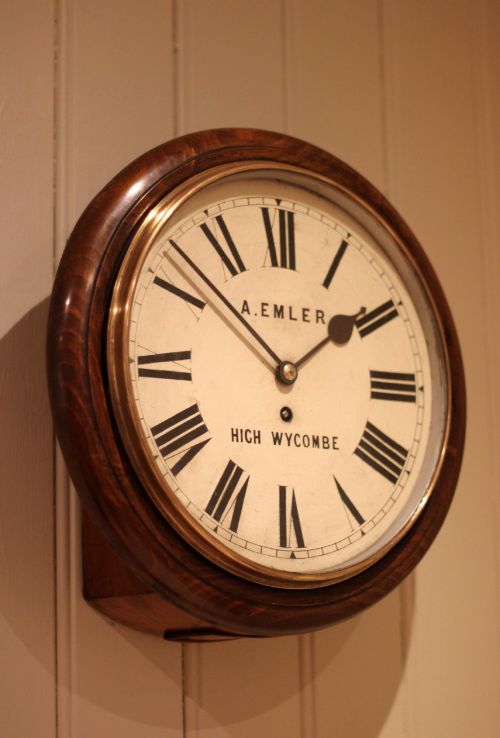
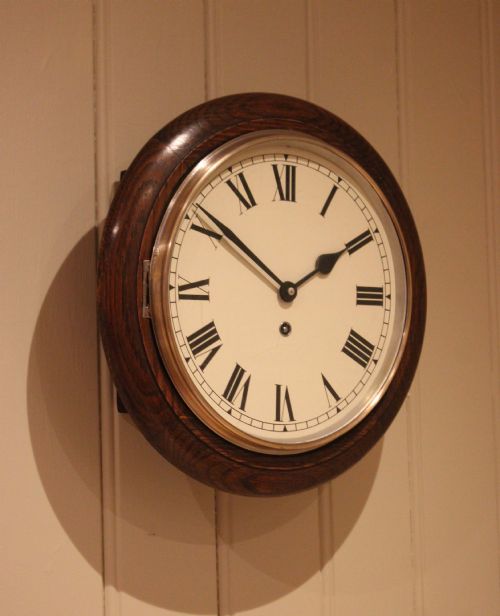
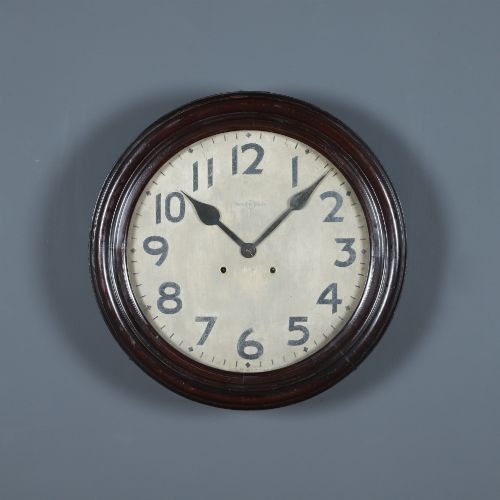
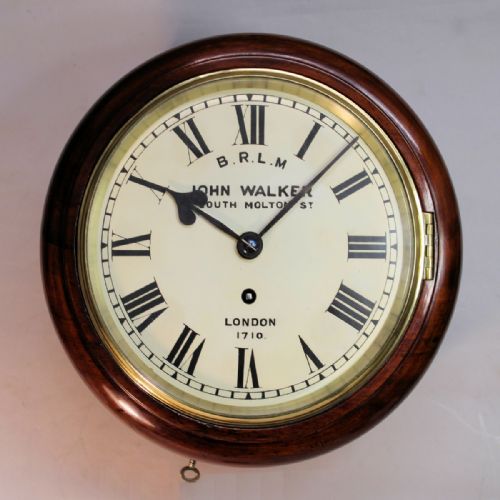
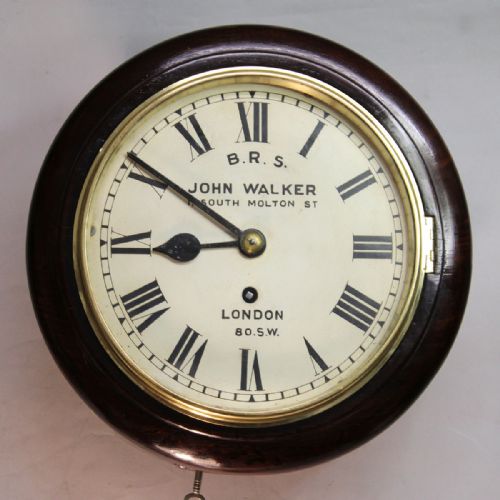
The version most commonly met on this page is the fusee dial wall clock, housed in a deep mahogany or oak surround with a clear white face designed for rapid legibility.
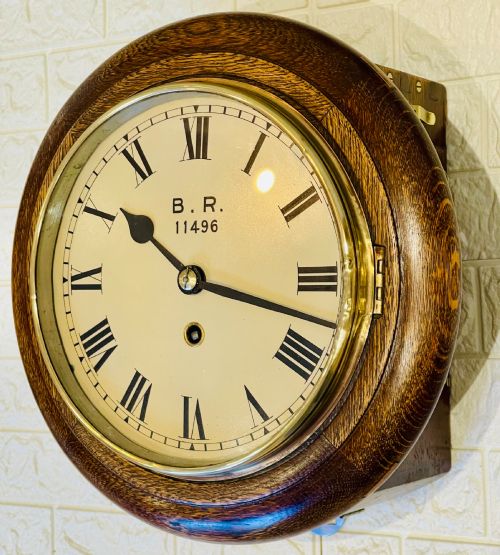
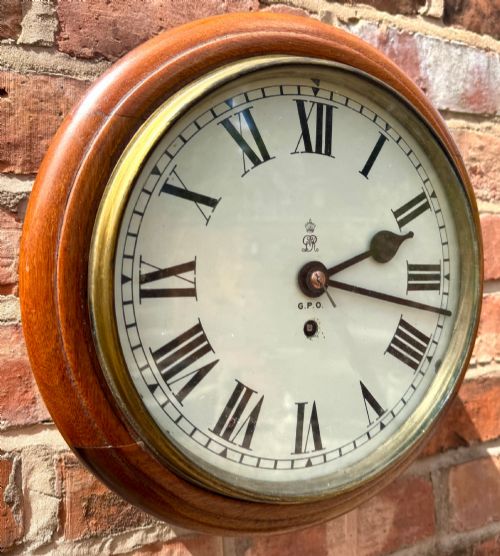
These clocks served station masters, signal boxes, and administrative offices, bearing the specific geographic stamps and regional prefixes of their former locations.
How They Were Made
Cabinet makers constructed the circular wooden cases primarily from solid mahogany and oak, utilising sturdy back boxes to protect the precision movements from dust and vibration in busy transport hubs.
Dial construction typically combined painted iron or metal faces with heavy bevelled glass doors, secured by brass bezels that hinged open for winding and regulation.
Some station clocks carry subtle dents on their brass bezels, left behind by generations of hurried staff checking the time with heavy pocket watches.
What Varies in Quality
The distinction between standard utility timepieces and premier examples often lies in the provenance and the calibre of the fusee movement, which maintains even tension for more accurate timekeeping.
Originality of components, from the stamped case numbers to the signed dial bearing a known maker like John Walker, separates mass-produced later issues from historically significant station pieces.
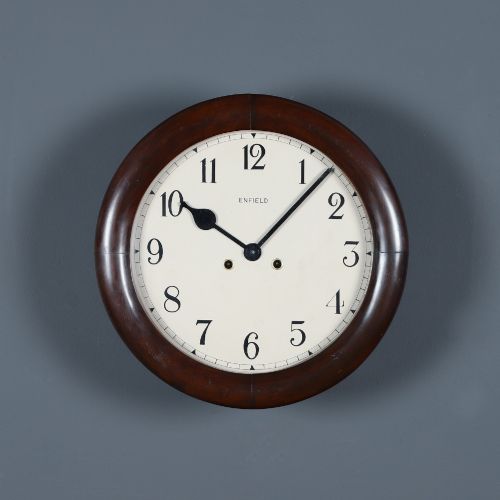
John Walker·Smiths·Enfield·Camerer Cuss And Co
The Vintage Railway Wall Clock Glossary
- Fusee
- A conical pulley used in older clock movements to equalise the declining power of the mainspring as it unwinds. This mechanism ensures consistent torque and superior timekeeping accuracy.
- Dial
- The visible face of the clock where the numbers and minute markers are painted. In railway pieces, these are traditionally clean white or cream with bold black numerals for distance reading.
- Bezel
- The ring of brass or wood that holds the glass face in position over the dial. Many railway clocks feature a hinged brass bezel secured with a side latch.
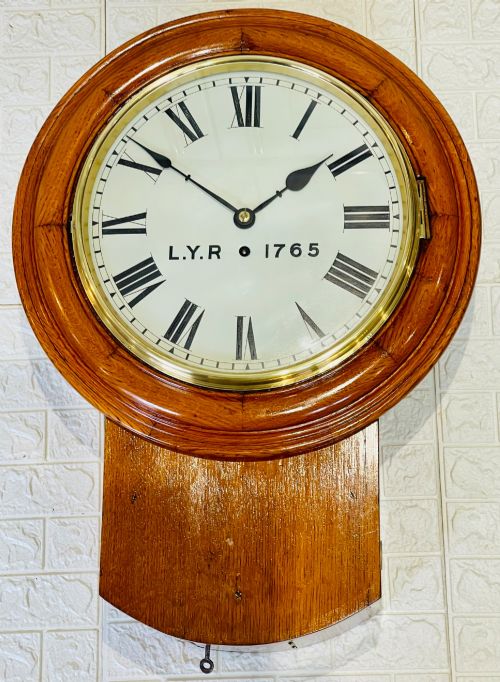
- Drop dial
- A clock case design where the circular dial sits atop an extended wooden box that houses the pendulum. This shape provides the necessary vertical drop for the weights or pendulum swing.
- Signal box clock
- A specialised utility timepiece designed for compact spaces alongside railway tracks. These sturdy models often featured distinct proportions suited to intense operational environments.
Vintage Railway Wall Clock: Frequently Asked Questions
What is a fusee railway clock?
A fusee railway clock uses a specialised chain and cone-shaped pulley system to regulate the power delivered from the mainspring. This traditional mechanism was favoured on the rail network for its reliable timekeeping precision.
Such movements are housed in deep wooden cases designed to withstand the heavy vibrations of nineteenth-century stations and offices.
How do I wind my wall clock?
Winding requires inserting the appropriate key into the small winding aperture on the painted dial face. Turn it gently until you feel firm resistance, taking care not to overwind the mainspring.
Most traditional fusee movements require attention roughly once every eight days to maintain accurate time.
Where were these clocks originally hung?
These timepieces were placed wherever precise coordination was vital for transport operations. Common locations included station master offices, ticket halls, signal boxes, and platform areas.
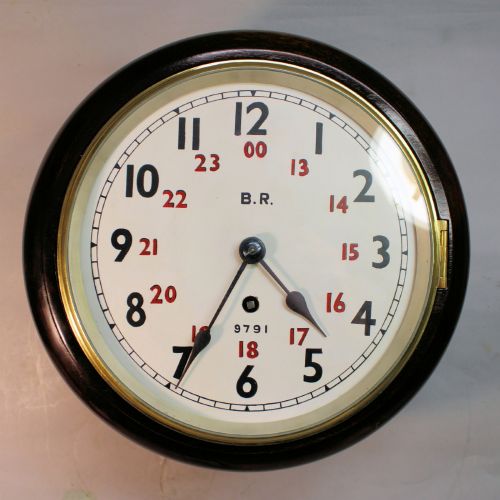
Many examples retain lettering or numbers on the dial and case indicating the specific railway company or regional line they served.
How do I date a railway clock?
Dating relies on examining the construction of the mahogany or oak case, the style of the numerals, and any maker signatures on the dial. Fusee movements and Victorian proportions generally point to the nineteenth century.
Later pieces often feature materials like bakelite or carry British Railways stampings from the mid-twentieth century.