


Vintage Purple Ring
A vintage purple ring brings together deep violet hues and precious settings from the Georgian era through to the later twentieth century.
Vintage Purple Ring
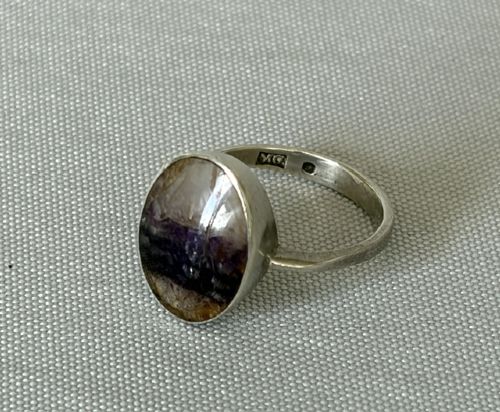
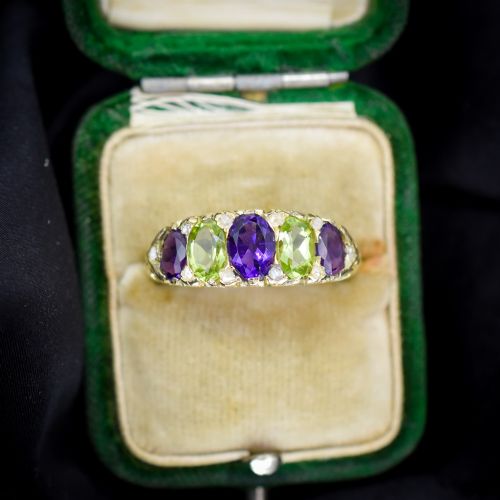
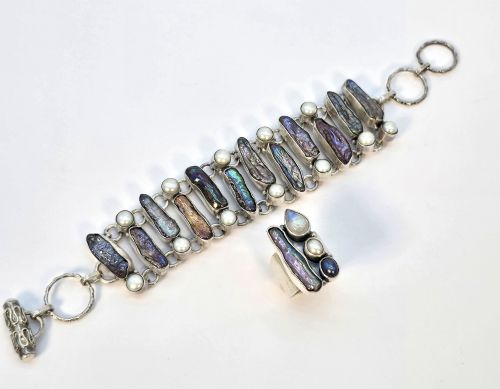
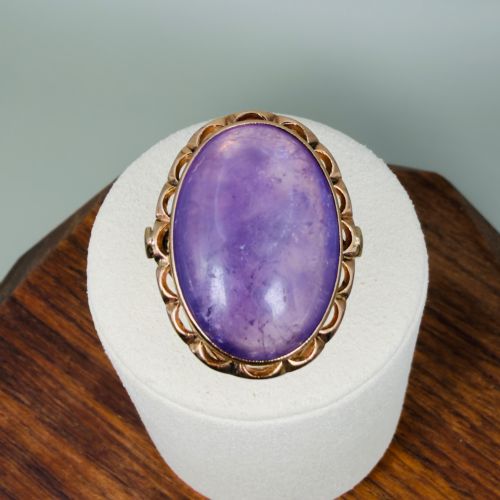
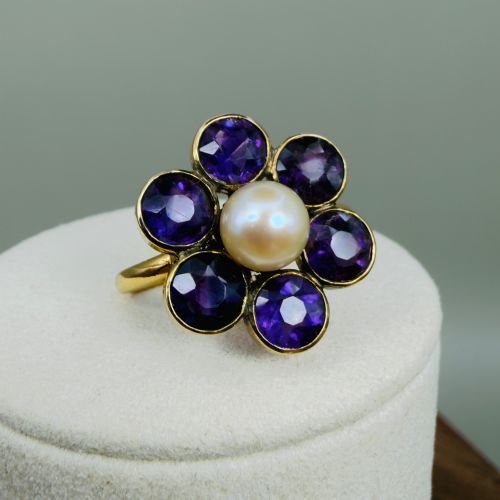
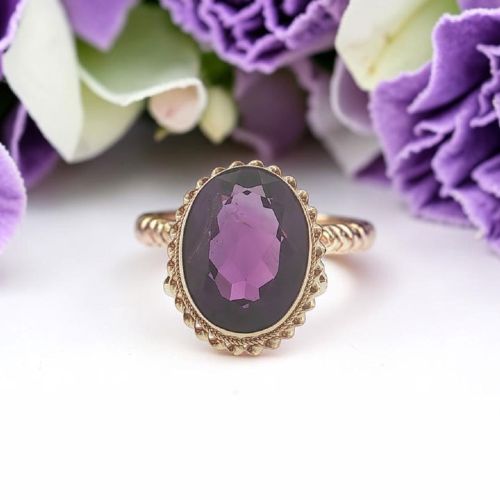
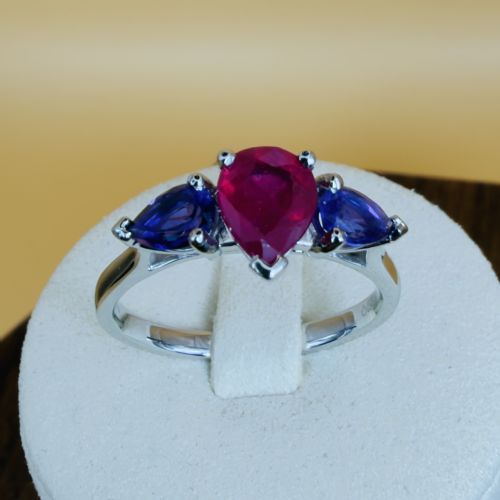
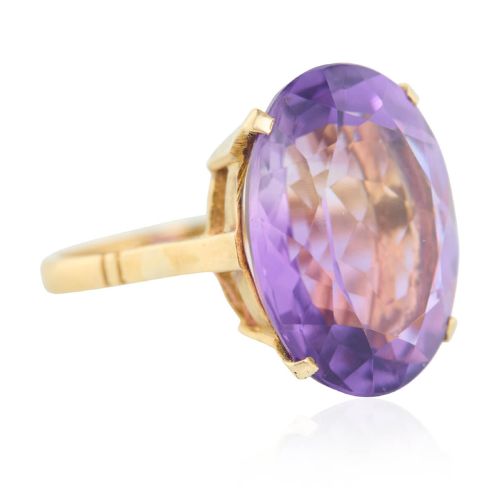
A vintage purple ring encompasses a diverse range of styles, from Georgian and Victorian pearl-accented clusters to bold mid-century cocktail pieces. When exploring a vintage purple ring, buyers encounter gemstones such as amethyst, purple sapphire, lavender jade, and alexandrite set into gold, silver, or platinum.
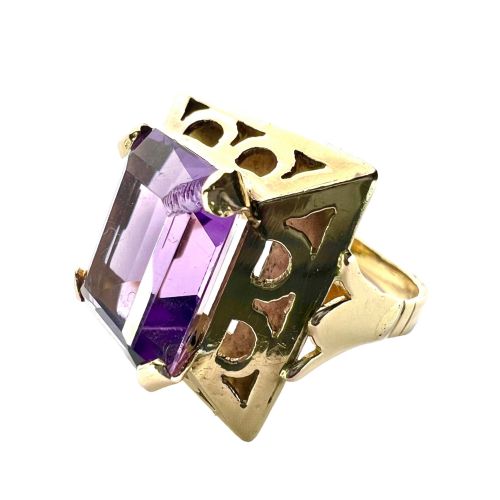
The selections span distinct periods including the 1920s Art Deco era, the 1940s, and 1950s modernist designs, reflecting changing tastes in stone cuts and band configurations. Many examples feature substantial carat weights, heart cuts, emerald cuts, and cushion cuts framed by diamonds or pearls.
How They Were Made
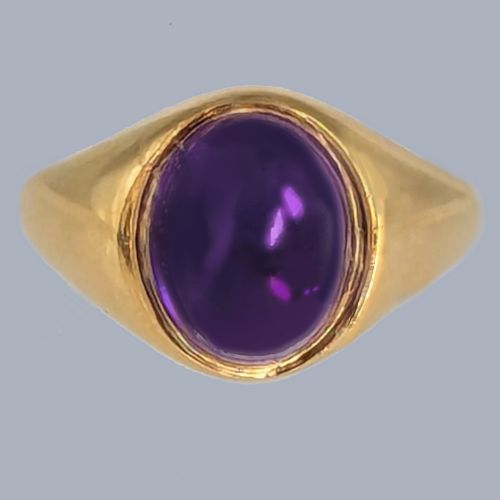
Goldsmiths utilised 9ct, 14ct, and 18ct yellow and rose gold, alongside platinum and silver, to construct durable and ornate settings for purple stones. Gemstones were shaped into precision emerald, cushion, round, and pear cuts, or left as smooth cabochons to emphasise natural colour.
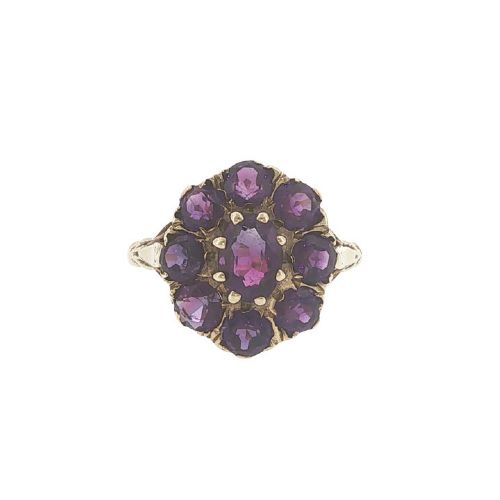
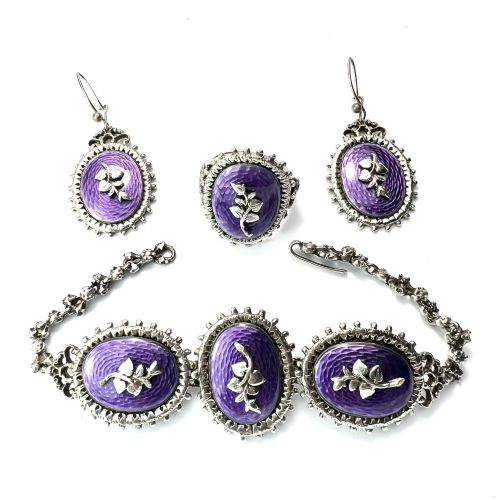
Techniques combined traditional claw and bezel settings with intricate cluster arrangements, often pairing central amethysts or sapphires with supporting diamonds, pearls, peridots, or enamel work.
Listings incorporate pieces spanning from the 19th century and Georgian period through the 1920s, 1950s, and up to the late 20th century.
What Varies in Quality
Quality rests upon the depth and clarity of the purple stone itself, alongside the weight and purity of the precious metal used in the shank and mount. Substantial gemstone size and secure, detailed prong or bezel work elevate a piece.
The integration of supporting materials, such as well-matched accent diamonds or genuine pearls, distinguishes standard daily wear from more exceptional cocktail and dress rings.
Harold Arthur Lazarus
The Vintage Purple Ring Glossary
- Amethyst
- A purple variety of quartz prized for its violet to deep plum colouration. It appears frequently across Victorian, Edwardian, and mid-century designs.
- Cabochon
- A gemstone shaped and polished with a smooth, rounded surface rather than faceted edges. This technique highlights the soft lustre of lavender jade and select amethysts.
- Cocktail Ring
- A large, showy ring designed to draw attention during social gatherings. These pieces often feature oversized centre stones and elaborate surrounds.
- Cluster Ring
- A ring style featuring a central gemstone encircled by a group of smaller stones, typically diamonds or pearls. This arrangement maximises overall visual impact.
- Solitaire
- A jewellery setting designed to showcase a single gemstone without competing side stones. Emerald and round cuts frequently appear in this solitary format.
Vintage Purple Ring: Frequently Asked Questions
How do I date a vintage purple ring?
Dating relies on hallmarks, metal types, and gemstone cuts characteristic of specific periods like the 1920s Art Deco movement or Victorian era.
Examining the construction style and assay office marks helps narrow down the exact decade of manufacture.
Are amethyst and purple sapphire interchangeable in these rings?
While both provide violet hues, amethyst is a quartz variety while purple sapphire belongs to the corundum family and offers greater hardness.
Listings specify the exact mineral composition alongside carat weights where recorded.
How should I care for a vintage purple ring?
Most amethysts and gold settings require gentle cleaning with warm soapy water and a soft cloth to preserve their lustre.
Harsh chemical dips should be avoided, particularly on rings featuring pearls or softer organic gems.
What styles are common in these rings?
Common formats include simple solitaire mountings, dramatic multi-stone cocktail designs, and intricate halo clusters.
Art Deco, Edwardian, and mid-century aesthetics dominate the available configurations.