


Vintage Purple Necklace
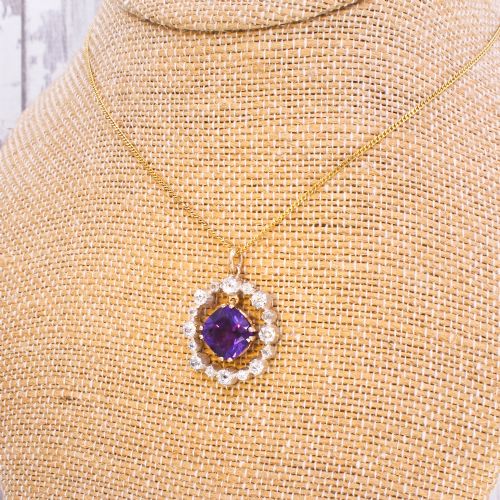
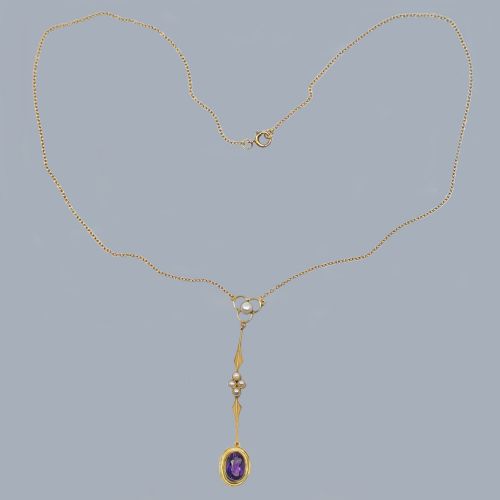
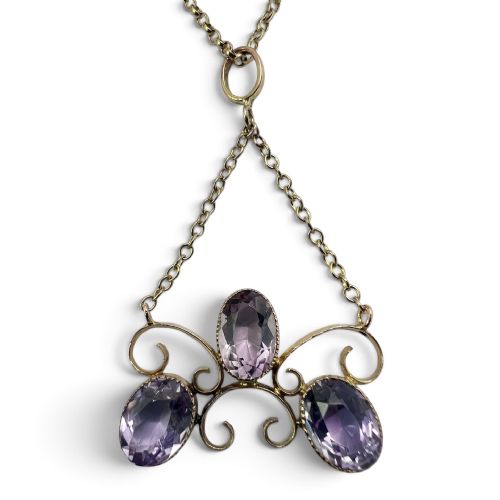
When you handle a vintage purple necklace, you are holding a piece defined by deep amethyst tones and period goldwork.
Vintage Purple Necklace
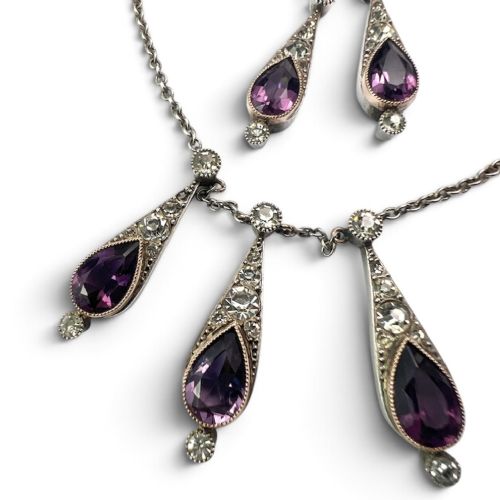
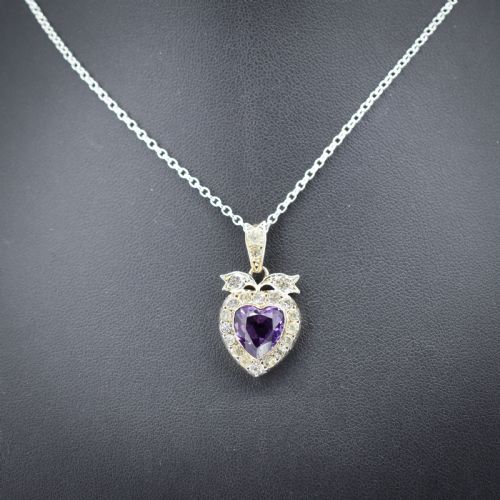
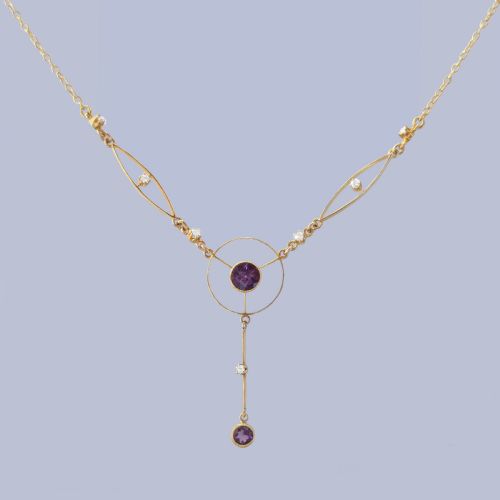
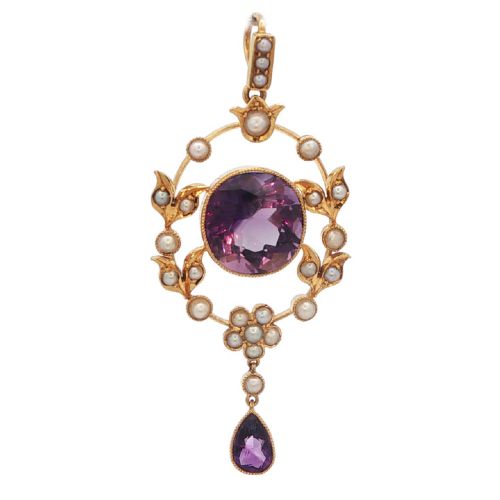
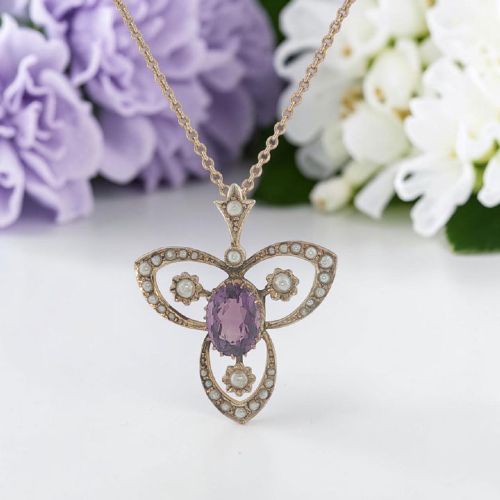
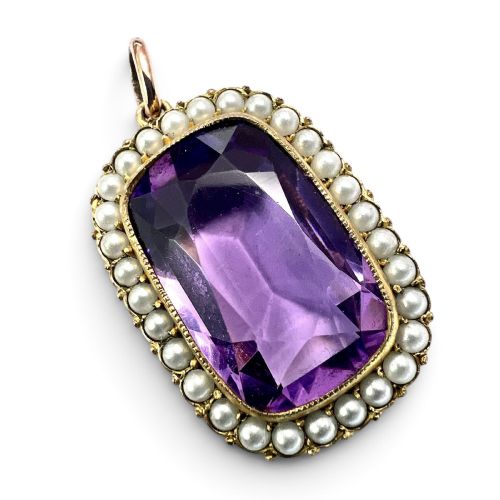
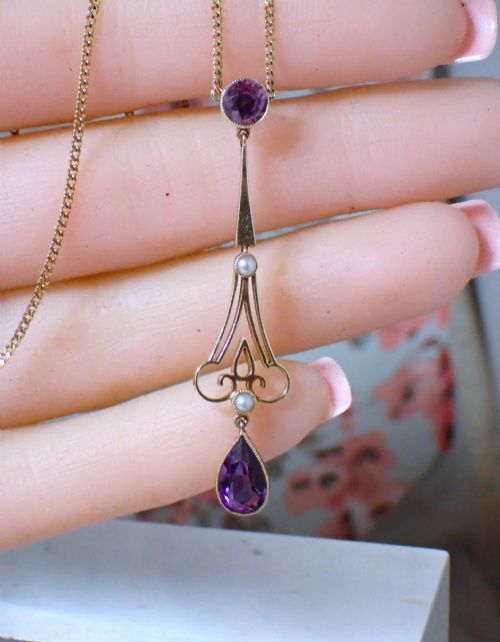
A vintage purple necklace typically centres on amethysts mounted in gold or silver settings, spanning periods from the Victorian era through the mid-century. Buyers searching for a vintage purple necklace will most frequently encounter Edwardian lavalier pendants and Art Nouveau floral designs set in nine-carat or fifteen-carat gold.
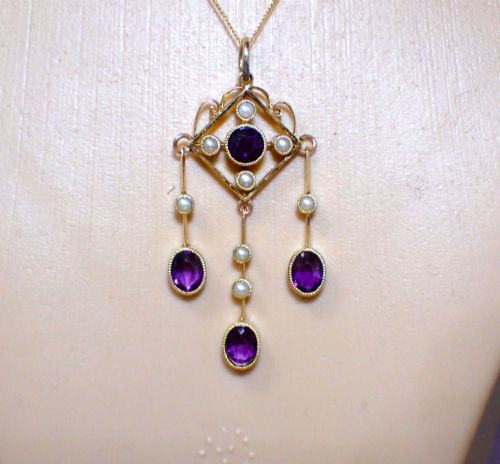
The selection ranges from delicate seed pearl and amethyst drops to substantial Victorian cluster pendants and mid-century clasp designs. Silver examples often incorporate paste stones, marcasite, or arts and crafts motifs alongside the central purple gems.
How they were made
Goldsmiths utilised nine-carat, fifteen-carat, and eighteen-carat yellow gold alongside silver to fabricate the delicate wirework, bezels, and chain links typical of these pieces. Stones were hand-cut, often featuring old-cut diamonds or foil-backed paste alongside natural amethysts.
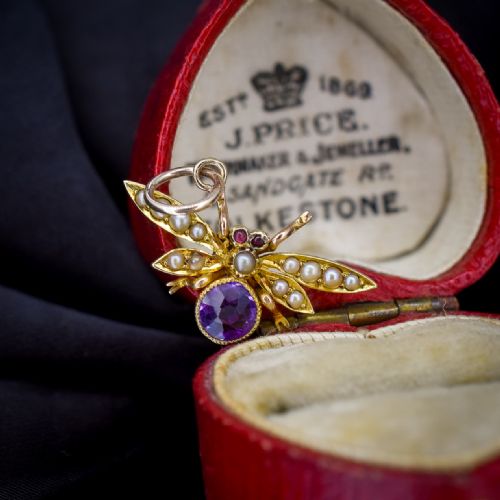
Craftsmen integrated seed pearls and split pearls using fine wire or adhesive settings, frequently arranging them in organic foliate or geometric patterns characteristic of the period.
Some beetles and butterflies managed to fly straight into the Edwardian era disguised as solid gold charms.
What varies in quality
The quality of a vintage purple necklace is determined by the depth of colour and clarity of the amethyst, alongside the intricacy of the gold or silver metalwork. Pieces featuring substantial gemstone carat weights and well-preserved seed pearls set within complex lavalier or festoon frameworks represent the higher tier of manufacture.
Hand-finished granulation, robust hinge mechanisms, and original matching chains further distinguish finer examples from standard production pieces.
S. Blanckensee & Son·Gabriel Argy-Rousseau
The Vintage Purple Necklace Glossary
- Lavalier
- A pendant necklace featuring a central stone or drop suspended from a smaller component, popular during the Edwardian period. These designs often incorporate swinging elements that move with the wearer.
- Paste
- Hand-cut glass used as a gemstone substitute in historical jewellery. High-quality paste offers considerable brilliance and is securely collet-set into silver or gold.
- Seed Pearl
- Very small, naturally occurring pearls, often drilled and threaded onto fine silk or wire. They are frequently used to accent amethyst centerpieces in Edwardian and Victorian clusters.
- Festoon
- A necklace style featuring draped chains, swags, or suspended drops arranged in a symmetrical curve around the neck. This style was favoured by Arts and Crafts and Edwardian jewellers.
- Pate de verre
- A glass-working technique involving crushed glass packed into a mould and fused in a kiln. Gabriel Argy-Rousseau utilised this method to create translucent coloured pendants.
Vintage Purple Necklace: Frequently Asked Questions
How do I date an amethyst pendant?
Dating relies on identifying stylistic markers, metal purity hallmarks, and stone cut characteristics. Edwardian pieces often feature fine millegrain wirework and seed pearls, while Victorian examples tend to be heavier with closed-back settings.
Examining the clasp type and chain construction provides additional chronological clues, as spring rings and barrel clasps evolved significantly between the nineteenth and twentieth centuries.
Are these amethysts natural or synthetic?
The stones found in these historical pieces are predominantly natural quartz amethysts, mined and cut before synthetic alternatives became widespread in commercial jewellery. Variations in colour zoning and natural inclusions are typical indicators of genuine stones from the Victorian and Edwardian eras.
Paste alternatives do occur, particularly in decorative twentieth-century pieces, but these are generally identifiable by mould seams or different refractive properties under magnification.
How should I store my gold necklace?
Store each necklace individually in a lined jewellery box or a soft fabric pouch to prevent the gold chains from tangling and scratching adjacent pieces. Keeping them away from direct sunlight and moisture protects both the metal alloys and the organic seed pearls.
Avoid hanging delicate lavalier pendants for extended periods, as tension can weaken ancient wire connections over time.
Can I wear my antique pendant daily?
While these necklaces were built to endure, older settings involving seed pearls and delicate gold wire require gentle handling. Removing the piece before swimming, exercising, or sleeping prevents unnecessary strain on the clasps and prongs.
Routine inspection by a professional jeweller helps ensure that ancient bezels and claw settings remain secure around the amethyst.