



Vintage Purple Brooch
A vintage purple brooch brings deep violet tones and precious metalwork together, offering a striking lapel accent rooted in early twentieth-century design.
Vintage Purple Brooch
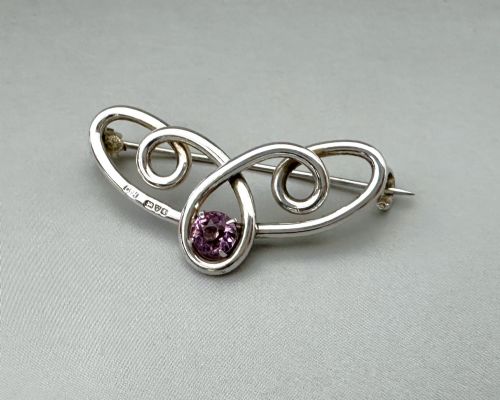
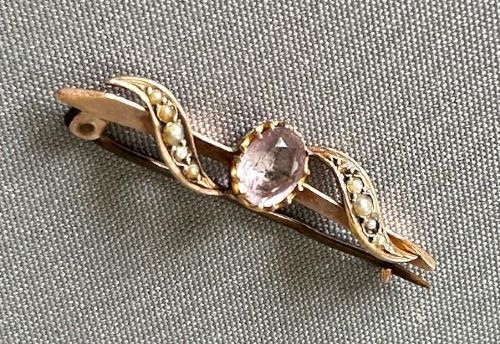
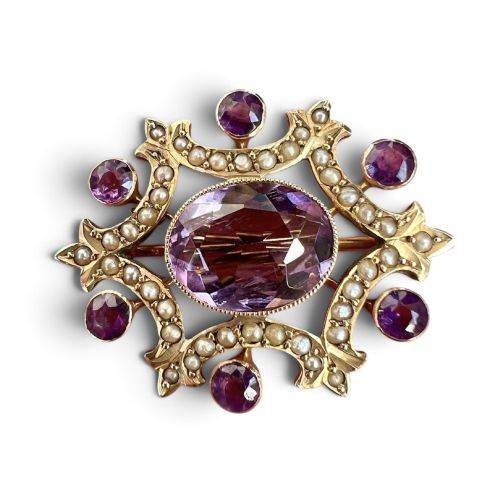
When you search for a vintage purple brooch, you encounter a selection spanning the Edwardian era through to the mid-twentieth century. The predominant forms on this page include delicate gold pins set with deep violet gemstones and intricate enamel work.
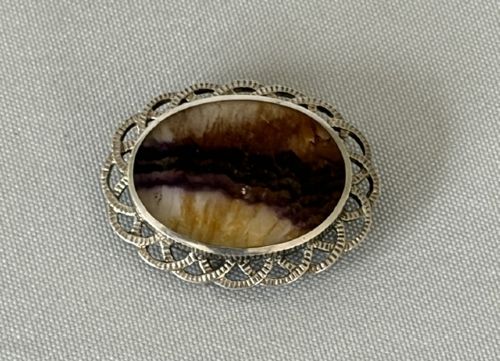
The materials balance precious metals with varied purple stones, creating distinct profiles from heart-shaped gemstone mounts to elaborate spray clusters. Each piece reflects the dominant decorative tastes of its specific decade, from ornate Edwardian filigree to cleaner modernist lines.
How they were made
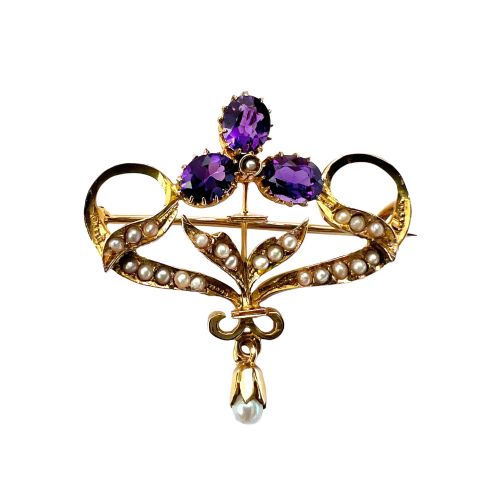
Goldsmiths utilised yellow gold, typically nine or fifteen carat, to construct secure settings for amethysts and pearls during the Edwardian period. Techniques involved detailed wirework and claw settings that elevated the central stones to catch the light.
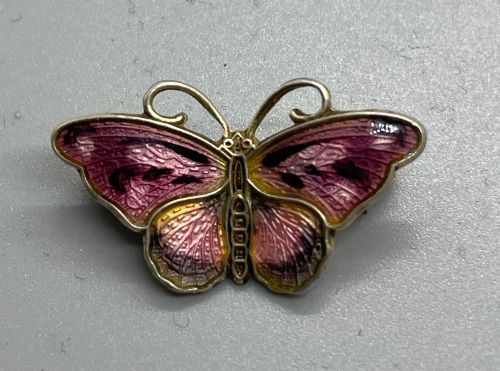
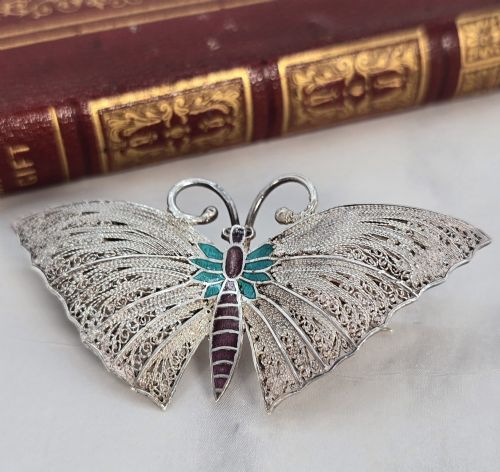
Continental and Scandinavian workshops applied vitreous enamel over silver gilt and silver bases, creating rich translucent colour surfaces. Filigree construction and meticulous hand-carving defined smaller details such as insect wings and floral motifs.
Vintage Purple Brooch Retail Price Guide 2026
Typical asking prices for vintage purple brooch among the pieces listed under this phrase on Sellingantiques today, from the lower quarter to the upper quarter. They describe what is for sale here now, not the wider market.
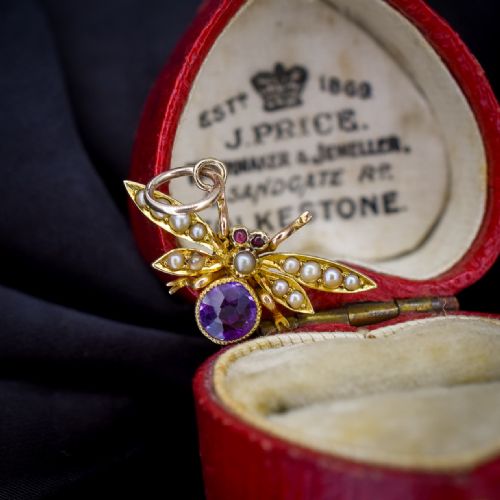
A tiny flying insect charm pendant manages to combine fierce amethyst eyes with delicate seed pearl wings, preserving a Victorian fascination with natural history.
What varies in quality
The standard of execution in gold work and stone selection establishes the difference across pieces. Finer examples display precise gemstone matching, clean claw work, and well-preserved enamel without chipping or loss.
Design complexity also marks the upper tier, where multi-functional items such as brooch-pendant combinations or articulated drops require advanced silversmithing skills. The weight of the metal and the depth of the stone colour contribute directly to the overall impact.
Beto
The Vintage Purple Brooch Glossary
- Amethyst
- A purple variety of quartz prized for its violet hue, frequently utilised as the central gemstone in Edwardian and mid-century jewellery. It ranges in tone from pale lilac to deep royal purple.
- Seed pearl
- A very small, naturally formed or cultured pearl often strung or set in clusters around larger stones. They add delicate luminosity to early twentieth-century gold brooches.
- Silver gilt
- Sterling silver that has been coated with a thin layer of gold through chemical or electrolytic processes. This technique provided the rich appearance of gold with the workability of silver.
- Filigree
- Ornamental work consisting of fine wire twisted and soldered together in open patterns. It appears frequently in Continental enamel and silver brooches from the earlier decades.
- Essex crystal
- A technique where a rock crystal is carved on the reverse side in intaglio and painted to create a lifelike three-dimensional miniature. It represents a specialised form of lapidary art found in select antique pieces.
Vintage Purple Brooch: Frequently Asked Questions
What periods do these purple brooches come from?
The pieces span the early twentieth century, with a strong representation of Edwardian craftsmanship alongside 1930s Continental work and mid-century Scandinavian or Mexican modernist designs.
This broad timeline means you see stylistic shifts from ornate heart motifs and seed pearl clusters to clean enamel butterfly shapes and large gemstone spray cuts.
How do I wear a vintage brooch today?
A purple brooch suits structured wool lapels, heavy knit cardigans, or silk scarves where the weight of the gold and gemstone can be supported securely. Many examples also include loops that allow the piece to be suspended from a chain as a pendant.
Ensuring the pin mechanism remains secure and fastening it through thicker fabric prevents the metal from sagging or pulling delicate textiles.
How can I tell Edwardian pieces apart from mid-century designs?
Edwardian items typically rely on yellow gold settings combined with amethysts and natural seed pearls, often featuring intricate filigree or heart-shaped frames. They emphasise romantic motifs and traditional precious metal standards.
Mid-century pieces from the 1950s and 1960s frequently incorporate silver gilt, vibrant enamel work, and modernist or Scandinavian geometric lines that depart from earlier Victorian revivals.